The Nanyang Coffee Story
Nanyang coffee is stronger, sweeter and darker than most Western coffee culture allows for. Here is where that tradition came from, and where it survives.
 By Renée Tan
30 August 2026 · 6 min read
By Renée Tan
30 August 2026 · 6 min read
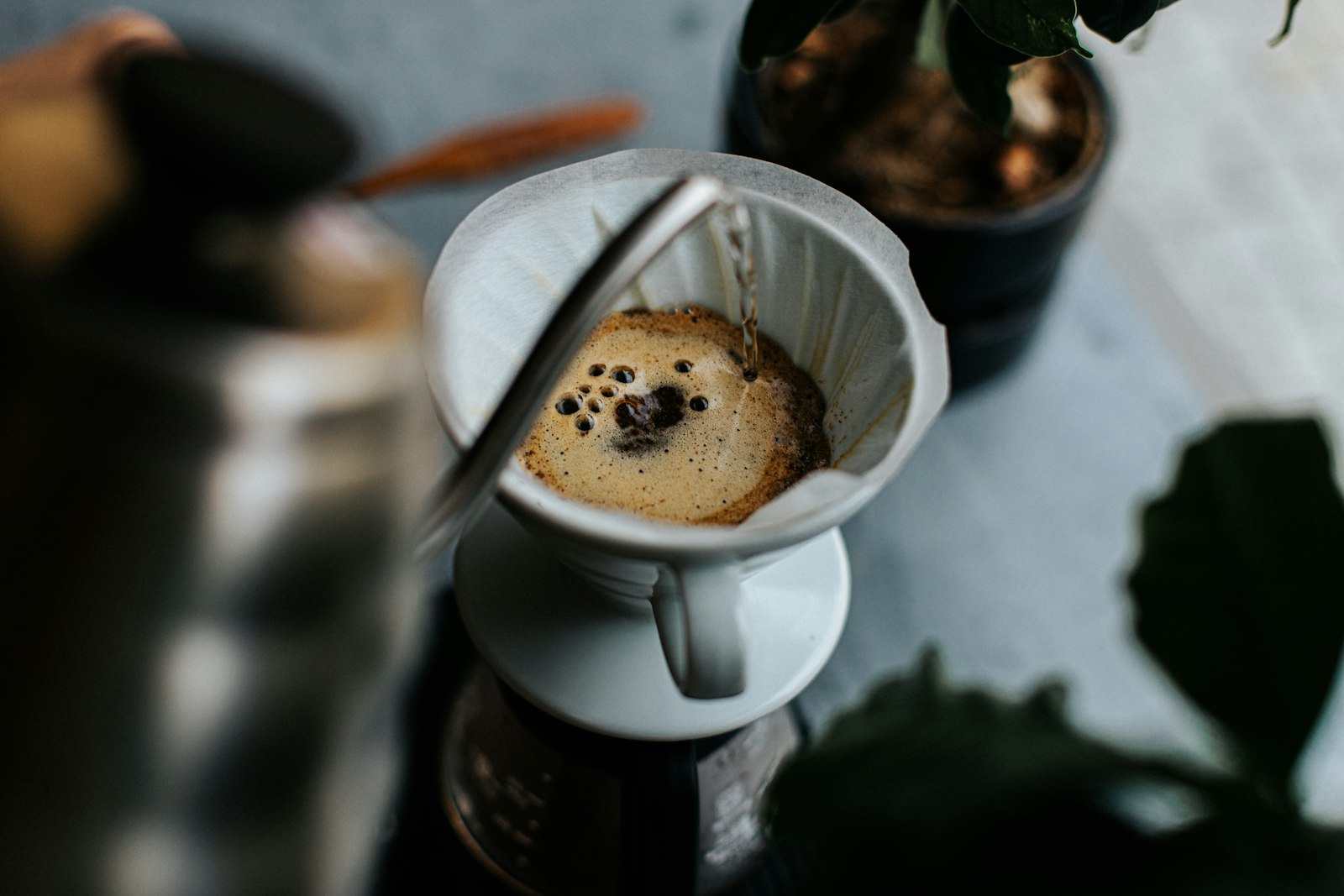
Nanyang coffee — the dark, faintly caramelised brew served at kopitiams across Singapore — sits at an odd remove from the specialty coffee culture that has otherwise reshaped how the city drinks its caffeine over the past fifteen years. Where specialty coffee has pushed toward lighter roasts, single-origin transparency and precise brewing ratios, Nanyang coffee has largely stayed exactly what it has always been: robusta or a robusta-arabica blend, roasted with sugar and sometimes margarine until the beans take on a dark, almost burnt sheen, then brewed strong through a cloth filter and served with condensed or evaporated milk.
It is, by the standards of contemporary coffee culture, an unfashionable drink — sweet, heavy, unapologetically far from the bright, acidic profile that specialty roasters chase. And yet it has survived, largely unchanged, because it was never really competing in the same category to begin with. Nanyang coffee is a social drink, meant to be had quickly, often standing, at a coffee shop counter early in the morning, not sipped contemplatively over a laptop.
Where the style came from
The tradition traces back to the early waves of Chinese immigrants — largely Hainanese — who arrived in Singapore and the wider Nanyang region in the nineteenth and early twentieth centuries and began operating coffee shops, adapting the coffee culture they encountered from British colonial households, where many had worked as domestic staff, into something more affordable and suited to local tastes. Robusta, hardier and cheaper to grow than arabica, became the dominant bean out of necessity as much as preference, and the practice of roasting with sugar and margarine developed partly as a way of stretching limited bean supplies and partly because the resulting flavour — deeper, sweeter, less acidic — suited the humid climate and the style of drinking it alongside a fast breakfast.
The sock filter and why it matters
The cloth filter — often still called a “coffee sock” for its shape — is not merely traditional theatre; it produces a genuinely different cup from a paper filter or espresso machine, allowing more of the coffee’s natural oils through into the final brew while still catching the grounds, producing a fuller body than a paper-filtered brew typically achieves. Kopitiams that still brew this way, rather than switching to faster machine-based methods, are increasingly rare, and worth patronising specifically for that reason.
The kettle itself matters too, more than most drinkers ever consider. A well-seasoned metal kettle, used daily for years, develops a coating that some traditional operators believe contributes subtly to the coffee’s flavour, in much the way a well-used wok develops its own character over time. Whether or not this is measurable in any strict sense, the ritual of using the same battered kettle for decades is part of what gives a genuinely traditional kopitiam’s brew its particular, hard-to-replicate consistency, cup after cup, morning after morning.
Reading a kopi order
The kopitiam ordering system, baffling to newcomers, is in fact a precise and efficient shorthand once learned. Kopi, unmodified, means coffee with condensed milk and sugar. Kopi-O drops the milk for sugar alone. Kopi-C swaps condensed milk for evaporated milk, a lighter, less sweet variation. Adding “gao” specifies a stronger brew; “poh” a weaker one; “siew dai” less sugar; “kosong” none at all. Learning even a handful of these terms transforms an ordering interaction that can otherwise feel opaque into something genuinely satisfying to navigate.
“My father used to say you could tell how well a stall was run just by watching how consistent the kopi tasted, cup to cup, across a whole morning,” one third-generation kopitiam operator told us. “If the coffee’s inconsistent, everything else usually is too.”
A tradition under quiet pressure, and a quiet revival
Like much of Singapore’s older hawker and coffee shop culture, the traditional kopitiam is under real pressure — from rising rents, from a shrinking pool of operators willing to learn the labour-intensive traditional roasting and sock-brewing method, and from the sheer convenience of specialty coffee’s faster, more standardised espresso-based service. A number of kopitiams have closed or been absorbed into larger, more commercial coffee shop chains that use machine brewing to cut costs and speed up service, at some cost to the depth of flavour that a proper sock-brewed cup delivers.
At the same time, there has been a genuine, if modest, revival of interest in Nanyang coffee among younger operators and even some specialty roasters, who have begun treating traditional dark-roast robusta with the same care and transparency more commonly applied to single-origin arabica — sourcing beans more thoughtfully, being more precise about roast profiles, while keeping the traditional brewing method intact. This is a promising development, since it suggests the tradition can modernise in the parts that benefit from more rigour, such as sourcing, without abandoning what makes it distinctive in the first place.
Where to taste it properly
The best Nanyang coffee is rarely found at the most photogenic kopitiam, but at the one where the same person has been brewing it, largely unchanged, for decades — worth seeking out specifically for that consistency. Order it kosong or with reduced sugar on a first visit if you want to actually taste the roast character underneath the sweetness that a standard order otherwise dominates.
For more on this specific corner of Singapore’s food culture, our piece on the kaya toast and kopi ritual covers the full breakfast tradition kopi is usually part of, while the best kopitiam classics, reconsidered looks at the wider menu beyond the coffee itself. For those interested in the specialty side of the city’s coffee scene, the new rules of the Singapore coffee bar makes a useful contrast, and a primer on coffee origins and terroir is a good next read for anyone wanting to understand the bean side of the story more deeply. Explore more of the city’s food culture in our Dining & Drinks section.
Nanyang coffee will likely never be reclaimed by the specialty coffee world in the way some other traditional brews have been, and it probably should not be — its value lies partly in staying exactly what it has always been, a strong, sweet, fast cup meant to be drunk standing at a counter before the day properly begins. That, in its own way, is worth defending as much as any single-origin pour-over.
Renée has covered Singapore's restaurants for over a decade, with a soft spot for the kitchens most people walk past.