The Art of the Old Fashioned
Three ingredients, one large cube, and no room to hide — a guide to the old fashioned and why it remains the ultimate test of a bar's discipline.
 By Renée Tan
30 August 2026 · 6 min read
By Renée Tan
30 August 2026 · 6 min read
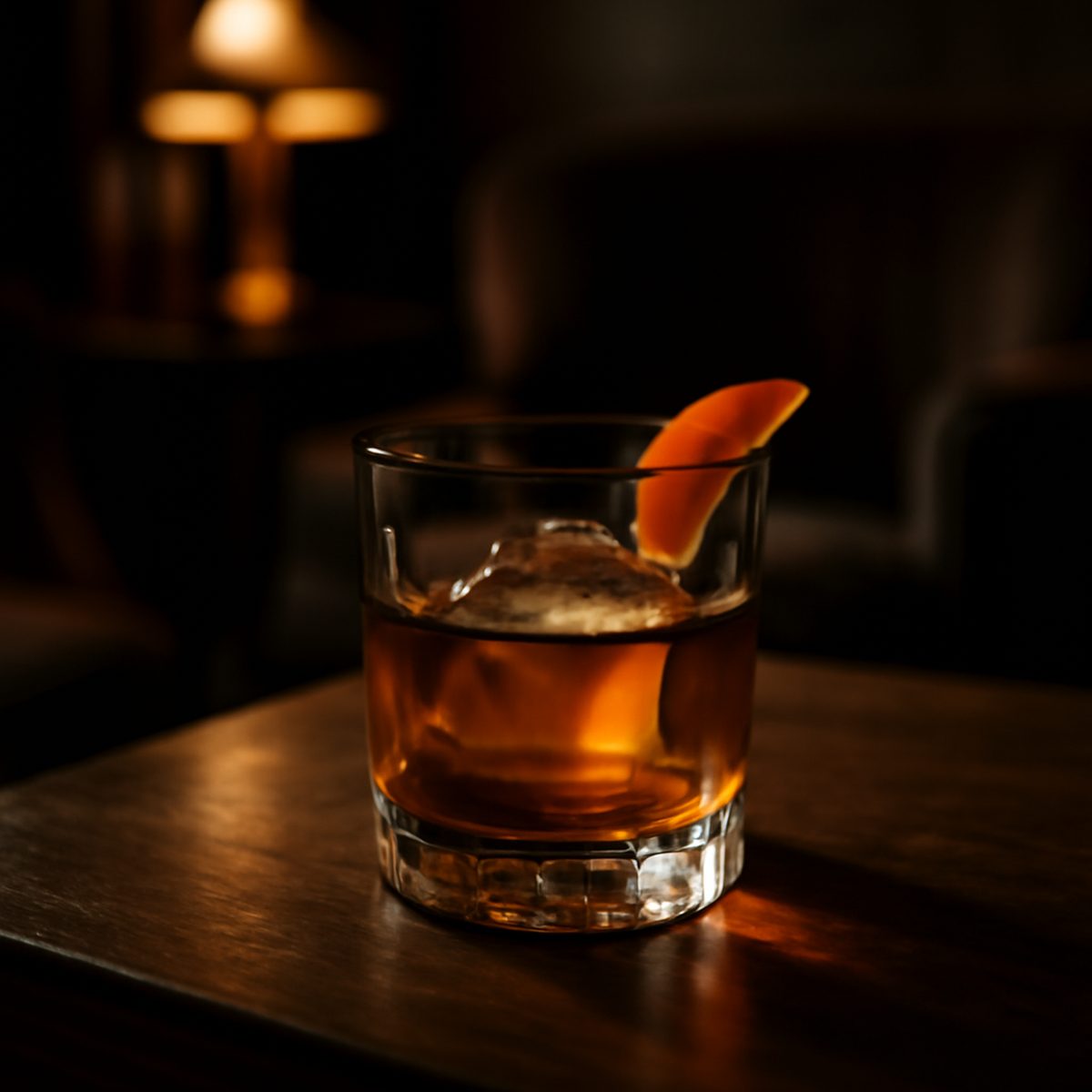
Ask any serious bartender which cocktail they judge a new bar by, and a surprising number will name the old fashioned before anything more elaborate. It seems, on paper, like the easiest drink in the world to make — whisky, sugar, bitters, a twist of citrus, built over ice and stirred. In practice it is closer to a written exam. There are only four ingredients, no clever technique to hide behind, and nowhere for a bartender to disguise an imbalance. A great old fashioned is not built from complexity. It is built from restraint, proportion, and a genuine understanding of the spirit doing most of the talking.
The case for a drink this simple
The old fashioned’s enduring appeal lies precisely in what it withholds. Unlike a cocktail built around six or seven ingredients, where a mistake in one component can be masked by another, this drink exposes every decision. Too much sugar and the whisky’s character disappears under sweetness. Too little dilution and the drink drinks hot and aggressive; too much and it turns thin and forgettable. The size and clarity of the ice matters more than most drinkers assume — a single large, dense cube melts slowly and evenly, keeping the drink cold without diluting it into blandness over the course of twenty unhurried minutes, which is roughly how long a well-made old fashioned should take to finish.
This is also why the drink functions as an unusually honest barometer of a bar’s overall standard. A bartender who takes the trouble to hand-cut ice, who tastes their bitters blend rather than reaching automatically for a single bottle, who understands that the sugar should support the whisky rather than compete with it, tends to run a kitchen — or in this case a bar — with the same discipline throughout the rest of the menu.
Choosing your whisky
The old fashioned was born as a bourbon drink and remains most commonly built that way, its caramel and vanilla notes providing a natural partner for the sugar and bitters. Rye whisky offers a spicier, drier alternative that some purists consider closer to the drink’s original spirit — literally, since rye was the more common whisky in America when the format first codified in the late nineteenth century. Increasingly, bars in Singapore are experimenting with Japanese whisky as the base, its softer, more floral character producing a noticeably different, often more elegant result. Those wanting to understand these distinctions in more depth might find our field guide to Japanese whisky a useful companion, since much of what separates one bottle from another becomes far more legible once it is filtered through a drink this transparent.
Smoky Scotch whiskies tend to divide opinion in this format — the peat can either add a fascinating dimension or simply overwhelm the other elements, and the difference usually comes down to how heavy-handed the bartender is with the sugar and bitters to compensate. Those who enjoy smoke in a cocktail may prefer a modern classic built around it, explored in our piece on the art of the penicillin.
The essential technique
- Muddle the sugar and bitters together first, before adding the whisky, to ensure the sweetness dissolves evenly rather than sitting in undissolved crystals at the bottom of the glass.
- Stir, never shake — an old fashioned should remain clear and silky, and shaking introduces unwanted aeration and dilution.
- Express the citrus oil from the orange peel over the surface of the drink before dropping it in, releasing the aromatic oils that lift the whole glass on the nose.
- Resist the urge to add fruit, cherries, or excessive garnish — the classic build has survived over a century precisely because it needs nothing more.
“The old fashioned is the drink that tells me whether I want to order anything else on the menu,” one Singapore bar director has said. “If they can’t get four ingredients right, I don’t trust them with fourteen.”
Where Singapore is getting it right
The city’s renewed appetite for classic technique has coincided with what amounts to a genuine return of the classic cocktail bar, spaces that have deliberately stepped back from the elaborate, multi-ingredient theatrics of the previous decade in favour of getting the fundamentals exactly right. An old fashioned made well at one of these bars is often the clearest signal of the kitchen-like precision happening behind the counter — batched syrups measured to the gram, bitters blended in-house, ice programmes that treat clarity as a genuine craft rather than an afterthought.
For those keen to go further into whisky as a category beyond the cocktail glass, our guide on building a whisky collection with intent covers how to think about bottles worth keeping at home, while how to taste whisky like you know how offers a useful primer for anyone wanting to move past ordering by brand name alone. And for anyone inspired to bring the ritual home, learning to build a proper home bar lays out exactly which bottles and tools earn a permanent place on the shelf.
A short history worth knowing
The drink’s origins trace back to gentlemen’s clubs in the American South during the mid-to-late nineteenth century, at a time when cocktails more broadly were becoming increasingly elaborate — flavoured with liqueurs, absinthe, and various fashionable syrups. Patrons who wanted their whisky served the way it always had been, simply sweetened and bittered, began asking for it “the old fashioned way,” and the name stuck long after the fashions it was rebelling against faded from memory. There is something fitting in the fact that a drink invented as a protest against unnecessary complication has, more than a century later, become the benchmark by which bartenders measure their own restraint. It has survived Prohibition, the tiki era, the mixology boom of the 2000s with its foams and infusions, and emerged each time essentially unchanged, because the format never needed saving in the first place. Singapore has a celebrated cocktail of its own with a much more elaborate recipe, and its history is told in the story of the Singapore Sling.
Understanding that history also explains why so many bartenders treat deviation from the classic recipe with genuine caution. Fashionable additions — a house-made bitters blend, an unusual sugar, a smoked glass — can work beautifully when applied with restraint, but the drink’s history is littered with well-intentioned reinventions that simply added noise where the original recipe had none.
The verdict
There is a reason the old fashioned has outlasted nearly every trend cocktail bar menus have thrown at it over the past century — it does one thing, and it does that one thing with total transparency. Ordering it at a new bar remains one of the most reliable ways to judge whether the rest of the menu is worth exploring, and drinking it well at home remains one of the more satisfying small rituals available to anyone with a decent bottle of whisky and twenty unhurried minutes. The wider world of considered drinking across the island is covered in full in Dining & Drinks.
Renée has covered Singapore's restaurants for over a decade, with a soft spot for the kitchens most people walk past.