How to Wear Head-to-Toe Neutrals
Dressing in a single tonal family looks effortless precisely because it rarely is. Here is how to do it properly without ever looking washed out.
 By Daniel Koh
30 August 2026 · 6 min read
By Daniel Koh
30 August 2026 · 6 min read

Ask a stylist which outfits photograph best on the street and, more often than not, they will point to someone dressed almost entirely in one colour family — stone, sand, taupe, oatmeal, the whole spectrum of what design people call “greige.” It looks effortless in the way that the best dressing always does, which is to say it looks like almost no effort was involved. In practice, head-to-toe neutrals is one of the harder tricks to pull off well, because the moment you remove colour as a source of visual interest, everything else — proportion, texture, fit — has to work considerably harder.
Get it wrong and you look washed out, or worse, as though you got dressed in the dark. Get it right and you look like someone who has stopped needing colour to hold a room’s attention. The difference between the two comes down to a handful of decisions that have nothing to do with the colour wheel and everything to do with texture, tone and where you allow the smallest amount of contrast to do its work.
Texture Is Doing the Job Colour Usually Does
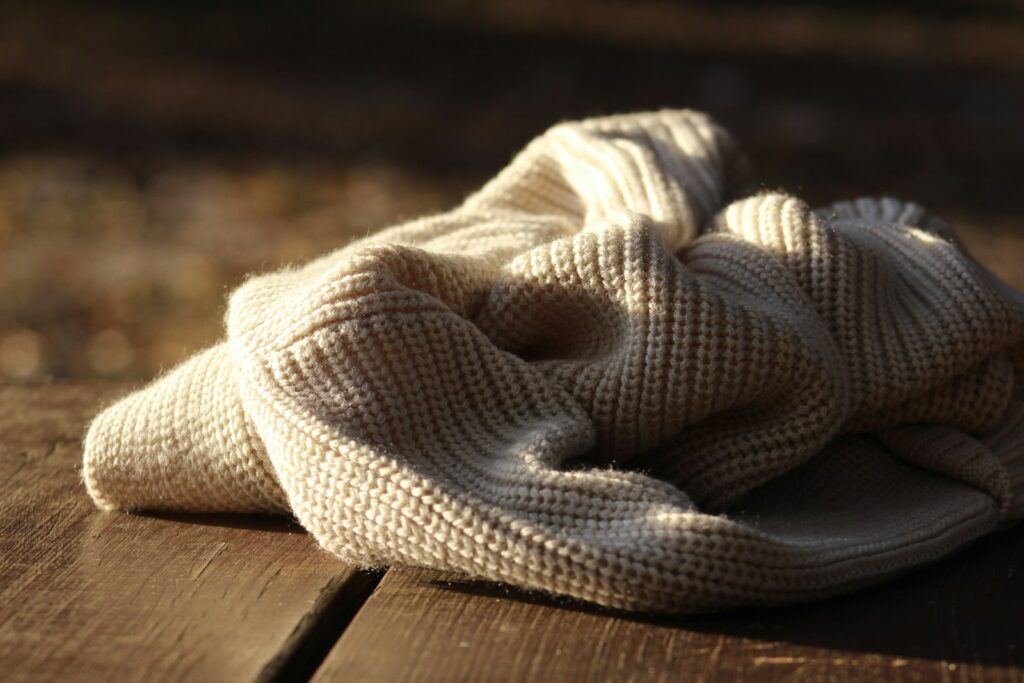
When every piece sits in a similar tonal range, the eye starts hunting for other signals of interest, and texture becomes the entire game. A smooth cotton shirt under a nubby wool jumper under a brushed suede jacket reads as considered even if all three are within two shades of each other on a colour chart. Flat, uniformly smooth fabrics in the same palette, by contrast, can genuinely start to look like a uniform — or worse, a single garment cut awkwardly in three pieces.
This is where knitwear earns its keep in a neutral wardrobe far beyond what it does in a more colourful one. A cable-knit or waffle-texture piece from the knitwear worth investing in introduces dimension without introducing a single new hue, and it is the easiest lever to pull if an outfit is starting to feel flat once you are stood in front of a mirror rather than a shop rail.
Stay Within One Undertone
The single most common failure in tonal dressing is not staying too close in colour — it is mixing warm and cool neutrals without realising it. Stone, camel and tobacco are warm; slate, dove grey and true taupe lean cool. Combine a warm-toned coat with a cool-toned trouser and the outfit reads as slightly off in a way that is hard to name but easy to see, even if every individual piece would look perfectly good on its own.
The fix is simple discipline rather than any special expertise: hold two garments together in daylight before committing to the pairing, and if one looks faintly yellow-green next to the other, they are fighting each other. A useful anchor piece here is a genuinely warm outer layer — the camel coat remains the reference point for warm-toned neutral dressing precisely because everything from cream to chocolate sits comfortably alongside it. Singapore’s climate rarely calls for the coat itself, but the same warm-undertone logic applies to a linen jacket or a lightweight overshirt worn as the outer layer on an air-conditioned evening, and the palette translates just as cleanly at a shorter sleeve length.
A Simple Palette to Build From
- Base layer: ecru, oatmeal or bone — always the lightest piece, worn closest to the skin
- Mid layer: stone, sand or a warm taupe — trousers or a knit
- Outer layer: camel, tobacco or a deep chocolate — the piece that anchors the whole look
- One point of near-black or charcoal, kept to footwear or a belt, to stop the whole outfit floating
Fit Carries More Weight Than Usual
Without colour blocking to define where one garment ends and another begins, silhouette does that job instead. A trouser that is even slightly too full, worn under a jacket that is even slightly too long, blurs into one shapeless mass when everything is the same tone. This is not an argument for tight dressing — it is an argument for proportion that is deliberate rather than accidental. A slightly cropped trouser with a longer coat, or a fitted knit under a more generous jacket, gives the eye a place to register where the layers change, which matters more here than it would in an outfit built on colour contrast.
Neutral dressing is not the absence of a decision. It is several very deliberate decisions that happen to share a colour family.
Where to Let a Little Contrast In
Total tonal purity, taken too literally, can tip into looking costume-like rather than considered — the visual equivalent of a mood board rather than a person getting dressed for a Tuesday. The most successful neutral outfits allow one quiet departure: a pair of dark brown suede loafers against a stone trouser, a black leather watch strap against a cream knit, a single piece of hardware in aged brass rather than the expected buckle. It reads as intentional precisely because it is the only note that breaks the pattern.
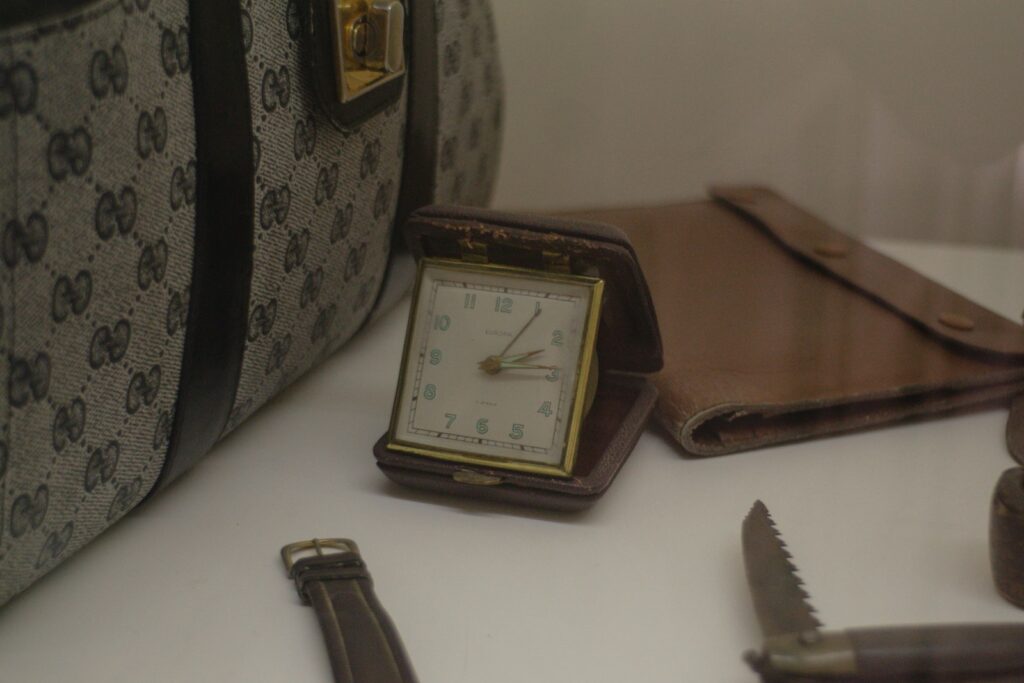
Accessories are the lowest-risk place to experiment with this. A watch on a neutral or dark leather strap sits happily within the palette, while something in a more textured metal introduces just enough interest without derailing the outfit’s logic — worth considering alongside how you think about how much a watch strap changes an outfit more generally, since strap choice is often the easiest way to shift a neutral look from flat to considered.
Building It Into a Working Wardrobe
The appeal of a neutral-led wardrobe is not really aesthetic purity — it is that almost everything within it works with everything else, which removes a surprising amount of daily friction. Start with three or four pieces that already share an undertone rather than trying to convert an entire existing wardrobe overnight, and let the palette expand from there as older, more clashing pieces are naturally replaced. It is a project best approached the way most good dressing decisions get made across Style & Watches — slowly, with an eye for texture over any single statement purchase — and one that, once assembled, makes getting dressed considerably quicker rather than more complicated, which is the quiet luxury the whole exercise is really in service of.
Daniel has spent fifteen years arguing that the best watch is the one you never take off.