How to Choose the Right Reading Nook Lighting
Good reading light is more particular than most home lighting. Here is how to choose fixtures, placement and colour temperature for a nook that gets used.
 By Priya Nair
1 September 2026 · 6 min read
By Priya Nair
1 September 2026 · 6 min read
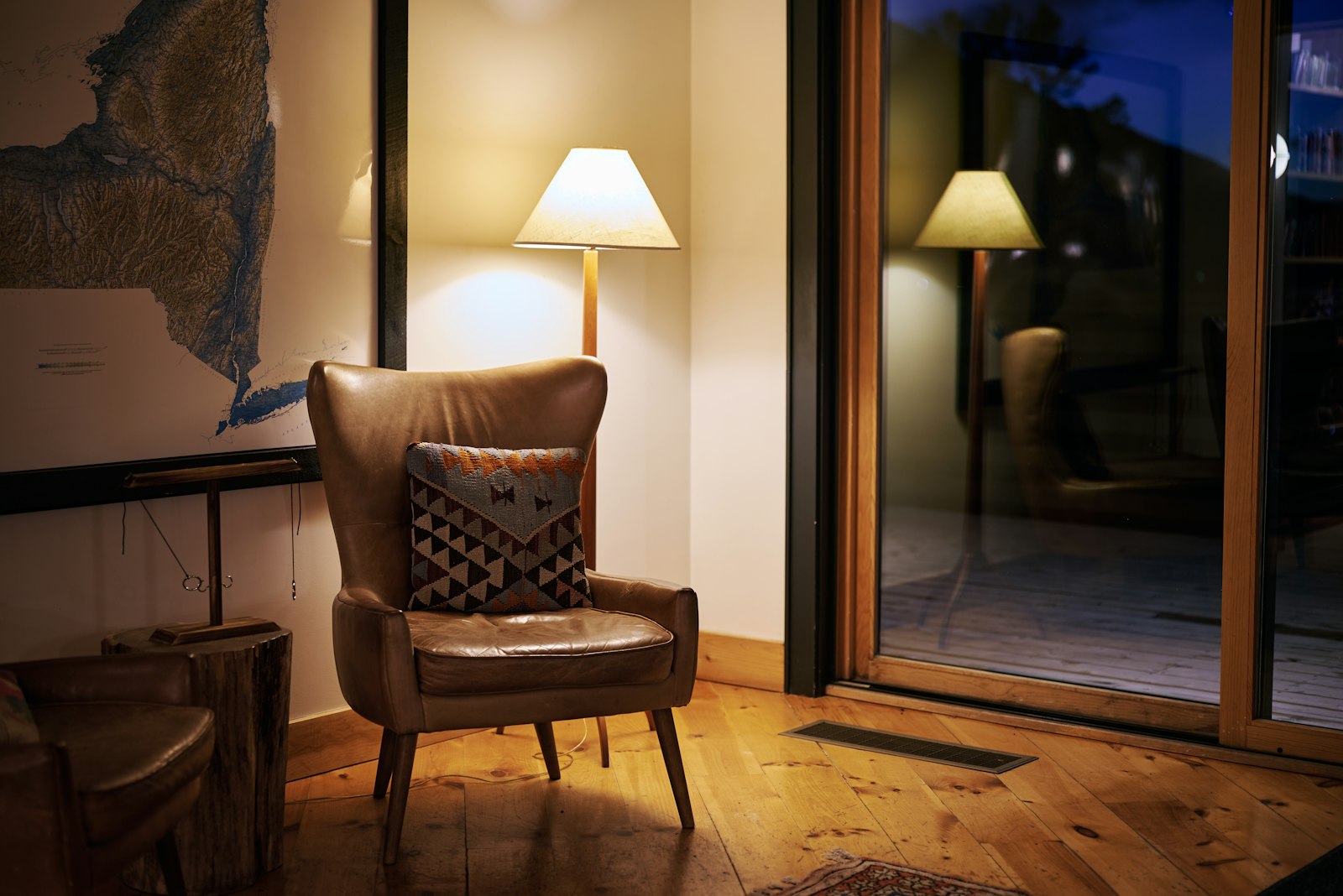
A reading nook lives or dies on its light. The chair can be perfect, the corner beautifully quiet, the view onto a garden or a quiet street exactly right — and none of it matters if the light forces a reader to squint, cast a shadow across the page, or simply sits too dim by nine in the evening. Of all the specialised lighting briefs in a home, a reading nook is arguably the most demanding, because it has to satisfy both the eye’s need for even, glare-free illumination and the room’s need to feel like somewhere worth sitting.
Start with the type of light, not the fixture
Reading light needs to be directional and adjustable, not ambient. A single ceiling downlight, however well placed, tends to cast a reader’s own head in shadow over the page — precisely the opposite of what is needed. The better approach layers two sources: a focused task light positioned over the shoulder, angled down onto the page, plus a softer ambient source elsewhere in the nook so the contrast between the book and the surrounding room is not jarring on the eyes during long sessions. This layering principle is really at its sharpest and most concentrated in a reading nook, more than almost any other lighting brief in a home.
Fixture types worth considering
- A floor lamp with an adjustable arm, positioned just behind and above shoulder height, so light falls onto the page without hitting the eyes directly.
- A wall-mounted swing-arm fixture, which frees up floor space in a tight nook and can be angled precisely as needed.
- A clip-on task lamp for a smaller built-in seat, useful where a freestanding lamp would crowd the space.
Colour temperature matters more than brightness
A warm colour temperature, roughly 2700 to 3000 Kelvin, suits a reading nook far better than the cooler, bluer light often recommended for task lighting elsewhere in a home. Cooler light can feel clinical and alert in a space meant for winding down, while warm light supports the relaxed, unhurried mood a reading corner is meant to offer. Brightness should still be sufficient — dim warm light is as frustrating as harsh cool light — so look for fixtures offering at least 400 to 600 lumens at the page, ideally with a dimmer to adjust for time of day and how tired the reader’s eyes already are.
Placement and avoiding glare
The single most common mistake in nook lighting is positioning the source directly in front of the reader, at eye level, which throws glare straight off a glossy page or a tablet screen. Light should come from above and slightly behind the shoulder on the same side as the dominant hand holding the book, casting a clean, even wash onto the page without a visible hotspot. For nooks built into a window bay, be conscious of how daylight and lamp light interact — a lamp positioned against strong daylight will look weak and washed out by comparison, so daytime reading in a bright nook may need little artificial light at all, reserved instead for evening use.
The test of good reading light is simple: can you read for an hour without noticing the light at all? If the answer is no, the fixture or its placement needs adjusting, regardless of how good it looks switched off.
Dimmers and switching
A dimmable fixture, controlled by a switch within easy reach of the seat, is worth prioritising over a fixed-output lamp, since reading light needs vary considerably between a bright afternoon and a late evening session. Smart bulbs with app or voice control offer convenience but should still allow a genuinely warm, low setting — some budget smart bulbs struggle to dim below a level still too bright for comfortable late-night reading, which defeats much of the purpose.
Pairing light with the rest of the nook
Lighting decisions should follow, not precede, decisions about the seat and its orientation — a beautifully chosen lamp is wasted if the chair faces the wrong way for it to actually work. Our piece on the art of the reading nook covers the wider brief of building the space itself, while our guide to materials for a warm reading nook is worth reading alongside this one, since surface finishes around the nook — matte rather than glossy walls, for instance — meaningfully affect how the light behaves in the room. If the nook shares a wall or an open sightline with a nearby snug or study space, our notes on snug nook lighting and study nook lighting both apply many of the same principles, adapted for slightly different uses.
Getting reading nook lighting right is a small investment that pays back every single evening the space is used. It is one of the few lighting briefs in a home where the test of success is entirely practical rather than aesthetic — not how the fixture looks switched off, but how invisible it becomes once someone actually sits down with a book. Browse our full Homes & Culture section for more on building rooms that genuinely earn their daily use.
Bulb choice within the fixture
Even the best-designed lamp underperforms with the wrong bulb. LED bulbs have improved considerably in colour rendering, but it is still worth checking the CRI (colour rendering index) rating before buying, since a low-CRI bulb can make white page and black text look subtly less crisp than they should, adding unnecessary eye strain over a long reading session. A CRI of 90 or above is a reasonable minimum for a dedicated reading fixture. Filament-style LED bulbs, popular for their warm glow and vintage appearance, are worth checking individually for actual lumen output, since their visual charm sometimes outpaces their practical brightness for genuine task use.
Seasonal adjustment
A nook that works beautifully lit through a Singapore evening may need a slightly different balance during a rare grey, overcast afternoon, when ambient daylight through a window is weaker than usual. Fixtures on a dimmer, rather than a fixed single-brightness lamp, make this kind of daily adjustment effortless rather than something a household has to consciously remember to manage, and it is one more reason a dimmer is worth the modest additional cost at installation.
Priya tours the homes most people only glimpse from the road, and asks how they are really lived in.