
How to Choose and Style Desk Lamps
A desk lamp has to work hard and look right doing it. How to balance genuine task lighting with a fixture considered enough to live on view daily.
 By Priya Nair
31 August 2026 · 6 min read
By Priya Nair
31 August 2026 · 6 min read
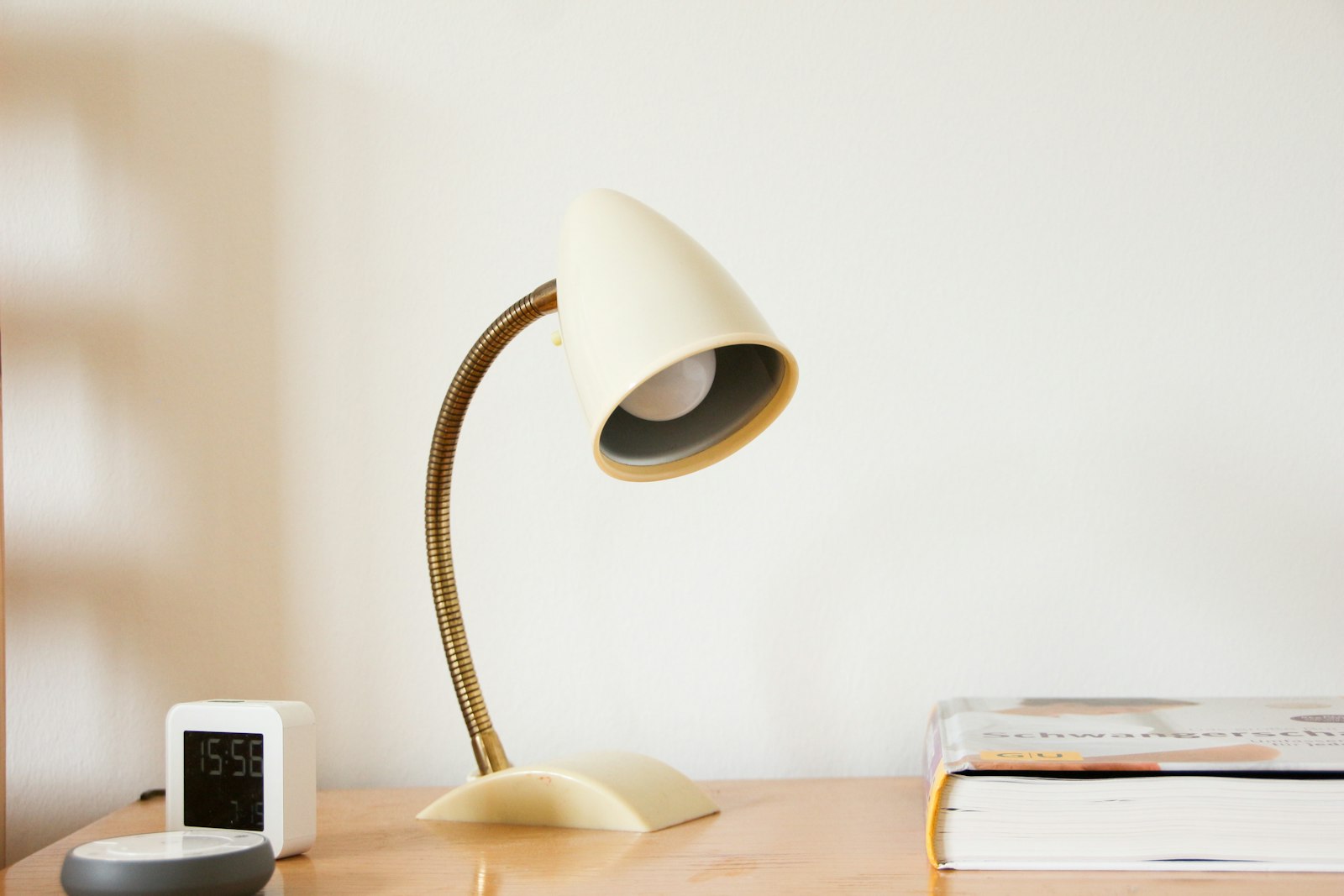
A desk lamp is one of the few objects in a home office or study asked to perform two entirely different jobs at once: it has to genuinely illuminate close, sustained work, and it has to look considered enough to sit permanently in view during video calls, in photographs, and simply as part of the room’s daily aesthetic. Very few lamps manage both convincingly, and choosing one well means being honest about which job matters more for the specific desk in question.
Start with function
Before anything else, a desk lamp needs to actually light the work surface properly. This means enough brightness for close tasks — reading fine print, handwriting, detailed screen work — without harsh glare or a light source positioned to cast the user’s own hand-shadow across whatever they are working on. For right-handed users, positioning the lamp to the left of the work area avoids this shadow problem; left-handed users should reverse the placement. This basic principle, simple as it sounds, is the single most commonly overlooked detail in desk lamp placement.
Adjustability matters more than most buyers expect
A lamp with a genuinely adjustable arm and head — able to move both height and angle — earns its keep far more than a fixed, decorative fixture, particularly on a desk used for a mix of screen work and paper-based tasks that each demand slightly different lighting. This is one area where the classic architect’s lamp format, with its counterbalanced arm, still outperforms most contemporary alternatives on pure function, even when a household chooses a more decorative style for the rest of the room.
Colour temperature for genuine desk work
Somewhere around 3000K to 4000K generally suits desk work best — warm enough to remain comfortable for extended periods, cool enough to keep the user genuinely alert rather than drowsy, which matters if the desk sees serious use in the evening. This sits distinctly cooler than the warm, low light favoured in a snug or living room, reflecting the desk’s more task-focused purpose. For a deeper look at how this compares with other rooms built around similarly close, sustained work, study lighting covers much of the same ground from a slightly broader, whole-room perspective.
Choosing a style that suits the desk
- An adjustable architect’s or task lamp for a genuinely hardworking desk used for long hours of close work.
- A classic banker’s lamp, with its glass shade and pull-chain switch, for a more traditional study where the lamp itself is meant to be a visible, characterful object.
- A slim, minimalist LED bar or panel lamp for a contemporary desk where the fixture should recede rather than draw attention.
- A sculptural or ceramic-based lamp for a desk used more occasionally, where visual character can reasonably take priority over maximum task performance.
Pairing the lamp with the rest of the desk
A desk lamp rarely sits in isolation — it shares the surface with a laptop, a stack of correspondence, perhaps a small piece of art or a single considered object. The lamp’s material and finish should generally echo something already present on the desk or in the room, whether that is a warm brass accent picked up elsewhere, or a matte black finish that matches other hardware nearby. This same logic of considered pairing applies broadly to how table lamps are chosen throughout a home — a desk lamp is simply a table lamp with an unusually demanding job description.
“People buy the beautiful lamp first and then complain the light is wrong for actual work,” a Singapore-based lighting consultant told us. “Test it doing the job before you fall in love with how it looks switched off.”
A note on bulbs and dimming
Even a beautifully chosen fixture underperforms with the wrong bulb. LED bulbs with a high colour rendering index render skin tones, paper and screens far more accurately than cheaper alternatives, which matters enormously on video calls and for any close colour-sensitive work. A built-in or plug-in dimmer, meanwhile, lets a single desk lamp do double duty — bright and task-focused during working hours, dimmed low for a desk used occasionally in the evening for something closer to reading than genuine work.
Material and how it wears over time
A desk lamp is handled daily — switched on, angled, occasionally bumped while reaching for something else on a crowded desk — which makes material durability a genuinely practical concern, not just an aesthetic one. Solid brass and well-finished steel both age gracefully, developing a soft patina at points of frequent contact that most owners come to appreciate rather than mind. Painted finishes, by contrast, tend to chip at the joints and hinges over years of adjustment, revealing the base material beneath in a way that reads as worn rather than characterful. For a lamp expected to last a decade or more of daily use, it is worth paying the modest premium for a genuinely solid material over a painted or plated finish that only imitates it.
The base deserves particular attention, since it bears the lamp’s full weight and absorbs most of the daily contact. A heavier, more substantial base not only improves stability, reducing the risk of the lamp tipping during an enthusiastic gesture across the desk, but generally signals a level of build quality that extends through the rest of the fixture as well. Lifting a lamp before buying, simply to feel its weight and balance, remains one of the more reliable ways to judge genuine quality that a product photograph or online listing cannot convey.
Getting the placement right
Beyond the lamp itself, its position on the desk deserves real thought. It should sit close enough to the primary work area to be genuinely useful, but not so close it becomes an obstacle to elbows and paperwork. Many considered desks position the lamp slightly behind the main working zone, angled forward, which keeps the base out of the way while still directing light exactly where it is needed. Combined with the broader lighting principles used to choose and style reading lamps elsewhere in the home, a well-placed, well-chosen desk lamp becomes one of those small objects that quietly improves daily life far more than its modest cost would suggest — the kind of small, considered upgrade we favour throughout Homes & Culture.
Priya tours the homes most people only glimpse from the road, and asks how they are really lived in.


