
How to Choose and Style Table Lamps
A table lamp does more design work per dollar spent than almost any other object in a room, provided it is chosen and placed with real intent.
 By Priya Nair
30 August 2026 · 6 min read
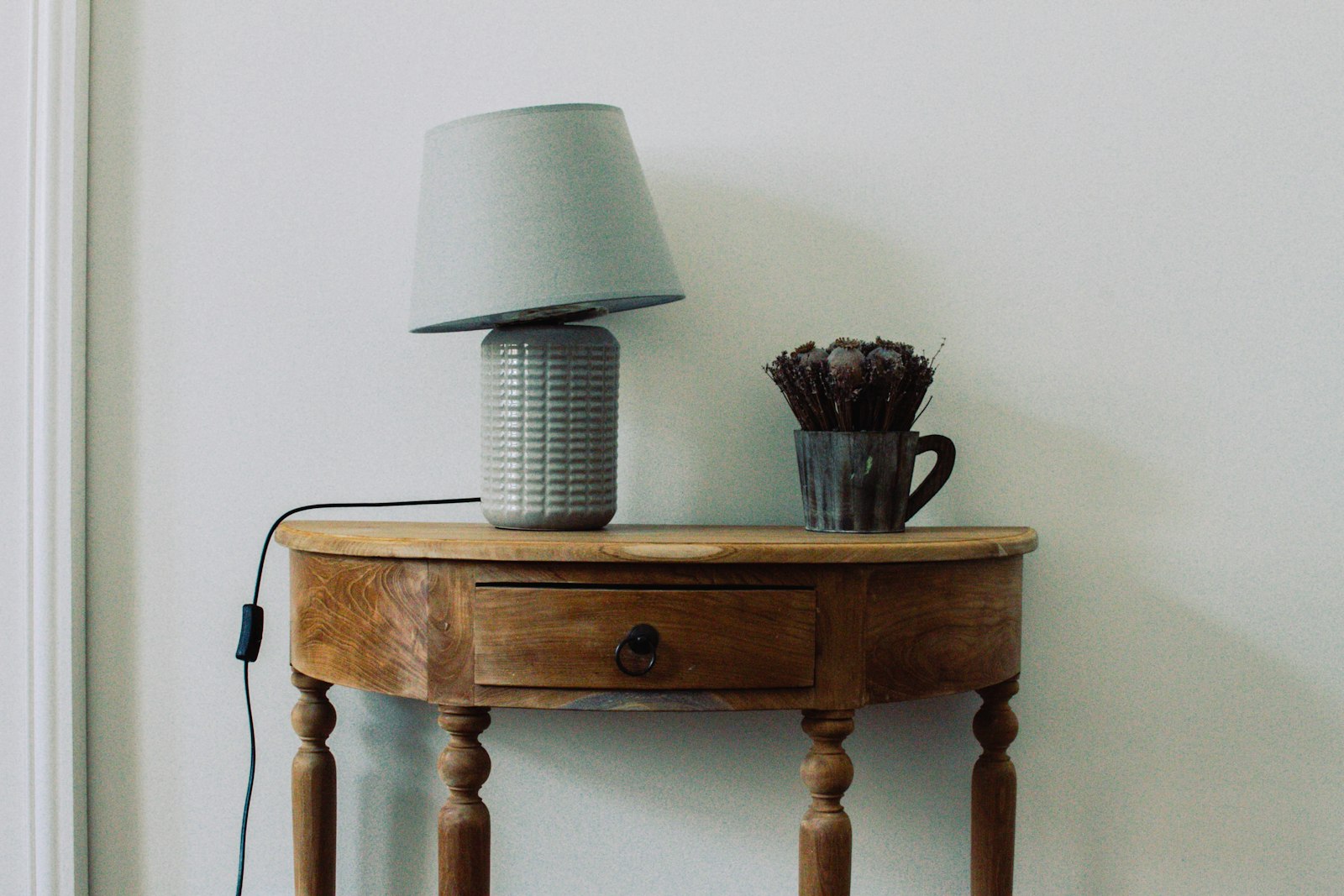
A single overhead light, however well specified, flattens a room into one uniform, slightly clinical brightness. Table lamps do the opposite — they create pools of warm, localised light that give a room genuine depth and character, in a way no ceiling fixture alone can replicate. Choosing and placing them well is one of the highest-return, lowest-cost design decisions available in any considered home.
Proportion Is the Most Common Mistake
The single most frequent error in table lamp selection is scale mismatch — a lamp too small for its side table, or a shade too large for its base, both of which read as visually awkward the moment they are placed. A useful rule of thumb: the lamp’s total height, base and shade combined, should sit roughly at eye level when seated nearby, which typically means somewhere between 58 and 66 centimetres for a standard side table lamp. The shade’s diameter should be proportionate to the base’s width — too narrow a shade on a substantial base looks pinched, while too wide a shade can overwhelm a delicate base entirely.
Pairing lamps of the same style but placing them at different table heights across a room — a taller lamp on a console, a shorter one on a side table — creates a considered, layered effect rather than the flatter uniformity of matching lamp-and-table pairs repeated identically throughout a space. Where focused light matters more than mood, our guide to choosing and styling clip and task lamps covers the more practical end of the range.
Choosing a Base Material
Ceramic remains one of the most versatile base materials, available in a wide range of glazes and forms that suit both traditional and contemporary rooms equally well. Glass bases bring a lightness that suits a room already carrying significant visual weight elsewhere, while brass or bronze bases add warmth and a sense of permanence, aging into a soft patina that, much like the metal fittings discussed in our guide to choosing warm materials for a bathroom, only improves with genuine daily use rather than deteriorating.
Timber bases, turned from solid wood, suit a room already leaning into natural materials and pair particularly well with linen or cotton shades for a softer, more organic overall effect.
Shade Materials and Their Effect
- Linen: diffuses light softly and warmly, suits most interiors, and ages well without yellowing as dramatically as some synthetic alternatives
- Silk: produces a richer, slightly warmer glow, well suited to a more formal or traditional room
- Paper or rice paper: gives a diffuse, gentle light with a more contemporary, minimal character
- Opaque card or metal: directs light more specifically downward and upward, useful for task-oriented placement near a reading chair
Bulb Temperature Matters More Than the Lamp Itself
Even a beautifully chosen lamp underperforms with the wrong bulb. A warm colour temperature, generally between 2200K and 2700K, suits most living and bedroom spaces far better than a cooler, more clinical light, producing the golden, restful glow associated with genuinely well-lit interiors. Dimmable bulbs, paired with a lamp on a dimmer-compatible switch or fitted with an in-line dimmer, add considerable flexibility, allowing a single lamp to serve both a brighter reading task and a softer, ambient evening mood. This principle is covered in greater depth in our broader guide to layering lighting throughout a room, where table lamps play one part in a considered, multi-source lighting scheme.
“I tell clients to buy the bulb before they even think about the shade,” says one Singapore-based lighting designer. “A gorgeous lamp with the wrong colour temperature bulb still looks wrong. It’s the cheapest fix in the whole room and the one people skip most often.”
Placement That Actually Works
A table lamp earns its place by doing genuine work, not merely by occupying an empty surface. Placed beside a reading chair, it should sit at a height and distance that actually illuminates a book without casting a shadow from the reader’s own shoulder — generally positioned slightly behind and above the shoulder line rather than directly beside the seat. On a console table in an entryway or hallway, a single well-chosen lamp does more to create a sense of arrival and warmth than an equivalent amount of overhead lighting, echoing the same considered welcome established by a properly styled formal living room.
A Practical Placement Checklist
- Beside every seat intended for reading or close conversation, positioned to avoid shadow from the reader’s shoulder
- On console and hallway tables, to create a warm point of arrival rather than relying purely on overhead lighting
- In pairs on a mantelpiece or sideboard for symmetry, or singly and off-centre for a more relaxed, asymmetrical arrangement
- Away from direct sightlines to a television or screen, where a bright bulb can create distracting glare
Cord Management, the Overlooked Detail
Few things undermine an otherwise beautifully chosen lamp faster than a visible, tangled cord trailing across a table surface or down a wall. Simple solutions solve most of this: a table with a discreet cable channel or hole built in for exactly this purpose, an in-line switch positioned within easy reach rather than requiring a fumble behind furniture, or a slim cord cover run along a skirting board to a nearby socket. For lamps positioned away from an existing outlet, it is worth considering a small electrician’s job to add a properly placed socket during any broader renovation, rather than relying on a visible extension lead as a permanent solution. This is a genuinely minor cost relative to the lamp itself, but it is the difference between a considered vignette and one that looks slightly improvised.
Styling Beyond the Single Lamp
The most considered rooms rarely rely on a single table lamp alone. Layering two or three lamps of complementary but not identical style throughout a room — perhaps a ceramic base on one side table and a brass base on a console nearby — introduces the same kind of collected, evolved character that a well-edited library nook achieves through its books and objects, rather than the slightly showroom feel of an entirely matched lighting scheme purchased as a single set.
A table lamp, chosen and placed with this level of intent, does more to establish a room’s atmosphere after dark than almost any other single object in the space. It is a modest investment relative to furniture or flooring, and one of the most immediately transformative — proof that considered design does not always require a large budget, only genuine attention to proportion, material, and placement. For more on layering light and character throughout a considered home, explore our wider homes and culture section.
Priya tours the homes most people only glimpse from the road, and asks how they are really lived in.


