The Considered Home Framing and Print Room
A dedicated print and framing room turns a scattered hobby into an organised craft. Here is how the space is planned so it actually gets used well.
 By Priya Nair
31 August 2026 · 6 min read
By Priya Nair
31 August 2026 · 6 min read
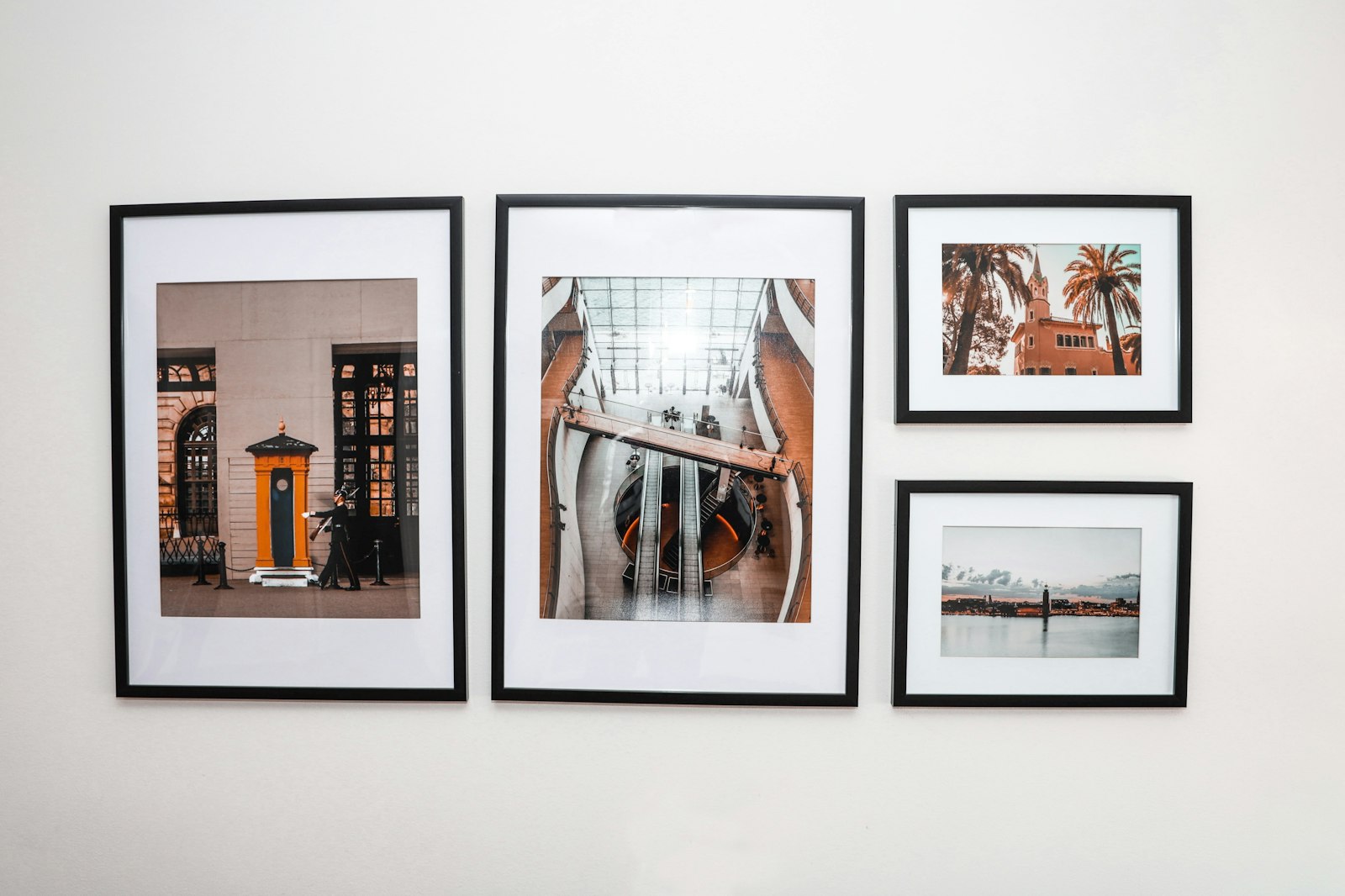
Most homes, quite genuinely, accumulate art faster than they ever get around to framing it properly — prints bought on holiday, photographs worth printing properly, a child’s drawing that deserves better than a fridge magnet, all stacked in a drawer or a cardboard tube, waiting indefinitely for a trip to a framer that never quite happens. A dedicated home print and framing room solves this not by making framing faster, exactly, but by making it possible at all, removing the friction of setting up and packing away a mat cutter and glass every single time. For a household that genuinely collects and displays art, the space earns its keep quickly.
What the Room Actually Needs to Do
A framing room is, at its core, a workshop, and it should be planned with the same practicality given to any other workspace in the home rather than treated as an extension of a study or a spare bedroom. The essential functions, in practice, are flat storage for unframed prints and finished pieces awaiting hanging, a clean, well-lit surface for cutting mats and assembling frames, and secure storage for glass, blades and adhesives kept safely away from children or pets. Without these three basics planned in from the start, the room tends to default back into general storage, with framing equipment competing for space with everything else that has nowhere better to go.
Flat Storage: The Detail Most Rooms Get Wrong
Prints and unframed artwork need to be stored flat, not rolled or stacked loosely, to avoid the cockling and creasing that ruins paper over time. A shallow plan-chest style cabinet, with wide, thin drawers sized for the largest prints likely to pass through the room, is the single most useful piece of furniture a framing room can have, and it is worth sizing generously from the start, since a collection of prints tends to grow faster than most people expect once framing becomes genuinely convenient. This kind of purpose-built flat storage is the direct equivalent, for paper and prints, of the considered shelving discussed in our piece on the considered home pottery studio, where storage was similarly built around the specific physical demands of the material being worked with.
The Working Surface and Lighting
A generous, self-healing cutting mat surface, at a comfortable standing or high-stool height, makes the single biggest difference to how enjoyable the actual framing work is. Lighting matters enormously here and is frequently underspecified — mat cutting and glass handling both demand strong, even, shadow-free light directly over the work surface, closer to the standard expected in a proper craft studio than the softer ambient light suited to a living space. A single warm pendant, however attractive, is rarely sufficient on its own; a dedicated task light, ideally on an adjustable arm, positioned directly over the cutting surface, does the actual work of making fine, accurate cuts possible.
Essentials for a Home Framing Setup
- Flat-file storage sized for the largest prints likely to be framed.
- A dedicated cutting surface with strong, adjustable task lighting.
- Secure, separated storage for glass and blades.
- Wall space or an easel for viewing a piece framed before final hanging.
Displaying Work in Progress
One detail that separates a genuinely well-designed framing room from a purely functional one is somewhere to lean or hang a piece once framed, before it is moved to its final position elsewhere in the home. A simple picture rail or a section of blank wall reserved for this purpose lets a finished frame be assessed properly against a neutral background, at the correct viewing height, rather than judged awkwardly propped against a skirting board. This same attention to final presentation is worth reading alongside our piece on the considered home reading and study room, since both spaces share the same underlying idea — a room built for a slow, careful craft deserves to be finished with the same care as the work produced within it.
“People think a framing room is a luxury,” one Singapore collector told us. “It’s really just the thing that stops art living in a cardboard tube for three years.”
Framing Materials and Local Humidity
Singapore’s humidity has a direct bearing on how framing should be approached at home, and it is worth understanding before assembling a single frame. Conservation-grade mat board and a proper moisture barrier behind the print matter considerably more here than in a drier climate, since ordinary board can develop foxing and discolour within a few years in sustained humidity, even behind glass. Silica gel sachets tucked discreetly into the back of a frame, changed periodically, are a small, inexpensive precaution worth taking as standard practice for any piece considered genuinely valuable, whether financially or sentimentally. Glass choice matters too — a UV-filtering glass or acrylic protects prints from the fading that Singapore’s intense daylight causes far faster than in more temperate latitudes, and it is worth specifying as the default rather than an optional upgrade for anything hung in a room with direct or even indirect natural light.
A Room Worth the Modest Investment
A home framing and print room does not need to be large — a well-organised alcove or a converted corner of a study can do the job just as well as a dedicated room, provided the storage, surface and lighting fundamentals are properly addressed. What it delivers, in exchange for a relatively modest investment, is the removal of the single biggest barrier between art bought or made and art actually seen on a wall. For any household building a genuine collection, it belongs on the shortlist of Homes & Culture renovation ideas worth taking seriously, precisely because it solves a problem so many homes quietly live with for years without ever quite naming it. Once the room exists and the friction of framing genuinely disappears, most households find the walls fill in far faster than they expected, and the tubes and drawers that once held unframed prints indefinitely finally, quietly, empty out for good, replaced by walls that actually tell the story of what a household has collected, made and gathered over the years.
Priya tours the homes most people only glimpse from the road, and asks how they are really lived in.