How to Choose the Right Study Lighting
Good study lighting is felt rather than seen, easing hours of reading and screen work without ever drawing attention to the fittings themselves.
 By Priya Nair
31 August 2026 · 6 min read
By Priya Nair
31 August 2026 · 6 min read

A study is one of the few rooms in a home where lighting directly affects performance rather than simply mood. Poorly lit, a study makes reading tire the eyes faster, video calls look washed out or shadowed, and screen glare force an awkward hunch toward the keyboard. Well lit, the same room disappears into the background of the work being done in it — which, for a room whose entire purpose is concentration, is precisely the right outcome.
Start with layers, not a single fitting
The mistake most studies make is relying on a single central ceiling light to do every job at once — general illumination, task lighting for reading, and screen-friendly ambience for calls. No single fitting does all three well. A properly lit study layers at least three sources: general ambient light for the room as a whole, focused task light at the desk for reading and close work, and a softer accent light elsewhere in the room to prevent the harsh contrast that comes from one bright pool of light in an otherwise dark room. This layered approach is covered more broadly in our guide to the art of layered lighting, much of which applies directly to a study.
The three layers, applied to a study specifically
- Ambient — a dimmable ceiling fitting or wall-mounted uplight, kept low enough not to compete with the task lamp during focused work.
- Task — a dedicated desk lamp positioned to avoid casting a shadow from the writing or dominant hand, ideally with adjustable colour temperature.
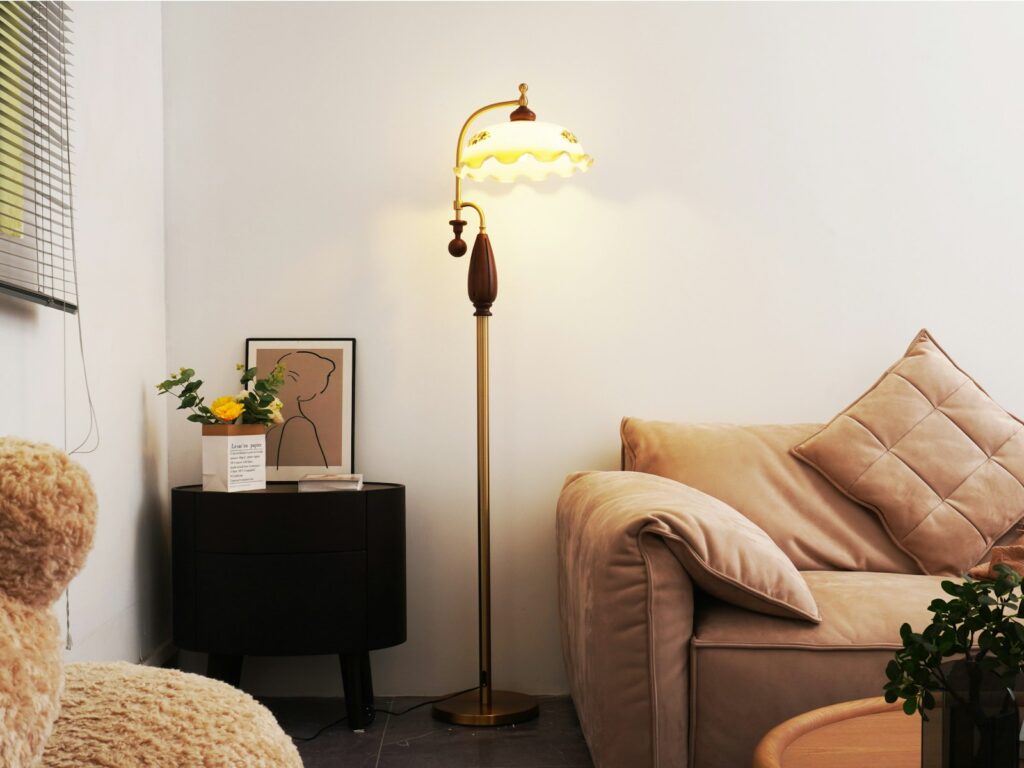
- Accent — a floor or shelf-mounted lamp elsewhere in the room, softening the contrast between the bright desk area and a darker room beyond it.
Colour temperature and the time of day
Cooler, bluer light — around 4000 to 5000 kelvin — genuinely aids concentration and alertness during focused daytime work, which is why many task lamps default to this range. But the same cool light late in the evening can disrupt the wind-down that ought to happen before sleep, particularly for anyone using a study into the night. A task lamp with adjustable colour temperature, shifting from cooler daytime light to a warmer evening tone, is a genuinely useful feature rather than a gimmick for anyone who works irregular hours from home.
Solving glare before it becomes a habit
Screen glare is the most common lighting complaint in home studies, and it is almost always solvable with fitting position rather than screen settings. A desk lamp or ceiling fitting positioned directly behind a monitor, reflecting off the glass, forces the eyes to work harder without the user ever quite identifying why. The fix is simple in principle — position the primary light source to the side of the monitor rather than behind it, and choose a desk lamp with a shade that directs light downward onto the desk surface rather than outward into the room. Glare and placement matter just as much in a smaller, wetter room, as our guide to choosing the right bathroom lighting explains.
Matte rather than glossy desk surfaces help considerably too — a high-gloss desktop can bounce overhead light directly into the eyes in a way a matte timber or fabric-topped surface simply does not. For anyone working from a glass or lacquered desk, a large matte desk pad solves most of the residual glare that repositioning fittings alone cannot fix, at a fraction of the cost of replacing the desk itself.
“Most people fix their posture before they fix their lighting, when it’s usually the lighting causing the strain that made them slouch toward the screen in the first place,” says one Singapore-based lighting designer who consults on home office fit-outs.
Natural light and where to sit relative to it
Daylight remains the best light source for a study when it is available, but position matters enormously. A desk facing directly into a window creates constant glare and eye strain from staring into bright light; a desk with its back to a window creates strong screen glare from behind. The generally preferred position is perpendicular to the main window, so daylight falls across the desk from the side without directly hitting the eyes or the screen. Blinds or sheer curtains that soften direct sun without blocking the room entirely give the most control across a full working day, particularly relevant in Singapore where direct sun can be intense for several hours regardless of orientation.
Adjustable shading matters as much as glazing type here. A motorised or manually adjustable blind allows the same desk position to work through very different conditions across a single day — filtered morning light, harsher midday sun, and softer late-afternoon light — without needing to relocate the desk seasonally the way a temperate-climate study might. It is a small investment that pays off daily rather than occasionally.
For a study that also functions as a reading room in the evening, the same layered approach used for a considered home reading and study room applies directly — a warm, dimmable reading lamp positioned beside a chair, separate entirely from the desk task lighting, allows the room to shift character between working hours and relaxed evening reading without needing to change fittings.
Furniture and posture, supported by light rather than working against it
Lighting and furniture choices in a study are more connected than most people assume. A well-chosen desk chair loses much of its ergonomic benefit if poor lighting causes a user to lean forward toward a glaring screen regardless of how supportive the chair is. Our piece on the considered home office chair covers seating in depth, but it is worth reading alongside this guide rather than in isolation — the two decisions genuinely reinforce or undermine each other in daily use.
Building a study that supports real work
Study lighting rewards a small amount of upfront planning far more than most home lighting decisions, because the room’s entire function depends on comfortable, glare-free, well-tempered light for hours at a stretch. Layer ambient, task and accent sources rather than relying on one fitting, choose adjustable colour temperature where the budget allows, and position the desk relative to daylight with real intention rather than convenience. For more on building considered, purposeful rooms throughout a home, visit Homes & Culture.
Priya tours the homes most people only glimpse from the road, and asks how they are really lived in.