A Weekend in Taitung
East Taiwan's quietest county rewards patience: a weekend guide to Taitung's coastline, rice valleys, and hot springs, away from the island's busier west.
 By Marcus Lim
30 August 2026 · 6 min read
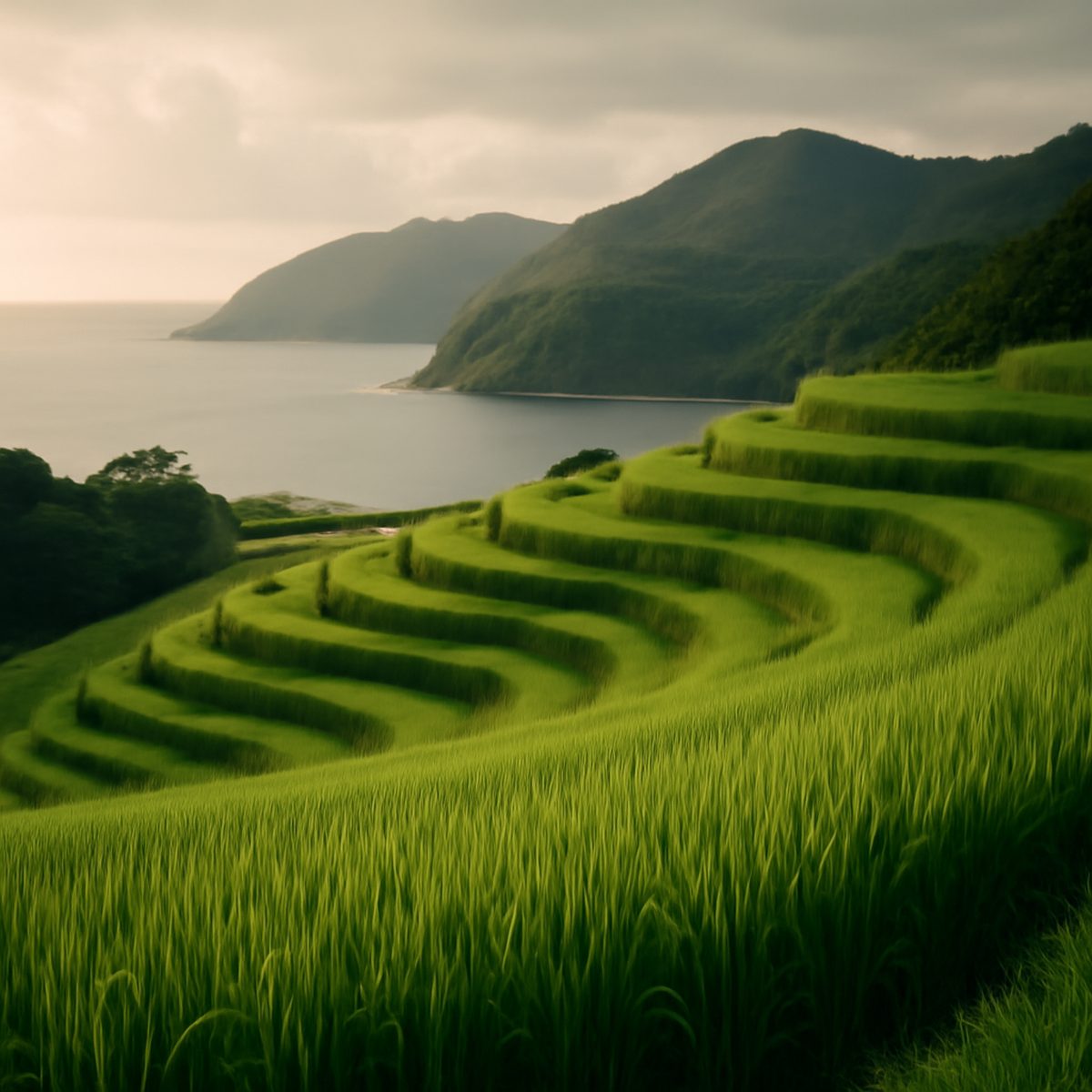
Most first-time visitors to Taiwan never make it east of the central mountains, and Taitung benefits enormously from their absence. This is the island at its slowest — a long, narrow county wedged between the Central Mountain Range and the Pacific, its economy still built more on rice and betel nut than tourism, and its pace correspondingly unhurried. A weekend here feels less like a city break and more like a genuine change of register.
Getting Oriented
Taitung City itself is small and does not pretend otherwise — most visitors use it as a base rather than a destination, staying a night or two before fanning out into the surrounding valleys and coastline. The county’s real appeal lies in the Rift Valley running north from the city, where rice paddies terrace the land between two parallel mountain ranges in a view that changes character completely with the seasons — vivid green in summer, gold before harvest, and briefly flooded and mirror-still in the weeks after planting.
A direct flight from Taipei covers the distance in under an hour, though the slower rail journey along the east coast — hugging cliffs and river mouths for much of the route — is arguably the better introduction to the region, given how much of Taitung’s character is bound up in its landscape.
The Rift Valley and Its Rice Country
Cycling is the standard way to explore the valley, and for good reason: the roads are flat, largely empty, and threaded between paddies with almost no commercial development to interrupt the view. A single stretch near Chishang has become quietly famous for exactly this reason — a wide, open rice field with a solitary tree at its centre that has become something of an unofficial symbol for the whole region. It photographs well, but the better experience is simply cycling past it slowly on a weekday morning with no one else around.
Hot Springs and the Coast
Taitung’s Pacific coastline runs largely undeveloped, a deliberate contrast to the resort-dense west coast of the island, and a handful of hot spring towns sit tucked into the hills just inland from it. These springs draw a very different crowd from Japan’s more famous onsen — smaller, quieter, and generally attached to modest guesthouses rather than grand resort hotels — but the mineral water itself is every bit as good, and considerably less crowded on a typical weekend. Travellers who enjoy this style of bathing culture more broadly might also appreciate the onsen ryokan worth the journey for a sense of how the tradition varies across the wider region.
Along the coast itself, a string of small fishing towns offer some of the freshest seafood in Taiwan, served without ceremony in family-run operations that have fed the same coastal communities for decades. This is not a region that performs luxury in any conventional sense; its appeal is in the quality of the raw ingredients and the total absence of pretence around them.
The road south from Taitung City toward Kenting is itself worth treating as a destination rather than a route, hugging cliffs with the Pacific opening out on one side and terraced farmland climbing the hills on the other. Frequent unmarked pull-offs give access to small, largely empty beaches that see a fraction of the visitor numbers found on the island’s west coast, and a rented scooter or car with no fixed schedule remains the best way to work this stretch of coastline properly.
A Simple Two-Day Itinerary
- Day one: arrive in Taitung City, drive or cycle the Rift Valley towards Chishang, stay overnight near the hot springs.
- Day two: explore the coastal road south, stopping at fishing towns for lunch, before returning to the city for an evening flight.
Indigenous Culture and Craft
Taitung holds one of the highest concentrations of Taiwan’s indigenous Austronesian communities, and this shapes the county in ways that distinguish it clearly from the rest of the island. Several villages along the coast and in the foothills maintain traditions — harvest festivals, distinctive weaving and woodcarving, communal singing styles unlike anything found in Han Chinese Taiwan — that are increasingly, and respectfully, opening to visitors through small community-run cultural centres and craft workshops. This is not staged spectacle; it is closer to genuine cultural continuity, and travellers who take the time to visit one of these centres tend to come away with a far richer sense of Taiwan’s actual diversity than a week spent entirely in Taipei ever provides.
Local markets reflect this same layering of culture, with indigenous produce and preparation techniques sitting alongside more familiar Taiwanese street food. A weekend market in Taitung City is a far better introduction to this blend than any restaurant menu, offering the kind of unfiltered, working-town atmosphere that has mostly disappeared from Taiwan’s larger cities.
The county also hosts a summer arts and music event on its coast that has grown considerably over the past decade, drawing performers to a stretch of beach otherwise left almost entirely alone. Timing a visit around it is worth considering for travellers who enjoy a bit more activity than the region’s usual quiet pace, though the crowds it brings are still modest by the standards of most regional festivals.
Why It Rewards a Slower Trip
Taitung is easy to underrate on paper — it has no single headline attraction to compete with Taipei’s night markets or Kenting’s beaches. Its appeal is cumulative rather than singular: the quality of the light over the rice terraces, the total quiet of a coastal road at dusk, the sense of having found a corner of Taiwan that has not yet been fully discovered by its own capital. For travellers exploring the wider island beyond its more obvious circuits, the best autumn escapes in Taiwan offers useful context on how Taitung fits into a longer, more considered Taiwan itinerary.
For more on where else in the region rewards this kind of unhurried travel, browse the wider Travel & Stays archive — Taitung is a strong argument for the case that the best weekends are rarely the ones with the fullest itineraries.
Marcus writes on travel and hospitality across Asia, and is happiest a long way from a lobby.