A Weekend in Da Nang
Once treated as a stopover on the way to Hoi An, Da Nang has quietly become a destination worth its own weekend. Here is how to spend it properly.
 By Marcus Lim
29 August 2026 · 6 min read

For years, Da Nang existed in most travellers’ itineraries as a functional stepping stone: the airport you flew into on the way to Hoi An’s lantern-lit old town, twenty-five minutes down the coast. That has changed considerably. The city has grown into a genuine destination of its own — a long, clean curve of beach, a skyline that has modernised without entirely losing its character, and a set of hills and pagodas within easy reach that reward a proper weekend rather than a rushed afternoon between transfers.
Friday evening: the beach and the bridge
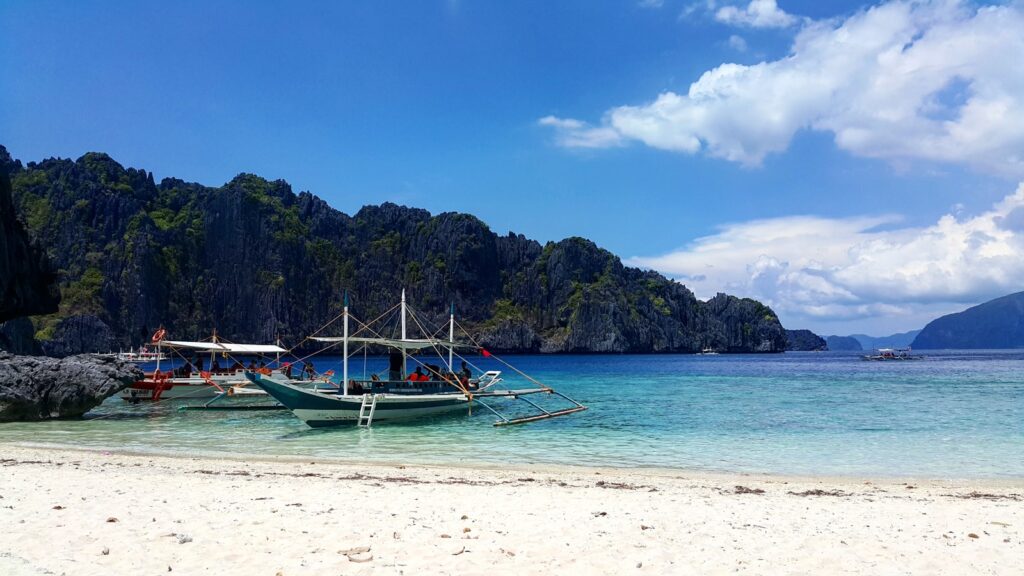
Da Nang’s My Khe beach runs for several kilometres of genuinely good sand, considerably less developed than equivalent stretches in Thailand or Bali, and worth an evening walk on arrival simply to get a feel for the city’s scale and rhythm. As the light fades, head toward the Han River, where the city’s dragon bridge — one of the more theatrical pieces of civic infrastructure in the region — breathes fire on weekend evenings, a small, unapologetically fun spectacle that locals turn out for as readily as visitors do.
Settle into dinner at a riverside restaurant for the city’s central Vietnamese seafood, built around the freshest possible catch and a lighter hand with spice than you will find further south. A composite riverside spot, family-run for two generations, does an excellent version of the region’s signature grilled fish wrapped in banana leaf, worth ordering alongside a round of the local rice wine.
Saturday: the marble mountains and the hills above the city
Set aside the morning for the Marble Mountains, a cluster of limestone and marble hills just south of the city, riddled with caves, Buddhist sanctuaries, and pagodas built directly into the rock. Climbing through the caves — some requiring a scramble, others accessible by a paved path — offers a genuinely different texture of sightseeing from the beach below, and the views from the upper viewpoints across the coastline are worth the climb alone.
In the afternoon, head into the hills above the city for cooler air and a change of pace. The Ba Na Hills complex, reached by a long cable car, has become a significant draw for its elevated gardens and French colonial-era architecture reconstructed at altitude; it is unapologetically touristic, but the view from the top, weather permitting, is genuinely spectacular, and worth the crowds if you go early.
A short weekend shortlist
- An early walk along My Khe beach before the day’s heat sets in
- A morning at the Marble Mountains, ideally before the tour buses arrive
- A slow riverside seafood dinner on the first night
- A short excursion north or south to compare Da Nang against its more famous neighbours
“Everyone used to ask how to get to Hoi An fastest,” a Da Nang-based guide told us. “Now they’re asking what else there is to do here, and there’s finally a real answer.”
Sunday: the old town, without the rush
Rather than a rushed day trip to Hoi An, consider it as a slower half-day extension of the weekend, timed for the late afternoon and early evening when the lantern-lit old town takes on its best light and the day-trip crowds from Da Nang have largely thinned out. Our guide to a weekend in Hoi An covers the town in full, and pairs naturally with a Da Nang base for travellers who want the beach infrastructure of the larger city alongside the old town’s charm.
For those building a longer central Vietnam itinerary, Da Nang’s improved hotel infrastructure — including a genuine wave of well-designed properties along the coastline — has made it a sensible base for exploring the wider region, our piece on Vietnam’s new design hotels, Hoi An to Da Nang covers the specific properties worth considering. Those continuing south should also read our notes on forty-eight hours in Ho Chi Minh City for the contrast between the country’s laid-back centre and its considerably faster-paced south.
Making the case for staying, not just passing through
What sets Da Nang apart from Vietnam’s bigger cities
Compared with the density and pace of Ho Chi Minh City or Hanoi, Da Nang offers something genuinely different: a mid-sized coastal city with real infrastructure but none of the chaos, wide boulevards along the waterfront that make for an easy evening walk, and a manageable scale that means most of the city’s highlights sit within a twenty-minute drive of each other. This makes it an unusually relaxed base for a short break, particularly for travellers who find Vietnam’s larger cities exhilarating but exhausting in equal measure. The city’s growing food scene has also begun to draw its own attention independent of the beach and hills, with a new generation of restaurants reinterpreting central Vietnamese classics — the region’s distinct noodle dishes, its lighter approach to seasoning compared with the south — for a more contemporary dining room, without losing what makes the cuisine specific to this part of the country.
The city’s rapid development has not been without cost; parts of the beachfront have seen a wave of large-scale hotel construction over the past decade that has changed the skyline considerably, and travellers who remember Da Nang from a decade ago will find it a markedly different place today. On balance, though, the trade has been a reasonable one: considerably better infrastructure and a wider range of accommodation, in exchange for a beachfront that looks somewhat more built-up than it once did. For most visitors arriving fresh, without that point of comparison, the city reads simply as well-organised and increasingly sophisticated, rather than as a place that has lost something along the way.
The city’s transformation over the past decade — new beachfront hotels, a genuinely improved culinary scene, better infrastructure connecting its beach, mountain, and old-town attractions — has earned it a weekend in its own right, rather than a night bookending a trip to somewhere else. Two nights is enough to cover the essentials properly; three allows a slower pace, including a proper half-day at the beach with nothing scheduled at all, which, for a city that spent so long being treated as a mere gateway, feels like exactly the right way to finally give it its due. For more of our regional coverage, visit Travel & Stays.
Marcus writes on travel and hospitality across Asia, and is happiest a long way from a lobby.