Why the Tank Watch Never Dates
A century on, the tank watch still looks like the future's idea of restraint. Why the rectangular dress watch never dates, and how to wear one well.
 By Daniel Koh
1 September 2026 · 6 min read
By Daniel Koh
1 September 2026 · 6 min read
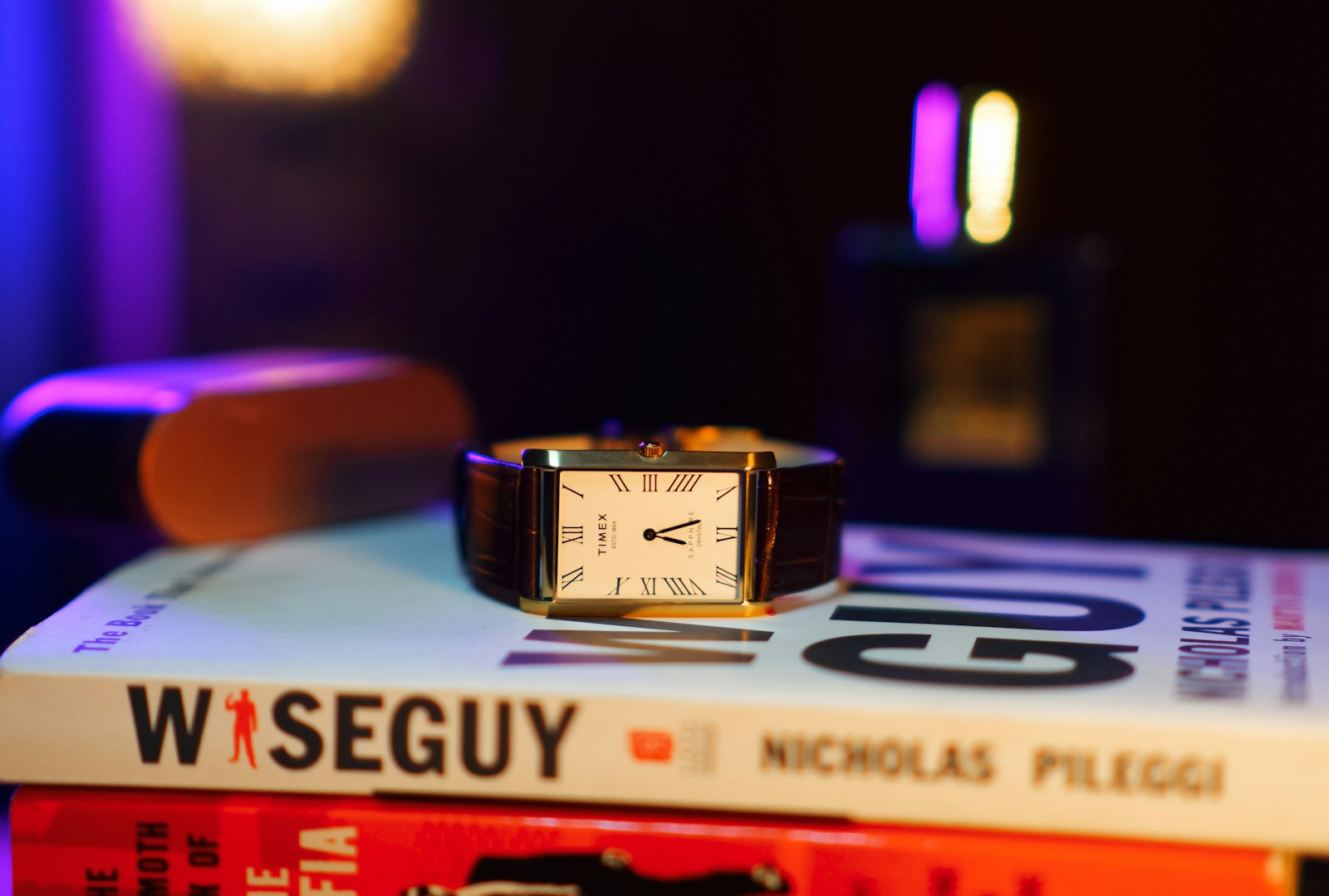
Most watches announce the decade they were made in. You can date a diver by the size of its case, a chronograph by the fashion of its dial, a sports watch by the width of its bracelet. The tank does none of this. Set a model from the 1920s beside one made last year and the family resemblance is so close that only a collector could tell them apart at a glance. In a field obsessed with novelty, the rectangular dress watch has spent a hundred years proving that the surest way to look modern is to refuse to chase the moment.
A shape borrowed from the ground up
The design story is well worn but instructive. The case was conceived to echo the tracks and hull of an armoured vehicle seen from above, the two upright bars, the brancards, standing in for the treads and the flat rectangle between them for the body. What could have been a gimmick became a grammar. Those vertical bars flow straight into the strap, so the watch reads as a single continuous line from wrist to wrist rather than a dial dropped onto a band. That unbroken geometry is the reason it sits so quietly on the wrist and photographs so cleanly on the page.
It is worth understanding how much the proportions do here, because the tank is a lesson in how case shape governs the whole character of a watch. If you have ever puzzled over watch case sizes and proportions, the tank is the clearest possible tutorial: change the ratio of length to width by a few millimetres and the elegance collapses.
Why the dial ages so slowly
Look closely and the details are almost stubbornly conservative. A rail-track minute chapter, Roman numerals, a small blued or dark seconds hand, and often a cabochon set into the crown. None of these was ever fashionable in the sense of belonging to a season; they were correct, and correct does not expire. The dial is usually silvered or white, printed rather than applied, which keeps the face flat and legible. There is no lume to yellow, no date window to unbalance the layout, no colour that will read as dated in a decade.
This is the same logic that runs through the best dress watches as a category. The dress watch is not trying to be seen from across a room. It is trying to slip under a shirt cuff and disappear until the moment you glance down, and the tank does this better than almost anything because it gives the eye nothing to snag on.
A watch that looks of no particular era is, paradoxically, the only kind that never looks out of date.
It helps, too, to remember what the tank was reacting against. It arrived when most men still carried the time in a pocket, and the wristwatch was a novelty associated with soldiers and sportsmen rather than gentlemen. A round watch on the wrist looked, to the eye of the day, like a pocket watch that had wandered onto the arm. The rectangular case was a deliberate break from that inheritance, a shape that could only ever have been designed for the wrist and owed nothing to what came before. That is why it still reads as modern a century later: it was never a translation of an older object but a genuinely new one, drawn from the world of machines and architecture rather than from the watchmaker’s traditional vocabulary of circles and Roman dials.
How it actually wears
On the wrist the tank behaves differently from a round watch of the same footprint. Because the case is longer than it is wide, it draws the eye along the arm rather than out from it, which flatters a slim wrist and sits neatly under a cuff. The flat caseback and thin profile mean it slides beneath a shirt without catching. It is the antithesis of the sports watch, and for many people it is the second watch that completes a two-piece set: a robust everyday piece for the weekend and a tank for everything that requires a jacket. Knowing which piece suits which setting is a discipline in itself, and our guide to matching a watch to an occasion sets out the principles.
That pairing is the heart of a considered collection. If you are drawn to the idea of owning less but better, the tank is a natural half of the equation, and the argument for keeping the whole thing small is one we have made before in the case for one very good watch. A dress watch you actually reach for beats three you rotate out of obligation.
Choosing one well
Several things separate a tank you will keep from one you will tire of.
- Proportion first — try it on before anything else; the right length-to-width ratio for your wrist matters more than the size on paper.
- Movement — a hand-wound or slim automatic keeps the case thin, which is the whole point.
- Dial restraint — resist added complications; the tank is at its best when the face is nearly empty.
- Strap — a fine leather strap in black or dark brown continues the line of the case; a heavy bracelet fights it.
There are many under-the-radar interpretations of the form, and the field of quietly excellent dress watches rewards the patient buyer far more than the loud end of the market does. You are not chasing a reference number here; you are choosing a shape you will wear for thirty years.
The longer view
The tank endures because it solved its problem completely and then stopped. There was nothing left to improve, so the watch simply carried on, decade after decade, quietly refusing to be redesigned. That is a rare thing in any object and rarer still in one worn on the body, where fashion usually has the last word. To wear a tank is to opt out of the argument entirely, and there is a deep calm in that. It is the whole philosophy of the style and watches pages in a single rectangle: choose the thing that was right to begin with, and let time do the rest.
Daniel has spent fifteen years arguing that the best watch is the one you never take off.