Why Tasmania Rewards the Slow Traveller
Tasmania is an island built for slow travel, all wild coasts, ancient forests and clean, honest food. Why it rewards those who take their time to see it.
 By Marcus Lim
1 September 2026 · 5 min read

Tasmania is often treated as an afterthought to an Australian trip, a few days tacked on after the mainland cities. This is a mistake. The island rewards precisely the opposite approach: come with time, drive slowly, and let the place unfold. Roughly the size of Ireland but with a fraction of the people, Tasmania is a landscape of wild coasts, temperate rainforest older than the dinosaurs, and some of the cleanest air and freshest produce anywhere on earth. It is not a destination to be ticked off. It is one to be dwelt in. Rush it, and you see a series of car parks; give it time, and it becomes one of the most quietly rewarding places in the southern hemisphere. The travellers who love it most are almost always the ones who stayed longest and drove least.
A wilderness at hand
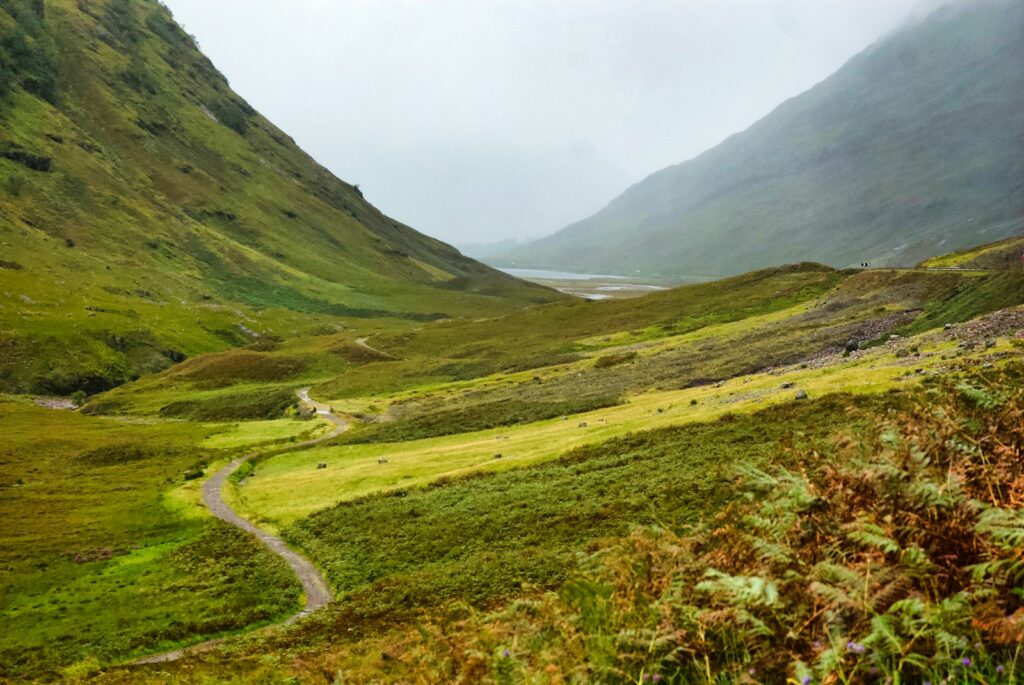
What sets Tasmania apart is how much of it is wild, and how close that wildness is. Nearly half the island is protected as national park or reserve, and you are rarely more than an hour from genuine wilderness: mountains, ancient forests of myrtle and sassafras, empty white-sand beaches on turquoise bays, and a west coast so battered by the Southern Ocean that it feels like the edge of the world. Unlike the great parks of the mainland, these are reached on quiet roads with barely another car in sight.
This makes it one of the more rewarding places anywhere for a certain kind of traveller, the sort who would rather walk a coastal track than queue for a viewpoint. It sits comfortably among the world’s national parks worth the journey, with the added grace that you can have much of it almost to yourself if you avoid the short peak season.
The case for going slowly
Distances on the map look small, but the roads wind and the temptations to stop are constant, a beach, a lookout, a roadside stall selling the day’s fruit. Trying to see the whole island in a few days means seeing it through a windscreen. Far better to pick one or two regions and go deep: the wild south-west, the east-coast bays, the highland lakes, the rich farmland of the north. Base yourself somewhere and radiate out on day walks rather than driving through.
This is Tasmania asking to be travelled the way the best places always do, and the discipline of building a proper slow travel itinerary pays off here more than almost anywhere. Leave gaps. The weather changes fast, the best days are often unplanned, and the island punishes a packed schedule.
Tasmania is not far in kilometres but far in feeling. It asks you to slow to its pace, and it gives the most to those who do.
The island’s isolation is the source of much of its character. Cut off from the mainland for thousands of years, Tasmania kept plants and animals that vanished elsewhere, which is why its forests feel so ancient and its wildlife so unfamiliar. The chance of seeing creatures found nowhere else on earth, going about their business in the dusk beside a quiet road, is one of the island’s great and underrated pleasures, and one that rewards the patient watcher rather than the hurried tourist. That same isolation shaped the people, too. Tasmanians have a self-reliant, slightly contrarian streak, and a fierce pride in their produce and their landscape that you feel in every farm gate stall and every small-town café. It is a place that has learned to make the most of what it has rather than importing what it lacks, and that quality gives it an authenticity that more polished destinations often struggle to match.
Some of the best food on earth
Cool water, clean air and rich soil make Tasmania a serious food destination, and one that is refreshingly unshowy about it. The cold Southern Ocean produces extraordinary oysters, abalone and crayfish; the pastures produce cheese, lamb and beef; the cool climate suits pinot noir and sparkling wine that hold their own against anywhere. Best of all, most of it is eaten close to where it is grown.
The pleasure is in the simplicity, and in the shortness of the chain from field to plate:
- Oysters at the source — shucked and eaten by the water where they are farmed.
- Cool-climate wine — pinot noir and sparkling from small vineyards you can visit.
- Cheese and produce — bought at the farm gate and eaten on a beach.
- A long table lunch — at a farm restaurant sourcing from its own paddocks.
That directness, food eaten within sight of where it was raised, is exactly the ethos behind the world’s best farm-to-table restaurants, and Tasmania delivers it almost by default rather than as a marketing exercise.
When to go, and how
Summer, from December to February, is the reliable season for warmth and long days, but it is also the busiest and the accommodation is stretched. The shoulder months on either side reward the flexible: autumn brings the turning of the deciduous beech, the fagus, one of the few native trees to change colour, while spring brings wildflowers and rushing rivers. Winter is quiet, cold and atmospheric, the season for empty highland roads and fires in the evening.
However you time it, the island rewards a certain unhurried attitude, the same one that makes any slow weekend away so restorative, only stretched across a fortnight. Drive gently, stop often, walk daily, and eat what the region grows.
The island that gives back time
What travellers take from Tasmania is rarely a checklist of sights. It is a slower pulse, a fortnight of wild coasts and long lunches and forests that feel primeval, that stays with them long after the mainland cities have blurred. That is the whole promise of the travel and stays pages: that the best journeys are not the ones that cover the most ground, but the ones that change your pace. Tasmania changes it more gently, and more completely, than almost anywhere.
Marcus writes on travel and hospitality across Asia, and is happiest a long way from a lobby.