A Guide to Luxury Rail in India
Crossing India at twelve miles an hour, by private carriage, turns out to be the most considered, unhurried way to see the whole subcontinent at all.
 By Marcus Lim
30 August 2026 · 6 min read
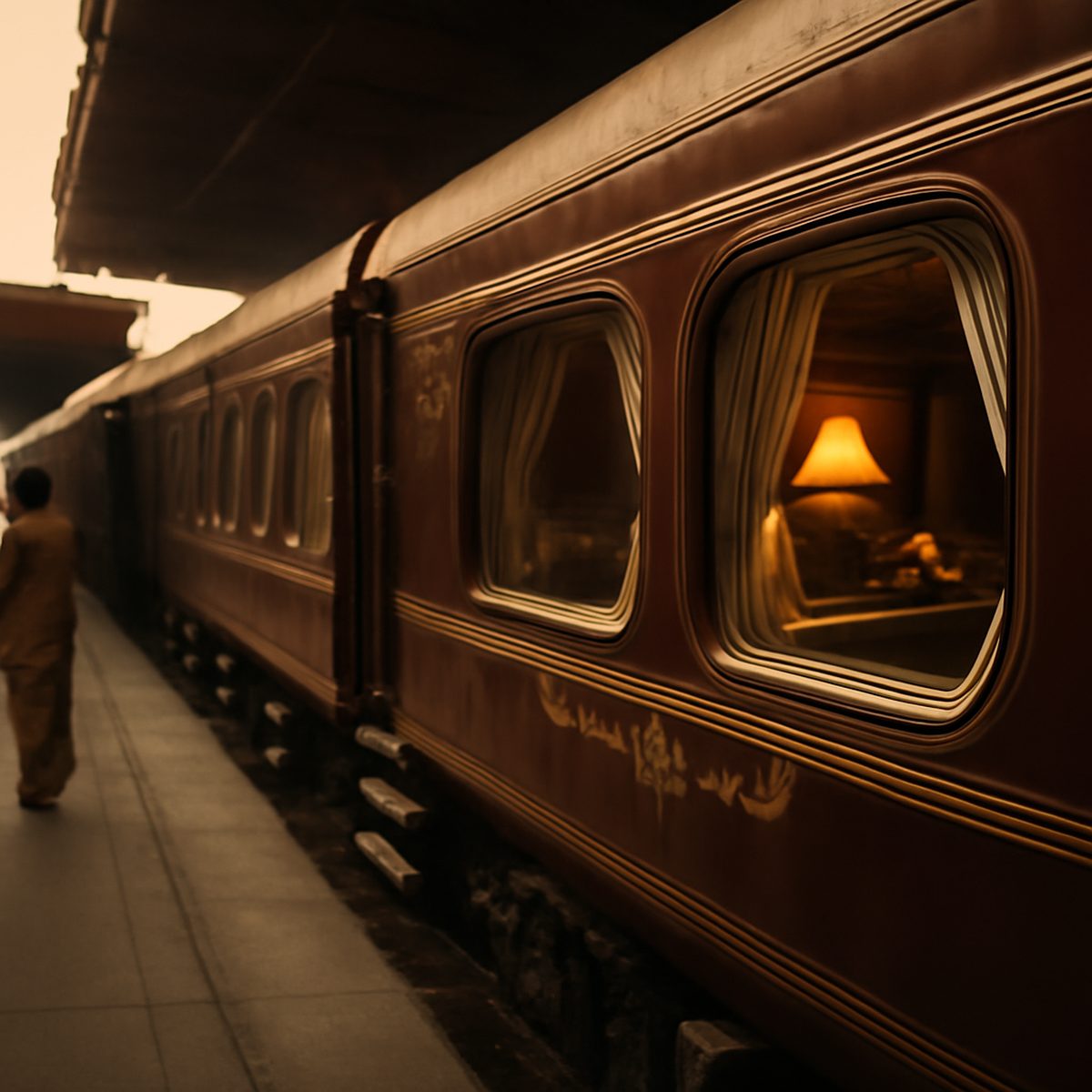
There is a particular hour, somewhere after the second cup of chai and before the first proper meal of the day, when a luxury train through India stops feeling like transport and starts feeling like a stationary hotel that happens to be moving. The dunes have given way to scrubland, a herd of goats has scattered from the tracks, and someone in a cream linen jacket is reading the newspaper two carriages down. This is the particular magic of rail travel in India: it does not rush you towards a destination so much as it lets the country reveal itself at the speed it deserves.
Why the train, and not the car
India rewards patience in a way few other places do. A private driver can get you from fort to fort in reasonable comfort, but the road trip flattens the country into a series of arrivals and departures, punctuated by traffic. The train does the opposite. It slows the whole exercise down to the rhythm of the rails, and in doing so it turns the journey itself into the destination — not unlike the great railway journeys that first made rail travel feel like an occasion rather than a chore. On a heritage carriage, breakfast is served as the plains scroll past the window; dinner arrives somewhere near a fort that has stood since before the concept of a timetable existed.
Choosing a route worth the fortnight
There are a handful of named luxury trains that have shaped the modern idea of Indian rail travel — the Maharajas’ Express among the best known, running variations on a loop through Rajasthan’s forts and palaces. Rather than treat any one operator as gospel, it is worth thinking in terms of routes and seasons instead. The desert circuit through Rajasthan is the classic introduction: painted havelis, lake palaces, and a procession of forts that seem to have been built specifically to be photographed at golden hour. A quieter, less-travelled option follows the Deccan south, trading fortresses for temple towns and coffee estates. Consider:
- Rajasthan’s fort circuit for first-time visitors, ideally in the cooler months between November and February
- The southern Deccan route for returning travellers who have done the forts and want temples, textiles and hill stations instead
- A combined rail-and-stay itinerary that breaks the journey with two or three nights in a single palace hotel rather than one night in five
What a typical carriage actually offers
Cabins on the better heritage trains run larger than most people expect — closer to a compact hotel room than a sleeper berth, with proper beds, en-suite bathrooms and windows built for watching the country go by. The dining car does the heavy lifting of the day: multi-course meals built around regional specialities, changing as the train crosses from one state’s cuisine into the next. An observation car at the rear, often open-air, is where the real conversations happen, usually over a whisky as the light goes copper over the fields.
“You stop checking your watch by the second day,” a Singapore-based collector told us after her own crossing. “The train tells you when it’s time to eat, and the landscape tells you when it’s time to look up.”
The etiquette worth knowing before you board
Dress on board tends towards smart-casual by day and something a touch more considered for dinner — not black tie, but not shorts either. Tipping is customary and usually pooled for the crew rather than handed individually. Photography of fellow guests should always be asked for first, and the same courtesy extends to staff, many of whom have spent decades on these lines and have stories worth more than a candid shot. Mobile signal is patchy by design in the more remote stretches, which is, if anything, the point.
Pairing the journey with the rest of the trip
Few travellers do a rail crossing in isolation. It works best bookended by a few days in Delhi or Mumbai to acclimatise, and closed out with a slower stay somewhere the train does not reach — a lake palace, a wildlife reserve, or simply a quiet hotel with a courtyard and nowhere to be. Those planning a longer subcontinental itinerary sometimes fold the rail leg into a wider multi-stop journey, treating India as one considered chapter within our broader Travel & Stays coverage rather than the whole book. It is also, for anyone who has fallen for the romance of the rails before, a natural companion to a grand European rail trip or the newer wave of overnight sleeper trains reshaping travel across Asia — different continents, same underlying pleasure of a landscape unrolling at a human pace.
What the days actually look like
A typical day on a heritage crossing begins early, before the heat properly sets in. The train pulls into a siding near a fort or a lake palace, and the day is spent off the carriage entirely — a guided walk through a walled old town, a private viewing of a palace courtyard before the coach parties arrive, perhaps a folk performance arranged in a garden nobody else has access to. By late afternoon the group is back on board, and the train pulls away as the light goes gold, dinner already being laid in the dining car. It is a rhythm that rewards travellers willing to hand over the itinerary entirely rather than negotiate it stop by stop, and after a day or two, most guests stop trying.
Who a rail crossing actually suits
This is not, despite appearances, only for retirees with time on their hands. Couples marking an anniversary, small groups of friends splitting a private cabin block, and solo travellers drawn by the built-in company of a shared dining car all make up a fair share of any given departure. What unites them is less an age bracket than a temperament: a preference for depth over ground covered, and a genuine comfort with structure. Anyone who finds a fixed itinerary claustrophobic on a normal holiday should look elsewhere; anyone who finds it a relief, rather than a compromise, tends to leave a rail crossing already planning the next one.
When to go, and how long to give it
The window between late October and early March is the sensible one, when daytime temperatures across most of the country sit in the comfortable range and the light does its best work in the early morning and late afternoon. A week is the minimum for any single circuit to feel unhurried; two allows for a proper stay at either end. Book early — the better carriages run limited departures each season, and the good cabins go first. What you are buying, ultimately, is not a faster way to see India. It is a slower one, and in a country this layered, slow turns out to be exactly right.
Marcus writes on travel and hospitality across Asia, and is happiest a long way from a lobby.