How to Wear Brown Shoes With Confidence
Brown shoes do far more work in a wardrobe than most men give them credit for. Here is how to wear them with real confidence, not just permission.
 By Daniel Koh
29 August 2026 · 6 min read
By Daniel Koh
29 August 2026 · 6 min read

There was a time when brown shoes carried a set of rigid, largely inherited rules — never after six, never with a black suit, never in the city. Most of these rules have quietly dissolved over the past two decades, and what remains is a far more useful, far simpler principle: brown shoes work with almost everything except true black, and they often work better than black does, particularly in daylight and in warmer climates.
The One Rule Worth Keeping
Brown and black genuinely do not mix well, and this is the one piece of old advice still worth respecting. A black suit calls for black shoes, full stop — the contrast otherwise reads as an accident rather than a choice. Every other combination is more flexible than most men assume, and navy, grey and brown suits all pair comfortably with a good brown shoe, often to considerably better effect than the more expected black.
Choosing the Right Shade
Not all browns behave the same way. A dark chocolate or oxblood shoe reads almost as formal as black and works well with a navy or charcoal suit for business settings. A mid-tan or chestnut shoe is more casual by nature and pairs beautifully with grey flannel, chinos, or a navy blazer for smart-casual occasions. The lighter the shoe, generally, the more relaxed the overall look — a useful dial to adjust depending on the formality of the day ahead.
A useful mental model is to think of brown as a spectrum rather than a single colour choice, running from near-black oxblood at the formal end through to a pale tan at the most casual. Owning two or three points along this spectrum, rather than a single all-purpose brown, allows far more precise matching to any given outfit than most men initially expect from what looks, at a glance, like a fairly narrow colour category. The same tonal thinking extends well beyond footwear, as our guide on how to wear earth tones with confidence explains.
Suede as a Different Register Entirely
Suede brown shoes occupy their own category, softer in both texture and formality than polished leather, and they suit the more relaxed end of smart-casual dressing particularly well. A suede loafer or derby reads as noticeably more casual than its leather equivalent in the same shade, which makes it a useful addition once the polished leather basics are established, rather than a starting point. Suede does demand more careful maintenance against rain and spills, a genuine consideration in Singapore’s climate, and a protective spray is worth applying before the first wear rather than after the first mark appears.
Matching Leather Accessories
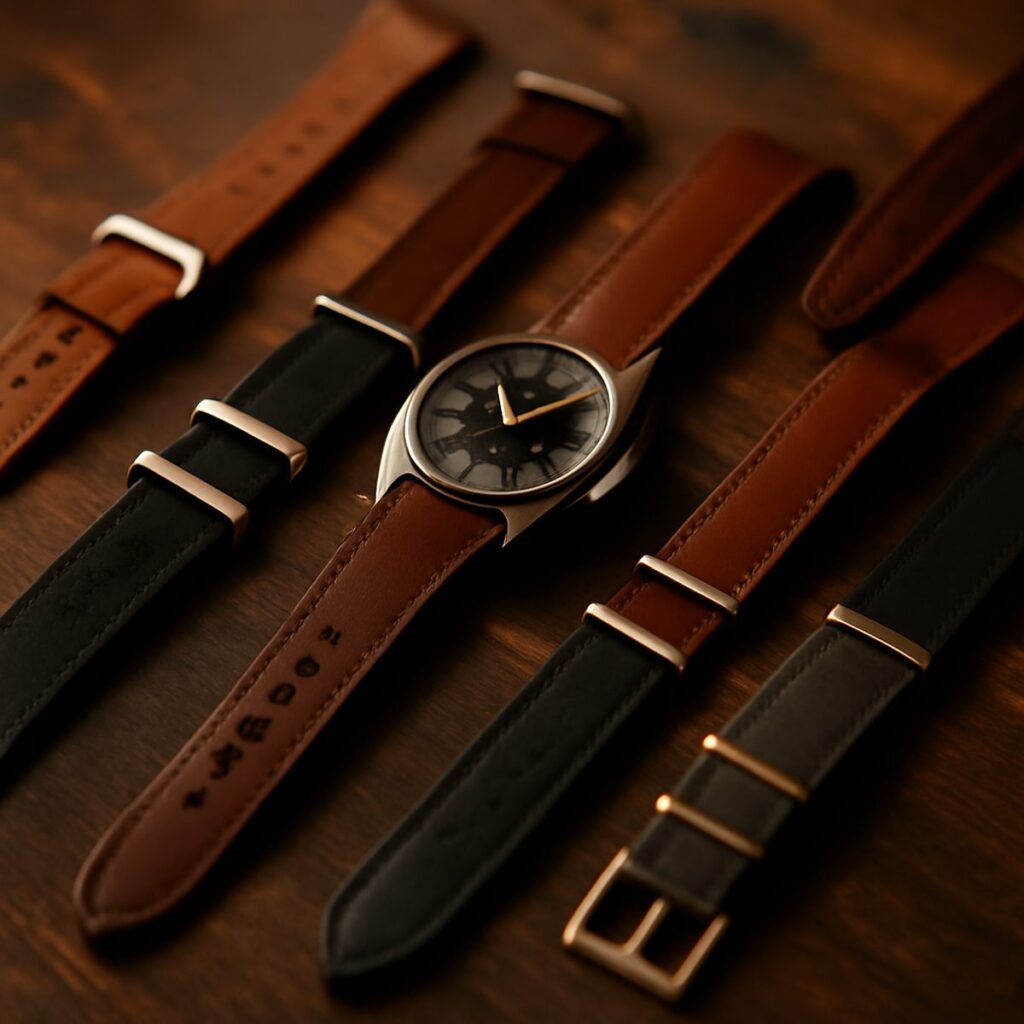
The detail that separates a genuinely well-put-together outfit from a merely adequate one is consistency across leather accessories. A brown shoe paired with a black belt is a small but noticeable mismatch, and the same applies to a watch strap or a briefcase. It is not necessary to match the exact shade precisely — that level of precision can look try-hard — but staying broadly within the same tonal family, warm browns together or cool blacks together, reads as considerably more deliberate.
A Few Combinations Worth Trying
- Dark brown oxfords with a charcoal suit and a burgundy tie, for business settings that still want a touch of warmth.
- Tan derbies with grey chinos and an open-collar shirt, for smart-casual daytime occasions.
- Oxblood loafers with navy trousers and a knit polo, for evening settings that call for something between formal and relaxed.
“Confidence with brown shoes comes from consistency, not boldness,” a Singapore-based tailor told us. “Match the leather tones and the rest takes care of itself.”
Caring for Brown Leather
Brown leather shows wear differently to black, developing a patina over time that many wearers actually prize rather than avoid. Regular conditioning matters more with lighter browns, which can dry out and crack visibly if neglected, whereas darker shades are somewhat more forgiving. Our guide to the details of a well-made shoe covers construction quality more broadly, and a shoe built with genuinely good leather rewards this kind of ongoing care with decades of use rather than a handful of years.
Building Toward a Full Rotation
Most men who commit to brown shoes eventually find themselves reaching for black less and less, simply because brown pairs with a wider range of what already hangs in a considered wardrobe. Building a full shoe rotation with brown as the dominant tone, rather than an occasional exception, is a reasonable long-term goal for anyone serious about dressing well. Our broader piece on how to build a shoe wardrobe covers how to sequence this kind of investment sensibly over several years rather than all at once.
The Belt and Watch Strap Question
The same logic that governs matching shoes to trousers extends naturally to a belt, and increasingly to a watch strap as well. A brown leather belt with brown shoes is the easiest, most reliable combination, and it is worth owning at least two shades — a dark chocolate for formal settings and a mid-tan for casual wear — to match the corresponding shoe. A leather watch strap in a complementary tone completes the picture, though this is one area where a slight mismatch is far more forgivable than with shoes and belt, since the watch sits at a different visual distance from the eye.
When Formality Genuinely Demands Black
None of this argues for abandoning black shoes altogether. Black tie events, funerals, and the most formal business settings still call for black, and no amount of styling confidence changes that expectation. Our guide to the art of black tie, done right covers exactly where these firmer rules still apply, distinct from the more flexible everyday guidance that governs most of a man’s actual working wardrobe.
What ultimately separates confidence from mere permission is understanding why the old rules existed in the first place, and recognising that most of them no longer apply to how men actually dress. Brown shoes are not a daring choice anymore — they are, for most situations, simply the better one. For more on building a considered wardrobe around choices like this, see our full Style & Watches section.
A Final Word on Confidence
The word “confidence” in this context is really shorthand for consistency of intent — dressing as though the choice was deliberate rather than accidental. A man who wears brown shoes because he has genuinely thought through how they work with the rest of his outfit will always look more assured than one following an outdated rule about black being the only safe option. That shift in thinking, more than any specific shoe or shade, is what actually makes the difference.
Daniel has spent fifteen years arguing that the best watch is the one you never take off.