How to Build a Travel Wardrobe
Packing well is less about fitting more in and more about choosing pieces that genuinely work across every day of a longer, more varied trip.
 By Daniel Koh
29 August 2026 · 6 min read
By Daniel Koh
29 August 2026 · 6 min read
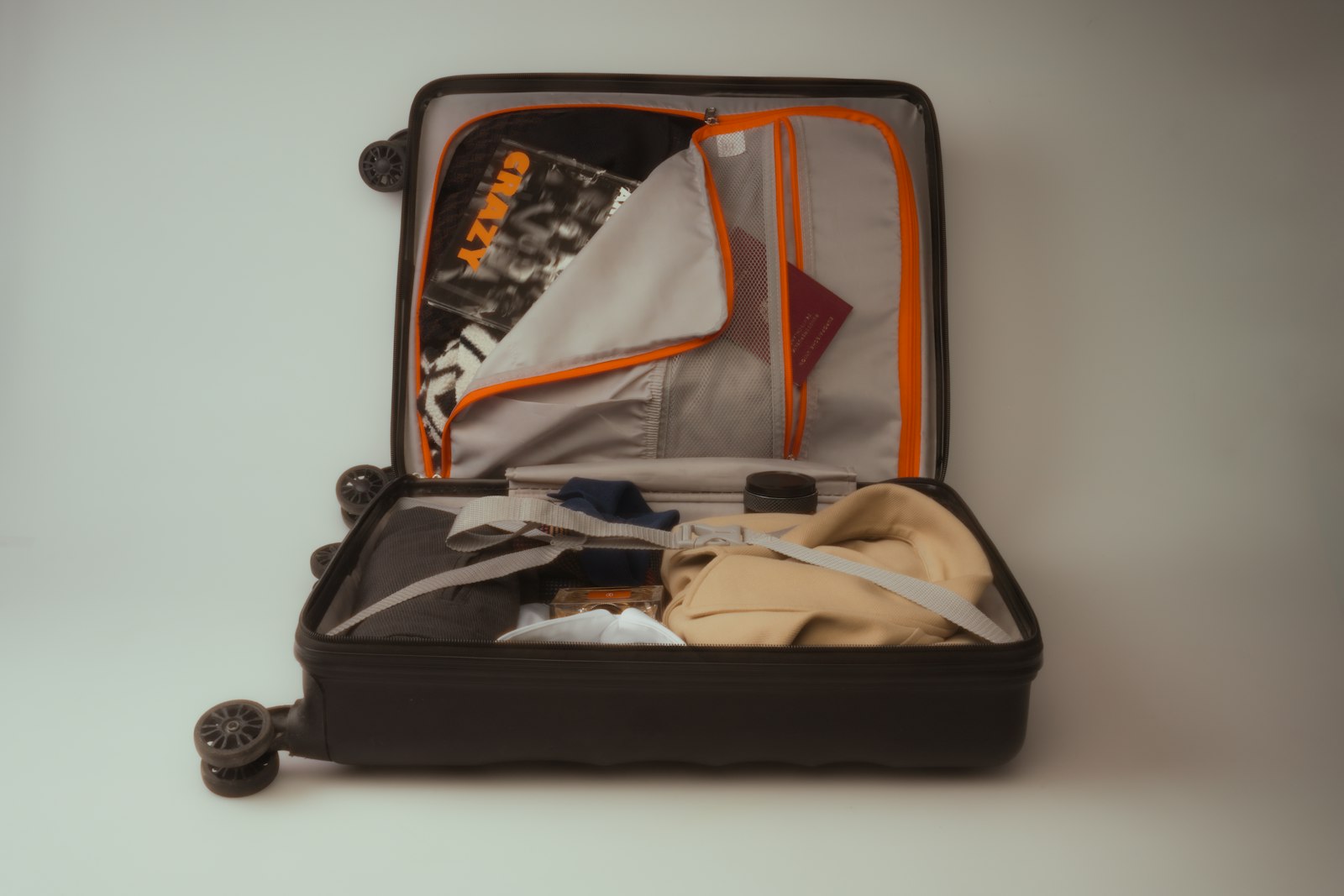
Most travel wardrobes fail for the same reason: they are built around anxiety rather than actual need, with an extra shirt packed for every conceivable scenario until the suitcase itself becomes the trip’s biggest source of stress. A genuinely good travel wardrobe works in the opposite direction, built around a small number of pieces chosen specifically for how well they combine with each other, rather than how many outfits they can theoretically produce.
Start With a Colour Palette, Not a Piece Count
The single most useful discipline in travel packing is committing to a tight, coordinated colour palette before choosing individual pieces. Navy, grey and white, with one accent colour, allow nearly every top to pair with nearly every bottom, which multiplies the number of usable outfits without multiplying the number of items in the bag. Our guide to building a ten-piece capsule wardrobe covers this principle in more general terms, and the same logic applies with even more force when every item also has to survive being folded into a suitcase.
The Core Pieces Worth Prioritising
A small number of genuinely versatile pieces do more work than a large number of specific ones. A pair of good chinos in a neutral tone, two or three oxford or lightweight shirts, a single knit layer for air-conditioned flights and cooler evenings, and one slightly smarter piece — a blazer or a good jacket — for any unexpected dinner or occasion. This core, built well, covers the vast majority of situations a considered trip is likely to produce, from a business meeting to a relaxed weekend extension.
What to Actually Pack
- Three to four tops in coordinating colours, mixing at least one smart and one casual option.
- Two bottoms maximum for trips under two weeks — chinos and one alternative.
- One layer for temperature swings between flights, air-conditioning and outdoor heat.
- A single pair of versatile shoes that work for both daytime and evening wear.
The Bag Itself Matters
A travel wardrobe is only as good as the bag carrying it, and a poorly structured bag undoes even the most carefully chosen capsule by allowing everything to crease and shift in transit. Our guide to the weekender bag, chosen well covers what to look for in a bag built specifically for this kind of considered, repeated travel, rather than a generic suitcase bought for a single trip years ago.
“The best-packed travellers I know bring less than everyone else and never look underdressed,” a Singapore-based stylist told us. “It’s entirely about how well the pieces work together, not how many there are.”
Laundry as Part of the Plan
For trips longer than a week, building in at least one laundry stop — whether a hotel service or a local laundrette — is often the difference between a workable capsule wardrobe and an overstuffed suitcase. Planning for this from the outset allows for a genuinely smaller pack, since the same core pieces can simply be worn again rather than duplicated for the sake of avoiding a wash.
Choosing Pieces That Travel Well
Fabric choice matters as much as colour coordination. Merino wool and certain technical blends resist wrinkling and odour far better than standard cotton, making them particularly well suited to multi-leg trips where ironing facilities are not guaranteed. Our guide to the best merino and technical basics covers which fabrics genuinely earn a place in a travel-specific wardrobe, as distinct from a home wardrobe where these considerations matter less.
Footwear: The Hardest Category to Pack Light
Shoes are the heaviest, bulkiest items in most suitcases, and the temptation to pack a separate pair for every occasion is where travel wardrobes most often go wrong. A genuinely versatile pair of leather sneakers or a smart loafer, capable of working for both daytime walking and a reasonably dressed-up evening, usually covers the bulk of a trip’s needs. A single additional pair — proper walking shoes for an active itinerary, or a slightly dressier option for a specific occasion — is normally the most that a well-planned trip actually requires.
Adjusting for Multi-Climate Trips
Longer, more ambitious itineraries introduce their own packing challenge, since a single capsule wardrobe rarely suits both a tropical stopover and a mountain retreat within the same trip. The general solution is layering rather than duplication — a versatile mid-layer that works across several climates, rather than a completely separate wardrobe carried for each leg of a longer journey. This principle scales surprisingly well even on trips spanning three or four continents, provided the core palette stays disciplined throughout.
Ultimately, the goal of a well-built travel wardrobe is invisibility — clothing that works so reliably it never becomes a source of friction during the trip itself. Getting there takes more upfront thought than simply packing everything that might conceivably be useful, but the payoff is a lighter bag, a calmer departure, and considerably more room for whatever gets bought along the way. For more on dressing with this kind of intent, see our full Style & Watches section.
Packing the Bag Itself
How a wardrobe is actually packed matters almost as much as what goes into it. Rolling rather than folding reduces creasing on most fabrics and makes far better use of a bag’s available space, while packing cubes keep categories separated and prevent the frustrating unpacking-everything-to-find-one-item problem that undermines an otherwise well-planned capsule. Shoes, being the heaviest and most awkwardly shaped items, are best placed at the base of the bag near the wheels or straps, both for weight distribution and to keep the rest of the wardrobe protected from any residual dirt on the soles.
Reviewing the Wardrobe After Each Trip
The best travel wardrobes are refined over several trips rather than perfected on the first attempt. Keeping a short mental note, or an actual note, of what genuinely got worn and what came home untouched is the fastest way to tighten a capsule over time, cutting the pieces that sounded useful in theory but never quite earned their space in practice. Most experienced travellers find their packing list shrinks steadily with each subsequent trip, arriving eventually at a core that rarely needs to change.
Daniel has spent fifteen years arguing that the best watch is the one you never take off.