The Best Minimalist Wallets
The pocket has finally rebelled against the bloated bifold. Here is how to choose a minimalist wallet that actually earns its keep every single day.
 By Daniel Koh
29 August 2026 · 6 min read
By Daniel Koh
29 August 2026 · 6 min read

For most of the last century, the wallet was judged by how much it could hold rather than how well it held it. Receipts, loyalty cards, a folded newspaper clipping — the bifold simply grew to accommodate the accumulation. The minimalist wallet is a quiet rebellion against that logic, and it has taken hold not because men suddenly became ascetics, but because most of what used to live in a wallet now lives on a phone. What remains — two or three cards, a little cash, perhaps an identity document — deserves an object built specifically for that smaller, more honest job.
What “Minimalist” Actually Means
The term gets applied loosely, so it is worth being precise. A genuinely minimalist wallet is not simply a smaller version of a traditional one; it is designed from first principles around a stack of cards rather than a fold of notes. The best examples hold between four and eight cards without bulging, sit flat rather than curved, and use a single, high-quality hide rather than layers of lining designed to disguise cheaper leather beneath. If you can identify individual cards by feel through the leather, the wallet is doing its job.
There are broadly three formats worth knowing: the card sleeve, which holds cards alone and pairs with a discreet money clip; the slim bifold, which folds once and keeps a compartment for notes; and the increasingly popular cardholder with a central pull-tab, which fans the cards for easy access. Each suits a different pocket and a different relationship with cash.
Leather Is Where the Money Should Go
Because a minimalist wallet is, by definition, mostly leather and stitching, the quality of both is far more exposed than in a bulkier design that can hide behind extra material. Full-grain leather, sourced from the top layer of the hide, will develop a genuine patina — darkening unevenly at the corners where thumbs meet it most often. Cheaper corrected-grain leather, by contrast, is sanded and coated to look uniform, and it will crack rather than soften over years of use. This is one accessory where the difference between good and excellent is worth paying for, since it is handled daily and seen by almost no one but its owner, which is precisely the kind of luxury this publication tends to admire.
- Check the stitching first — a saddle stitch, sewn by hand or a saddle-stitch machine, will not unravel the way a single continuous machine stitch can.
- Ask how the leather is expected to age; a wallet that promises to look identical in five years is usually using a coating rather than a hide.
- Consider the edges. Burnished, painted edges that have been sanded smooth are a small but reliable signal of care in construction.
Matching the Wallet to the Life
A wallet lives differently depending on how its owner moves through the day. Someone who travels frequently benefits from a design with a dedicated slot for a passport-adjacent card or a slim pocket for a second currency, while someone who works largely from a desk can go leaner still, since the wallet spends most of its life in a jacket rather than a trouser pocket, where thickness matters far more. It is also worth thinking about how the wallet pairs with the rest of one’s everyday carry — a slim wallet alongside a bulky set of keys defeats the purpose of either.
For men who have simplified their card use down to one or two, a genuinely tiny sleeve wallet, barely larger than the cards themselves, has become a small status symbol of its own — proof that someone has decided what they actually need and discarded the rest.
“I tell every client the same thing,” said one bespoke leather goods maker who works from a small atelier off Tanjong Pagar. “Buy the wallet that fits the life you actually live, not the one you think you should be living.”
Colour and Finish, Considered Properly
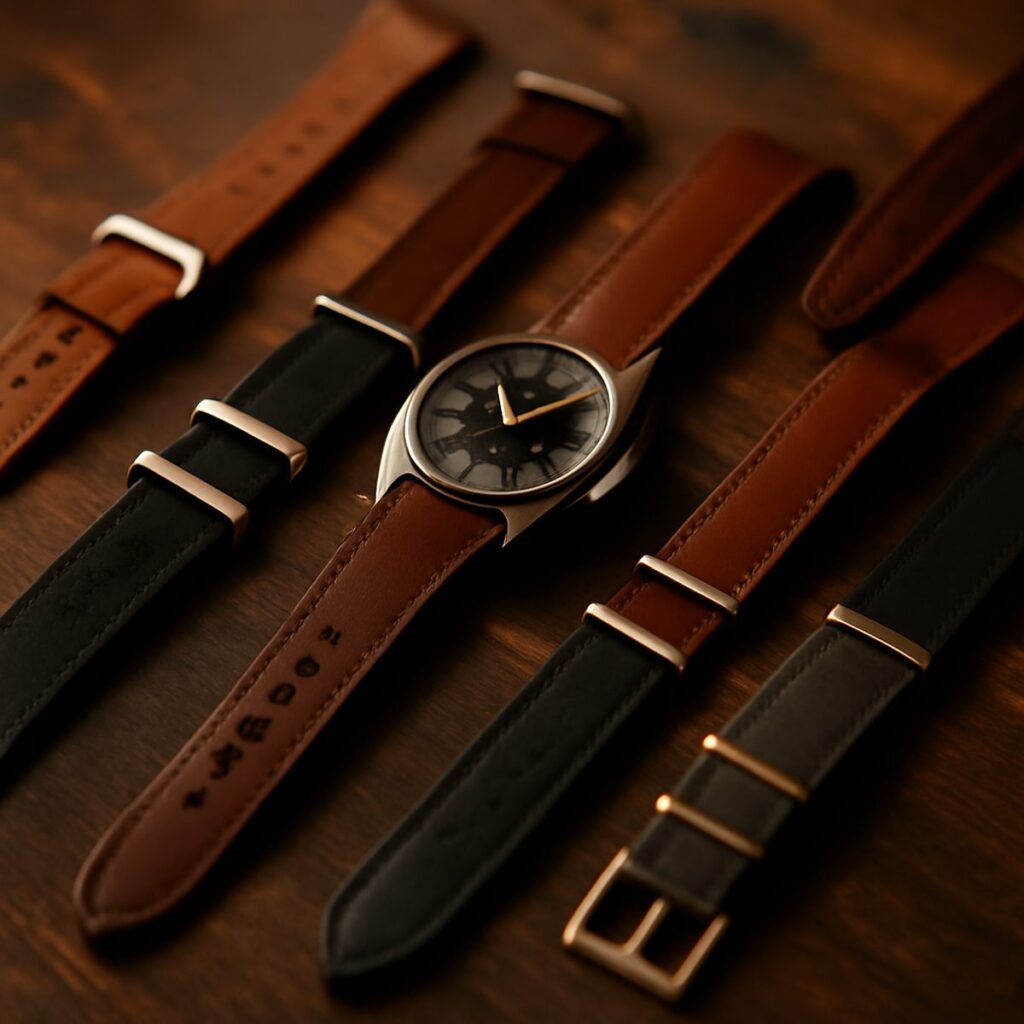
Black remains the safe, correct choice for most formal wardrobes, but a rich chestnut or cognac brown has become the more interesting option for men who want their wallet to age visibly and beautifully rather than simply wear out. Navy and deep green have also found favour recently, offering a point of quiet colour that reads as considered rather than showy — very much in keeping with how a well-chosen watch strap can introduce personality without shouting about it. Whatever the colour, matte finishes tend to age more gracefully than high-shine leathers, which can look tired rather than lived-in once the gloss wears unevenly.
What to Avoid
Steer well clear of wallets padded with unnecessary lining purely to create the illusion of substance — a minimalist wallet should feel light in the hand, not heavy with filler. Be wary, too, of RFID-blocking claims used as the sole selling point; it is a genuinely useful feature but should never substitute for good leather and construction. And resist the urge to buy the thinnest possible option purely for the sake of thinness — a wallet with absolutely no structure will not protect its cards and will crease unattractively within weeks.
The right minimalist wallet, in the end, is one that disappears into the pocket and reappears, years later, better than the day it was bought — a small daily object that rewards the modest amount of thought put into choosing it. For more on getting the small, daily details right, our Style & Watches section covers everything from straps to shoes with the same principle in mind: buy less, buy better, and let it earn its place.
A Note on Longevity
One final consideration, often overlooked in the rush to buy the sleekest silhouette: repairability. A wallet built with quality leather and honest stitching can usually be restitched or re-edged by a competent leather worker after a decade of hard use, extending its life considerably beyond the original purchase. A wallet built with glued seams and synthetic coating generally cannot — once it fails, it is replaced rather than repaired, which rather defeats the spirit of buying something considered in the first place. Ask, before buying, whether the maker offers any form of repair service. The answer tells you a great deal about how the wallet was actually built, and whether the brand expects its customers back in five years or merely hopes they will not notice the difference until then.
It is a small question to ask a shop assistant, and an even smaller one to ask yourself before parting with the money, but it separates a wallet bought for a season from one bought, quite deliberately, for the next decade of ordinary use.
Daniel has spent fifteen years arguing that the best watch is the one you never take off.