Why the Water Mill House Endures
Built where the water runs fastest, the old mill house was engineered for beauty by accident. Why the converted watermill endures as a home worth the trouble.
 By Priya Nair
1 September 2026 · 6 min read
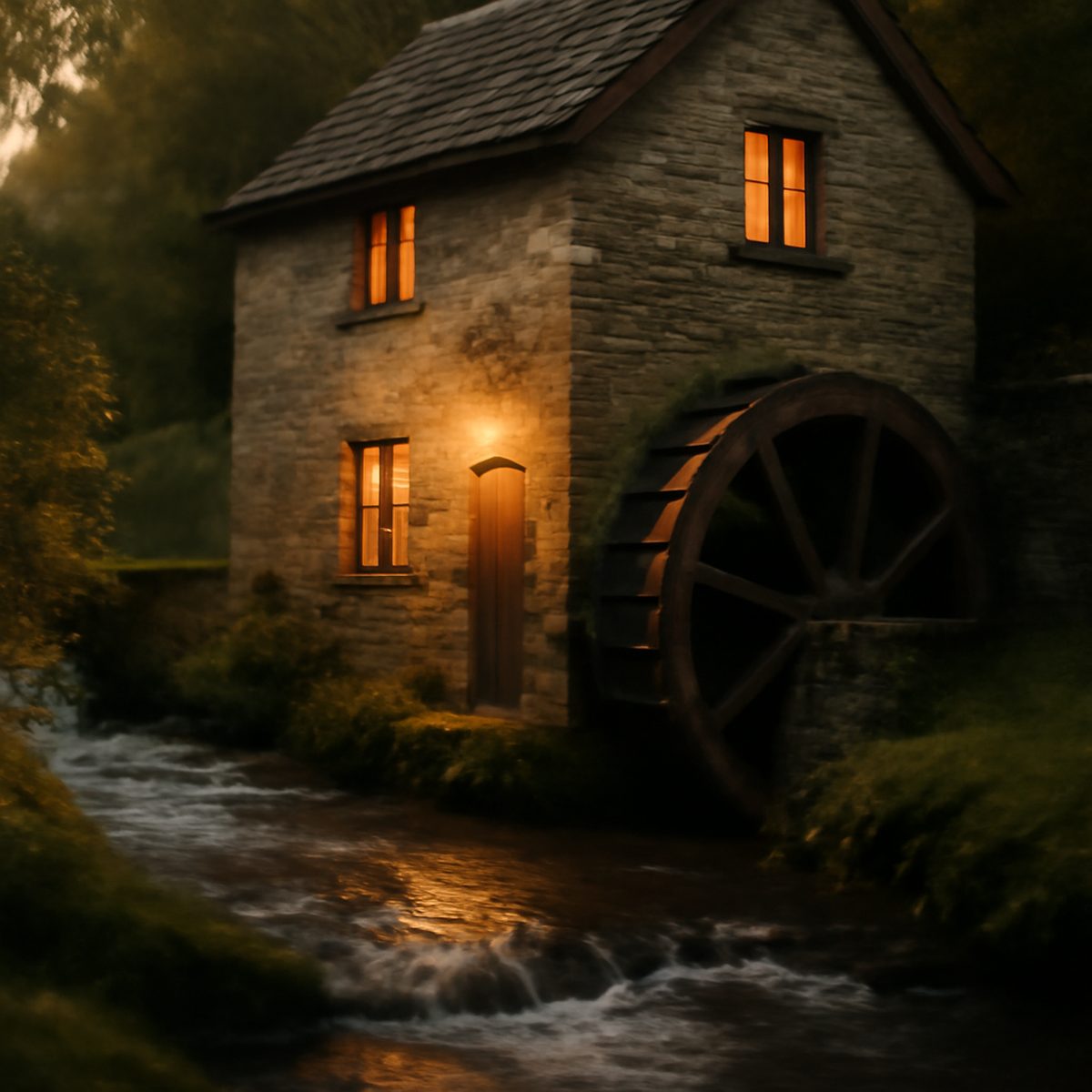
There is a particular romance to the water mill house that no amount of estate-agent language can quite exhaust. It is there in the sound, the constant low rush of the race beneath the floor, and in the siting, always beside moving water, always in the fold of a valley where a stream could be persuaded to work. The mill was a machine before it was a home, and that is precisely the source of its enduring appeal. Everything that makes it beautiful to live in was, originally, a solution to a problem of power, and the honesty of that engineering is what keeps it standing.
Built by water, sited for beauty
A mill could only stand where the water ran fast and reliable, which meant the millwright chose his site for the flow rather than the view. The happy accident is that fast, reliable water almost always comes with beauty: a valley bottom, a weir, a race dug to concentrate the current, willows and alders along the bank. The miller inherited one of the loveliest positions in any parish not because he sought it but because the water demanded it, and the modern owner inherits it in turn.
That involuntary good taste in siting is the mill’s first great virtue, and it puts it in the company of the other rural buildings that were placed by need and turned out beautiful, chief among them the subjects of why the farmhouse endures and the case for the converted barn stay. All three were working buildings first, and all three reward the owner who respects the logic that shaped them.
Honest structure, generous volume
The mill’s second virtue is its bones. It had to carry heavy machinery and grinding stones, so it was built robustly, with thick stone or brick walls, massive timber floors and beams sized for loads no house would ever impose. Those over-engineered structures have simply refused to fail, and they give the converted mill a solidity that new building rarely matches. The machinery also demanded height and open volume, which the modern conversion inherits as soaring, light-filled spaces that would cost a fortune to create from scratch. Other working buildings share that same robust inheritance, as our piece on why the coach house endures explains of a more modest conversion.
The miller built for the machine, not for us. But the machine wanted strong floors, tall rooms and a building that would last two hundred years, and it turns out we want exactly the same things.
The best conversions leave that industrial honesty legible: the great beams exposed, the old wheel or a stretch of the race preserved behind glass, the sluice kept working even if it powers nothing now. The instinct is the same one that governs any sensitive conversion, keeping the structure telling its own story, and it runs through the art of the considered basement conversion just as surely as it does the mill.
Living with the water
To own a mill is to enter a relationship with water, and it must be understood clearly before the romance carries you away. The same flow that charms sits close, and the sensible owner takes flood risk, damp and the maintenance of weir, sluice and race seriously from the start. These are manageable with good survey and honest budgeting, but they are not optional, and the mill punishes the buyer who fell for the sound of the race without reading the flood maps.
Managed well, though, the water is pure gift. It cools the house in summer, fills it with a sound that visitors never forget, draws wildlife to the door, and offers, increasingly, the tempting possibility of generating a little power once more from the very flow the miller harnessed. Underfoot, the practical old materials that suit a waterside house, stone and tile that shrug off the occasional damp, are the same ones praised in the quiet luxury of the limestone floor.
Before you fall for one
- Commission a proper flood and damp survey before anything else. The water is the whole story, good and bad.
- Establish who owns and maintains the weir, sluice and race. These are real, ongoing responsibilities.
- Keep the industrial features legible; a mill stripped of its wheel and race is just a damp house.
- Choose waterside-appropriate materials underfoot, stone and tile over anything that fears the occasional wet.
The sound and the seasons
Ask anyone who has lived in a mill what they miss most when they leave, and they will not name a room or a view. They will name the sound. The constant, soft rush of water beneath and around the house becomes the background to every hour, a white noise that soothes sleep, masks the intrusions of the wider world, and marks the seasons more honestly than any calendar. In a wet winter the race roars; in a dry August it drops to a murmur, and the household reads the weather of the whole valley through the volume of its own foundations. A home speaks to the other senses too, and our piece on the art of scent at home considers how fragrance shapes the feeling of a room.
That constant presence changes the character of the house in a way no other feature can match. A mill is never quite silent and never quite still, and it teaches its owner a particular attentiveness to water, to level, to weather, that town life dulls. The wildlife follows the water too: kingfishers on the race, trout in the pool below the wheel, herons that treat the millpond as a private larder. To live in a mill is to live in a small, intense ecosystem organised around moving water, and that immersion, more than the beams or the volume, is what turns owners into lifelong devotees of the type.
Why it lasts
The water mill house endures because it was built to endure, by people who needed it to work and had no budget for the merely decorative. Its beauty is a by-product of its usefulness, its strength a legacy of the loads it once carried, and its romance the simple, unfakeable presence of moving water. Buy one with your eyes open to the responsibilities and it will repay you with a quality of life, and of sound, that no new house can manufacture.
Respect the water, keep the old engineering honest, and you inherit not just a home but a working relationship with a landscape that predates you by centuries. It is not the easiest house to own, and it is one of the most rewarding. For more buildings that earn their keep by being true to what they were, the Homes & Culture section keeps returning to the theme, and the mill, race still running, makes the case better than any argument.
Priya tours the homes most people only glimpse from the road, and asks how they are really lived in.