A Guide to Collecting Vintage Barware
Shakers, jiggers, coupes and decanters carry the glamour of an era. Here is how to collect vintage barware with an eye for quality, and build a set you use.
 By Priya Nair
1 September 2026 · 6 min read
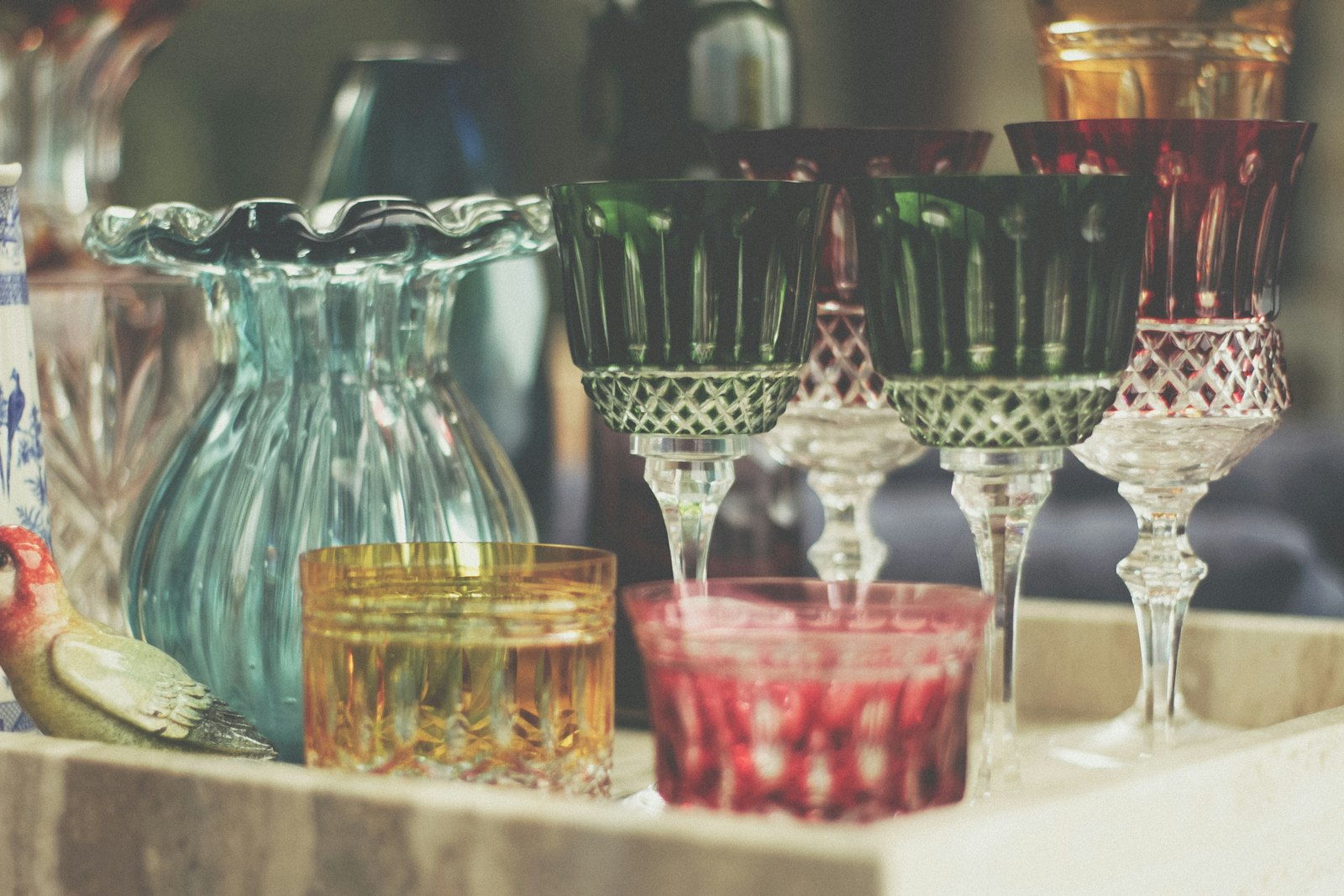
Few categories of collecting reward the beginner as generously as vintage barware. The objects are useful, they are often beautiful, they turn up everywhere from grand auctions to Sunday flea markets, and — crucially — you can put every last piece to work rather than shutting it behind glass. To collect old shakers, jiggers, coupes and decanters is to assemble a working museum of an era that took the ritual of a drink seriously, and to bring some of that seriousness back to your own evenings.
Start with what you will use
The first rule of collecting barware is that it is not, in the end, about display. A shaker that never chills a drink, a coupe that never holds one, a jigger that never measures — these are ornaments, and they miss the point. Begin, therefore, with the pieces you will actually reach for: a good cobbler or Boston shaker, a proper double jigger, a strainer, a bar spoon, and a set of glasses you are happy to drink from nightly. Build the collection outward from use, not from rarity.
This working philosophy sits naturally alongside the wider revival we chart in the return of the bar cart — the idea that the tools of hospitality should be out, handsome and in daily service rather than boxed away for best.
Knowing quality from tat
The market is thick with reproductions and with genuinely old but genuinely bad objects, and the collector’s eye is really an eye for quality of making. In metalware, weight tells the truth: a good shaker or cocktail set has heft, crisp seams, a lid that seats with a satisfying precision, and — if it is silver or silver-plate — hallmarks or maker’s marks worth learning to read. Thin, light, rattly pieces were cheap when new and are cheap now. The same instincts that guide a guide to collecting vintage silver serve the barware collector directly, since so much of the finest old barware is silver or plate.
Pick a vintage shaker up before you look at the price. Weight, seam and the seat of the lid will tell you everything the label cannot.
The glass question
Glass is where barware collecting becomes a pleasure of the eye. The coupe, the Nick and Nora, the heavy cut old-fashioned tumbler, the etched highball — each carries its era, and each drinks differently. Look for good weight in the base, a clean ring when tapped, and cutting or etching that is crisp rather than mushy. Hand-blown and hand-cut pieces have a life that machine glass never manages, a quality we make the full case for in why hand-blown glass belongs in the home. For the deeper end of glass collecting specifically, a guide to collecting vintage glassware is the companion piece to this one.
Decanters, jiggers and the small gear
Beyond shaker and glass lies a whole world of smaller kit, and it is where the character of a collection lives. A cut-glass decanter with a well-fitted stopper dignifies a spirit and looks superb on a tray. Jiggers, strainers, mixing glasses, ice buckets, tongs and picks accumulate quickly and cost little; the joy is in matching a coherent set rather than hoarding oddments. Buy the small gear in a consistent metal — all brass, all steel, all silver — and the cart reads as considered rather than jumbled.
A sensible starting kit
- One good shaker with a lid that seats cleanly.
- A double jigger, a bar spoon and a fine strainer.
- Four coupes and four heavy tumblers you are happy to use nightly.
- One cut-glass decanter with a stopper that fits snugly.
Living with the collection
Where to hunt, and what to pay
Half the pleasure of collecting barware is the hunt, and the good news for the beginner is that the field is still wide open and mostly affordable. House-clearance sales and provincial auctions remain the richest seam, since barware was made in enormous quantities across the middle of the last century and much of it survives, often unrecognised, in job lots and box lots that the serious silver and glass collectors overlook. Charity shops and Sunday markets throw up the odd shaker or set of coupes for very little, and the discipline is simply to keep looking, since the good pieces surface when you least expect them.
Prices reward patience and punish impatience. A common pressed-glass tumbler or a plated shaker in fair condition should cost almost nothing; it is only the named makers, the rare shapes and the pieces in mint condition with their original fittings that command real money, and even then the barware market sits well below the equivalent silver or fine-glass markets. The trap to avoid is paying antique prices for reproduction or merely old-but-ordinary pieces dressed up as something special. Learn the tell-tale marks, feel the weight, check the seams and the fit, and buy the best example you can of each thing you actually need rather than hoarding cheap oddments. A small collection of considered, quality pieces will always outperform a cupboard full of near-misses, and it will give far more pleasure every evening you reach for it. Keep a running note of the shapes you still lack and the makers whose work you have come to trust, and the gaps in a set have a way of filling themselves over a year or two of unhurried looking, each piece arriving with its own small story of where it was found.
The final rule is the happiest: use it all. Vintage barware was made to be handled, and it improves with handling — the silver develops a soft patina, the glass earns its small honest marks, and the whole set gathers the character that only real use confers. Keep it out where you make drinks, wash it by hand, and let it work. That principle — that the good things should be lived with rather than curated into stillness — runs through every collecting piece in our Homes & Culture pages, and nowhere is it easier, or more pleasurable, to put into practice than behind your own small bar.
Priya tours the homes most people only glimpse from the road, and asks how they are really lived in.