Why the Highlands of Laos Reward the Patient Traveller
The mountainous north of Laos gives nothing to the traveller in a hurry, and everything to the one willing to move at the pace of the river and the mist.
 By Marcus Lim
1 September 2026 · 6 min read
By Marcus Lim
1 September 2026 · 6 min read

Northern Laos does not make itself easy, and that is the whole of its appeal. The roads are slow, the distances are longer than the map suggests, and the mist can hold a valley hostage until mid-morning. For the traveller in a hurry this is a catalogue of frustrations. For the patient one it is a filter, a series of small obstacles that keep the highlands quiet and reward those who accept the terms. This is a landscape that gives back precisely as much as you are willing to slow down for.
The pace of the road
The first thing the highlands teach is that distance here is measured in hours, not kilometres. A hundred kilometres of mountain road can swallow half a day, winding up ridgelines and down into river gorges, past terraced hillsides and villages where the bus stops for anyone who waves. The impatient traveller reads this as inefficiency. The patient one reads it as the trip itself — a slow, unspooling passage through country that would be invisible from the window of anything faster. Travellers with only a few days to spare may prefer a shorter, easier break, and a weekend in Taoyuan applies the same unhurried spirit closer to an international airport.
Accepting this pace is the whole art of it. The highlands belong to the same family of destinations that punish haste and reward surrender, the places where the reward is in the passage rather than the arrival. It is the sensibility that also draws travellers to a slow weekend in Luang Prabang, the river town that serves as the region’s gentle threshold.
Mornings belong to the mist
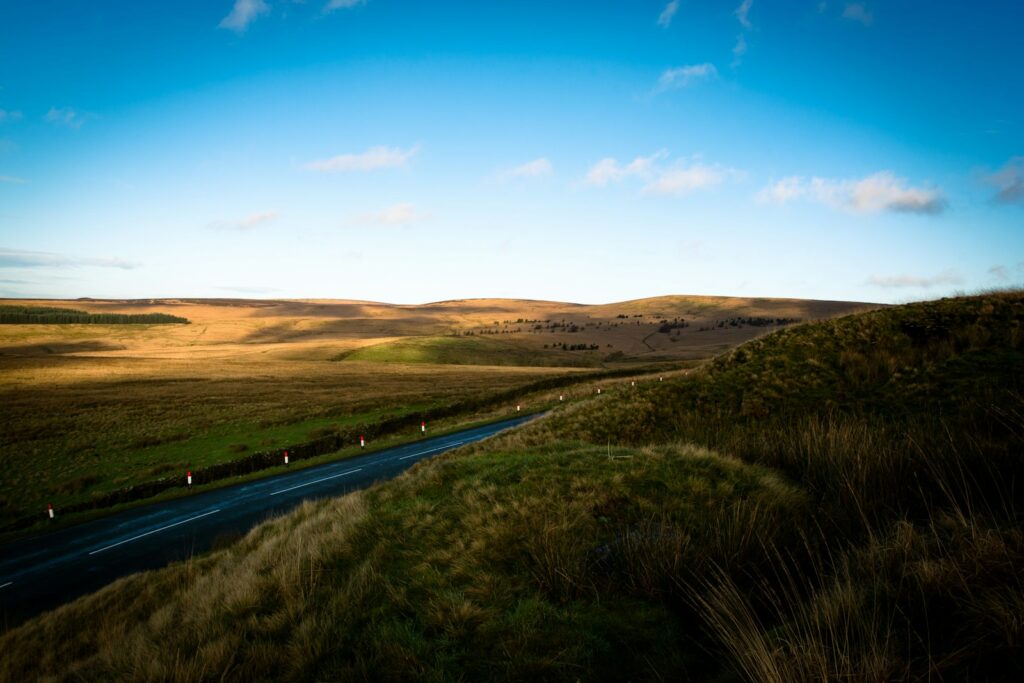
The highland day begins under cloud. Rise early — the cold makes it easy — and you will find the valleys filled with mist that pools in the low ground and burns off slowly as the sun climbs. For an hour or two the world is halved: a near foreground of wet grass and woodsmoke, and beyond it nothing but white. Then the mist lifts, the far ridges appear one by one, and the valley reveals a depth it had been hiding. It is a daily piece of theatre, and it is free to anyone awake to see it.
The highlands do not hurry, and they will not be hurried. That is the bargain, and it is a generous one.
These mornings are the reason to stay a night in the small mountain towns rather than passing through them. A composite of the best highland lodges offers little more than a clean room, a wood stove and a veranda facing east — and that veranda, at six in the morning, is worth more than any resort’s spa.
The villages and their rhythms
The highlands are farmed, and the farming sets the rhythm. Terraces climb the hillsides in careful contour lines; below them, water buffalo work the wet fields. The ethnic diversity of the north is written into the villages — different textiles, different roofs, different market days — and the patient traveller who lingers in one place for a few days rather than ticking through many will begin to read the differences. A market visited twice tells you more than ten markets glimpsed once. The same principle of lingering serves a much shorter trip too, as our weekend in Hsinchu suggests in a very different corner of Asia.
This is slow travel in its purest form, and it belongs to a considered way of moving through the wider region. The instinct is the same one that governs a well-planned overland journey; those tempted by the highlands would do well to read how to plan a grand tour of Laos before committing to a route.
The river as a second road
Where the roads fail, the rivers carry on. A slow boat down a highland river is the region’s great set-piece: hours of green banks, fishing villages, children waving from sandbanks, and a pace so unhurried that the mind empties entirely. There is nothing to do on the boat but watch, and after the first restless hour that becomes the point. The river teaches patience more effectively than any philosophy, simply by removing the option of hurry.
What patience buys you
The dividend of all this slowness is solitude. Because the highlands resist the quick visit, they remain largely free of the crowds that have thickened elsewhere in South-East Asia. You can still find a ridge-top village with no other outsider in it, a market that trades for locals rather than tourists, a stretch of river with no other boat in sight. This is increasingly rare, and it exists here precisely because the region is hard to reach in a hurry.
The highlands sit within a broader map of places that reward the unhurried, from mountain valleys to remote coasts. A traveller who takes to the north of Laos will recognise the same virtues in the way Tasmania rewards the slow traveller, and closer to home in a slow weekend in the Cameron Highlands, another cool upland that gives its best to those who stay put and let the mornings come to them.
The practicalities of patience
Patience in the highlands is not only a temperament; it is a logistical necessity, and it pays to plan for it. Distances take longer than any map or app will admit, so build in slack — a day held loose here, an unbooked night there — and resist the urge to fill every hour. The weather does as it pleases, and a road that was open in the morning may be slow with mud by afternoon, particularly in the wet months. The traveller who treats these as disasters will have a miserable time; the one who treats them as part of the texture of the place will not. Carry warm layers for the cold mornings, cash for the many places that take nothing else, and a book for the inevitable waits.
Above all, come with fewer plans than you think you need. The highlands reward the traveller who arrives in a valley with no fixed idea of when they will leave, and who lets a good place keep them an extra day. Over-scheduling is the surest way to miss what the region actually offers, which is the luxury of unstructured time in beautiful country.
Going slowly, on purpose
The mistake most travellers make in northern Laos is to try to see it all, and the highlands punish that ambition with exhaustion and a blur of half-seen places. The better plan is to choose two or three valleys and stay in each long enough to learn its rhythm. You will see less and understand more, which is the trade the highlands are quietly offering. For more journeys pitched at this deliberate pace, the Travel & Stays section is where the slow road begins.
Marcus writes on travel and hospitality across Asia, and is happiest a long way from a lobby.