Why Jute Rugs Deserve a Second Look
Warm, textured and quietly versatile, the jute rug grounds almost any room and layers with anything. A case for the overlooked natural-fibre classic.
 By Priya Nair
1 September 2026 · 6 min read
By Priya Nair
1 September 2026 · 6 min read
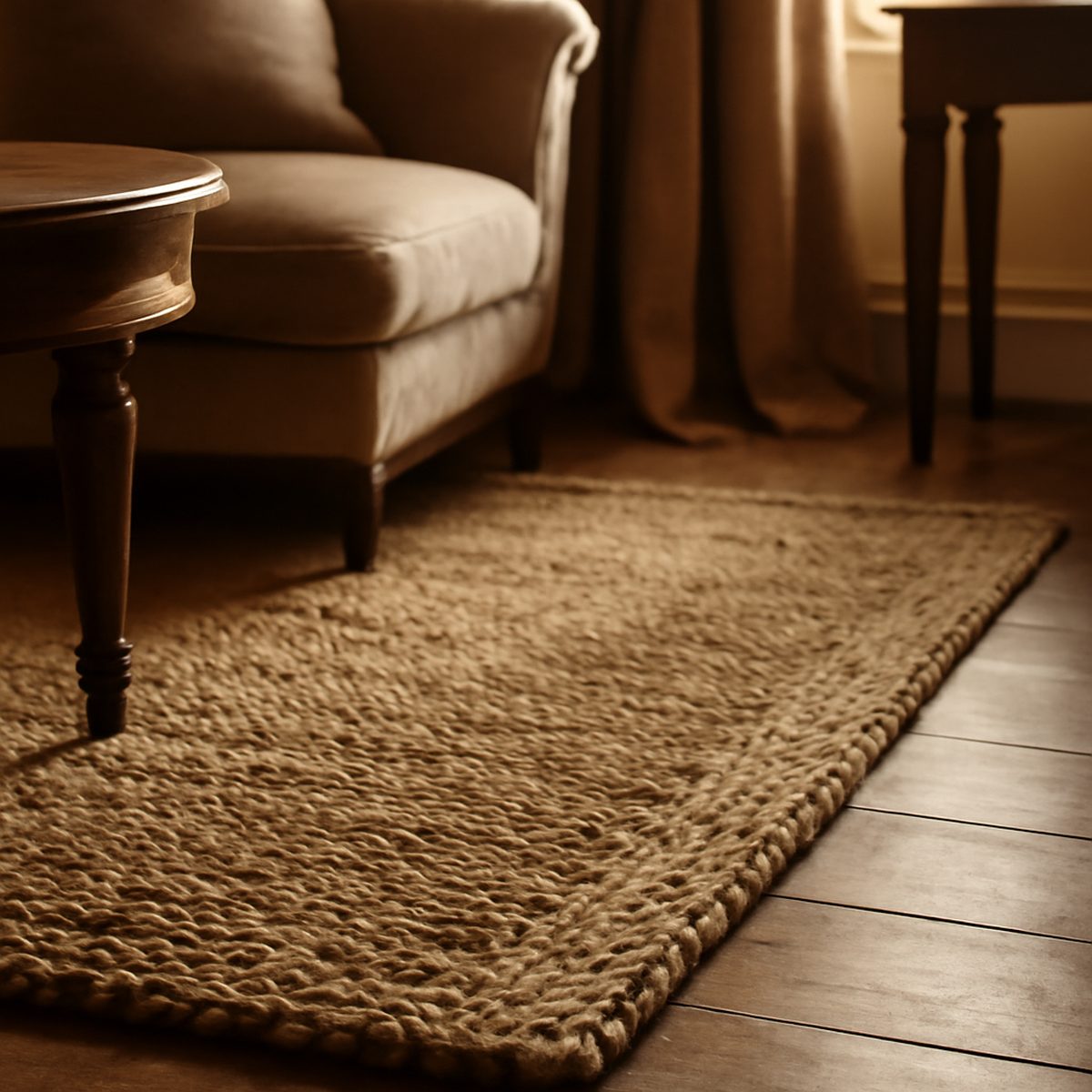
The jute rug is easy to overlook. It is cheap, it is plain, it turns up in every homeware shop from the humblest to the grandest, and its very ubiquity has made it invisible — the default natural-fibre floor covering that people buy without quite seeing. This is a mistake. Look properly at a good jute rug and you find one of the most useful, characterful and quietly beautiful things you can put on a floor: a warm, textured, honest surface that grounds a room, plays well with everything, and brings the tactile warmth of a natural fibre underfoot at a fraction of the cost of anything comparable. It deserves a far better reputation than ‘the affordable option’.
The fibre from the field
Jute is a plant fibre, spun from the stalks of a tall crop grown mostly across the river deltas of South Asia. It is one of the most sustainable textile materials there is — fast-growing, rain-fed, needing little chemical input, and fully biodegradable at the end of its life. Spun and woven into a rug, it produces a surface with a distinctive warm, golden-brown colour and a soft, slightly hairy texture that is gentler underfoot than the coir or sisal it is often lumped in with. It is, in short, an honest material doing an honest job, and that honesty is central to its appeal.
Appreciating jute is really appreciating natural fibre in general, and it belongs to a conviction that runs deep through good interiors. The same instinct that makes a room reach for it is the one behind the case for natural materials — the sense that grown, woven, biodegradable things bring a warmth and a rightness to a home that synthetic substitutes, however practical, never quite manage. A polypropylene rug photographs the same and feels entirely different underfoot.
The great neutral ground
The single most useful quality of a jute rug is its neutrality. Its warm, muted, textural surface sits happily beneath almost any scheme, in almost any room, without competing for attention. It grounds a seating arrangement, warms a hard floor, defines a zone in an open-plan space, and gives the eye a calm, natural base from which everything else can rise. Where a patterned rug commits a room to a look, a jute rug simply supports whatever look you choose, which is exactly why designers reach for it so often as a foundation.
A jute rug rarely stars in a room. It does something more useful — it makes everything placed on it look better, and asks for no credit in return.
This makes jute the ideal base layer for one of the most reliable tricks in decorating: layering rugs. A smaller patterned or antique rug placed over a large jute one gains definition and lift, while the jute provides scale, warmth and a natural border. The technique is worth mastering, and it pairs beautifully with the character pieces celebrated in collecting vintage rugs — the jute grounds the collection while the vintage rug supplies the colour and story. Layered this way, a humble jute rug becomes the setting that shows a treasured one to its best advantage.
Texture where a room needs it
Beyond neutrality, jute brings texture, and texture is what most modern rooms are short of. Against smooth painted walls, sleek cabinetry and hard flooring, the rough, woven, tactile surface of a jute rug is a welcome note of natural roughness, the kind of contrast that keeps a pale, minimal room from feeling flat. Its warm colour and broken texture add depth that a flat-coloured rug cannot, catching the light differently across its weave. It shares this quality with other honest natural surfaces, and anyone who values the same warmth in furniture will recognise the appeal of rattan — both are woven plant fibres that bring an unforced, organic texture into a room.
Living with jute, honestly
Jute is not without its demands, and choosing it well means understanding them. It is best treated as a material with a life rather than a bulletproof surface, and matched to the right room.
- Keep it dry: jute dislikes damp and can mark if soaked, so it suits living rooms and bedrooms better than bathrooms or busy hallways.
- Choose the right room: lovely underfoot in low- to medium-traffic spaces; a tougher fibre may serve a front hall better.
- Get the size right: jute reads best when generous, either anchoring the whole furniture group or filling the floor; a mean little rug looks lost.
- Expect a little shedding: a new jute rug sheds loose fibre for a while, then settles; this is the material, not a fault.
Sizing in particular rewards a little thought, because a rug that is too small undercuts the grounding effect that is jute’s whole purpose. The rug should relate properly to the furniture it sits under, a judgement that is the entire subject of choosing the right rug size, and one that matters more with a foundational rug like jute than with a small decorative one.
The quiet environmental case
There is a further argument for the jute rug that goes beyond looks and cost, and it is one that matters more each year. So much of what we put underfoot is now spun from plastic — synthetic fibres that shed microplastics with every footstep, that are made from oil, and that will outlast us all in landfill without ever breaking down. A jute rug is the honest antidote: a plant grown in a season, woven with little energy, used for years, and then returned to the earth to rot away harmlessly when its life is finally done. In a home trying to tread a little more lightly, swapping a synthetic rug for a natural one is among the easiest and least sacrificial changes to make, costing nothing in comfort or beauty and giving something back in conscience. The humble jute rug turns out to be a quietly responsible choice as well as a handsome one.
The humble classic, reconsidered
What makes the jute rug worth a second look is precisely what makes it easy to dismiss: it is modest, it is affordable, and it never demands attention. But modesty is exactly what a good floor covering should offer — a warm, textural, natural ground that supports the life of the room without competing with it. Buy a generous one, treat it kindly, layer a treasure on top of it, and the humblest rug in the shop becomes the quiet foundation of your whole room. For more on the honest materials that make a home feel warm and grounded, our Homes & Culture section is the place to browse. Look again at the plain jute rug; it has been quietly doing the most important job in the room all along.
Priya tours the homes most people only glimpse from the road, and asks how they are really lived in.