Understanding the Retrograde Watch
The retrograde watch, explained: how a hand that travels an arc and snaps back works, why the complication charms collectors, and what to weigh before buying.
 By Daniel Koh
2 September 2026 · 6 min read
By Daniel Koh
2 September 2026 · 6 min read
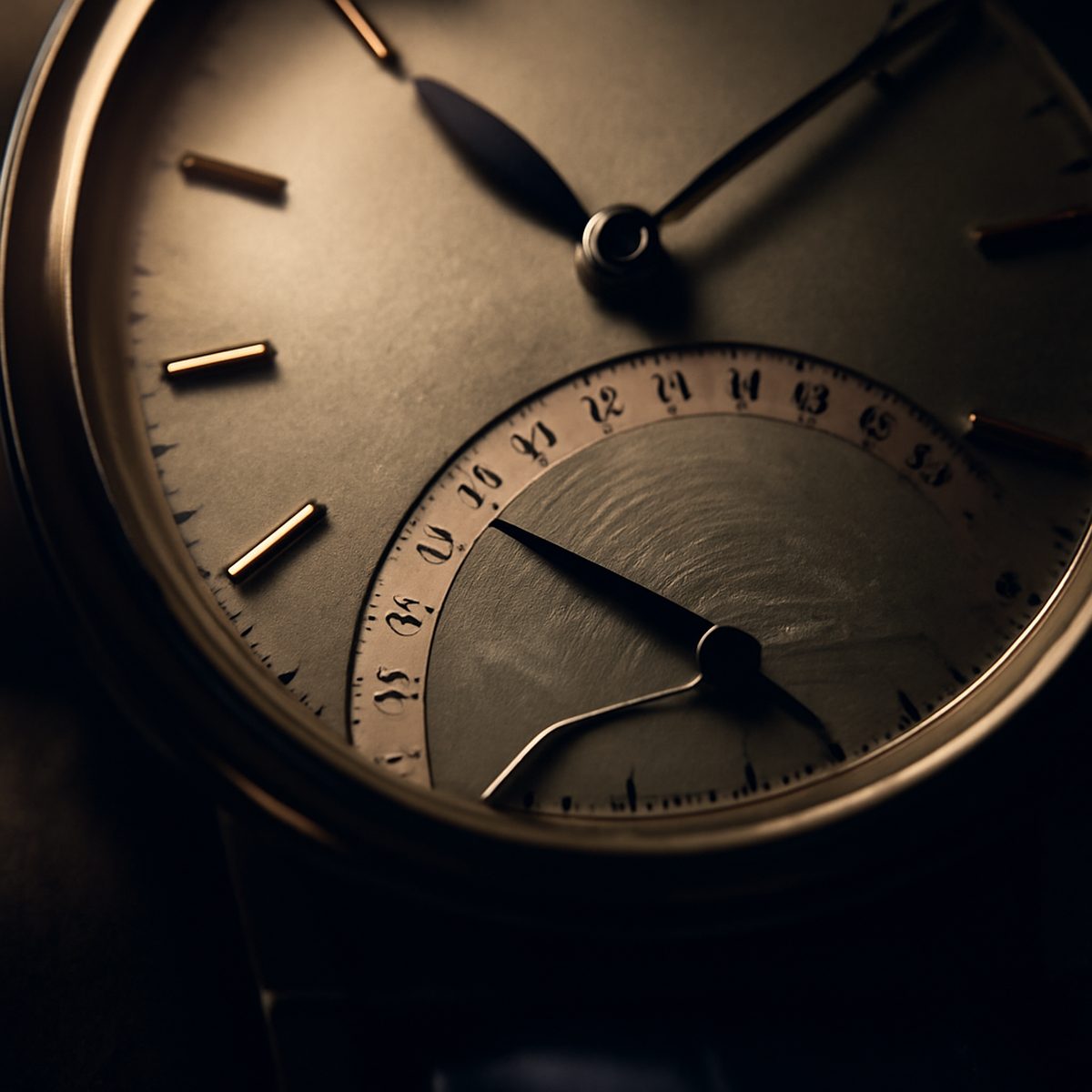
Most of what a mechanical watch does, it does in circles. Hands sweep endlessly round and round, and we barely notice. Then, occasionally, a watch does something that stops you: a hand travels along a curved arc, reaches the end of its scale, and in an instant flies back to its starting point to begin again. That small piece of theatre is the retrograde watch, and it is one of the most quietly delightful things a watchmaker can build into a dial.
What retrograde actually means
The word retrograde simply describes a hand that moves along an arc rather than a full circle, then jumps back to zero when it reaches the end. Instead of the date or the seconds or the day travelling round and round, the indicator sweeps across a fan-shaped scale, pauses at the far end, and snaps back in the blink of an eye. It is a different way of displaying information that most watches show with a conventional rotating hand, and it turns a routine reading into a small event.
Understanding it helps to place it within the wider language of watchmaking. It is, in the proper sense, a complication, an added mechanical function beyond simple timekeeping, and it belongs in the same conversation as other displays that reward a little study, such as the jumping hour watch and the regulator.
How the retrograde complication works
The mechanism behind the retrograde complication is a small feat of engineering. As the hand advances along its arc, it is also winding a fine spring, storing a little energy with each step. A cam and a lever govern the movement, and when the hand reaches the end of its scale, the lever slips off the edge of the cam and releases that stored energy all at once. The spring whips the hand back to its starting point, ready to begin the sweep again. It is this instant snap-back that gives the retrograde its signature drama.
A conventional hand tells you the time. A retrograde hand performs it, gathering tension across its arc and discharging it in a single, satisfying flick that never stops being a small pleasure to catch.
Why collectors love it
The appeal of a retrograde display is partly visual and partly mechanical. On the dial, a fan-shaped sub-scale breaks up the usual circular symmetry and gives a watch a distinctive, architectural look. And the knowledge of the delicate mechanism working away beneath, the cam, the lever, the tensioning spring, adds the intellectual pleasure that serious enthusiasts prize. It is a complication that shows a maker’s ingenuity without necessarily costing as much as the grandest complications. Anyone drawn to the cleverness of mechanisms like the annual calendar tends to fall for the retrograde too.
What to look for
If a retrograde watch appeals, a few things are worth weighing before you commit:
- The crispness of the snap-back; a good one is instant and decisive, not lazy or hesitant.
- The legibility of the arc; a well-designed scale should be easy to read at a glance, not merely decorative.
- The balance of the dial, since a retrograde sub-dial can either harmonise beautifully or clutter the face.
- The overall power management, as any added complication draws on the movement’s reserves; our note on the power reserve complication is worth reading alongside.
What a retrograde can display
The retrograde principle is not tied to any one function, which is part of what makes it so versatile and so charming. A watchmaker might apply it to the seconds, so that the small seconds hand sweeps its arc and flicks back every minute; to the date, so that the pointer travels across a fan of numbers and springs home at month’s end; or to the day of the week, the power reserve or even the hours themselves. Some ambitious pieces carry several retrograde displays at once, filling the dial with hands that sweep and snap in their own rhythms.
Each application changes the character of the watch. A retrograde seconds is a subtle, almost private pleasure, noticed only by the wearer; a retrograde date is a more visible piece of theatre that others may catch. The variety means there is a retrograde to suit almost any taste, from the understated to the frankly exuberant, which is part of why the complication has such a devoted following among collectors.
A brief history of the sweep
The retrograde is not a modern novelty but an old idea, one that dates back centuries to the early days of precision horology, when makers first devised the cam-and-spring arrangement that governs the sweeping hand. For a long time it remained a relatively rare and specialist feature, seen mostly in complicated pieces from serious houses. In recent decades it has enjoyed a real revival, as a renewed appetite for mechanical ingenuity has drawn collectors back to displays that do something visibly clever.
That history adds to the appeal. To wear a retrograde is to carry a small piece of horological tradition on the wrist, a mechanism refined over generations and still capable of surprising and delighting. It is a reminder that watchmaking, at its best, is not merely about keeping time but about finding beautiful and inventive ways to show it, a spirit that connects a modern retrograde to the great complicated watches of the past.
A complication with character
The retrograde watch will never be the most practical way to tell the time, and that is entirely beside the point. It exists because a watchmaker looked at a simple rotating hand and asked whether there might be a more interesting way, and then went to considerable trouble to build it. That spirit of ingenuity for its own sake is what makes mechanical watches worth caring about in an age of phones and screens. Catch that little hand snapping home just once, and you will understand the whole appeal. For more on the complications and craft that make a watch worth studying, browse the rest of our style and watches writing.
Daniel has spent fifteen years arguing that the best watch is the one you never take off.