Understanding the Power Reserve Complication
Part fuel gauge, part quiet theatre, the power reserve indicator shows how much life is left in a watch. How the complication works, and why it endures.
 By Daniel Koh
1 September 2026 · 6 min read
By Daniel Koh
1 September 2026 · 6 min read
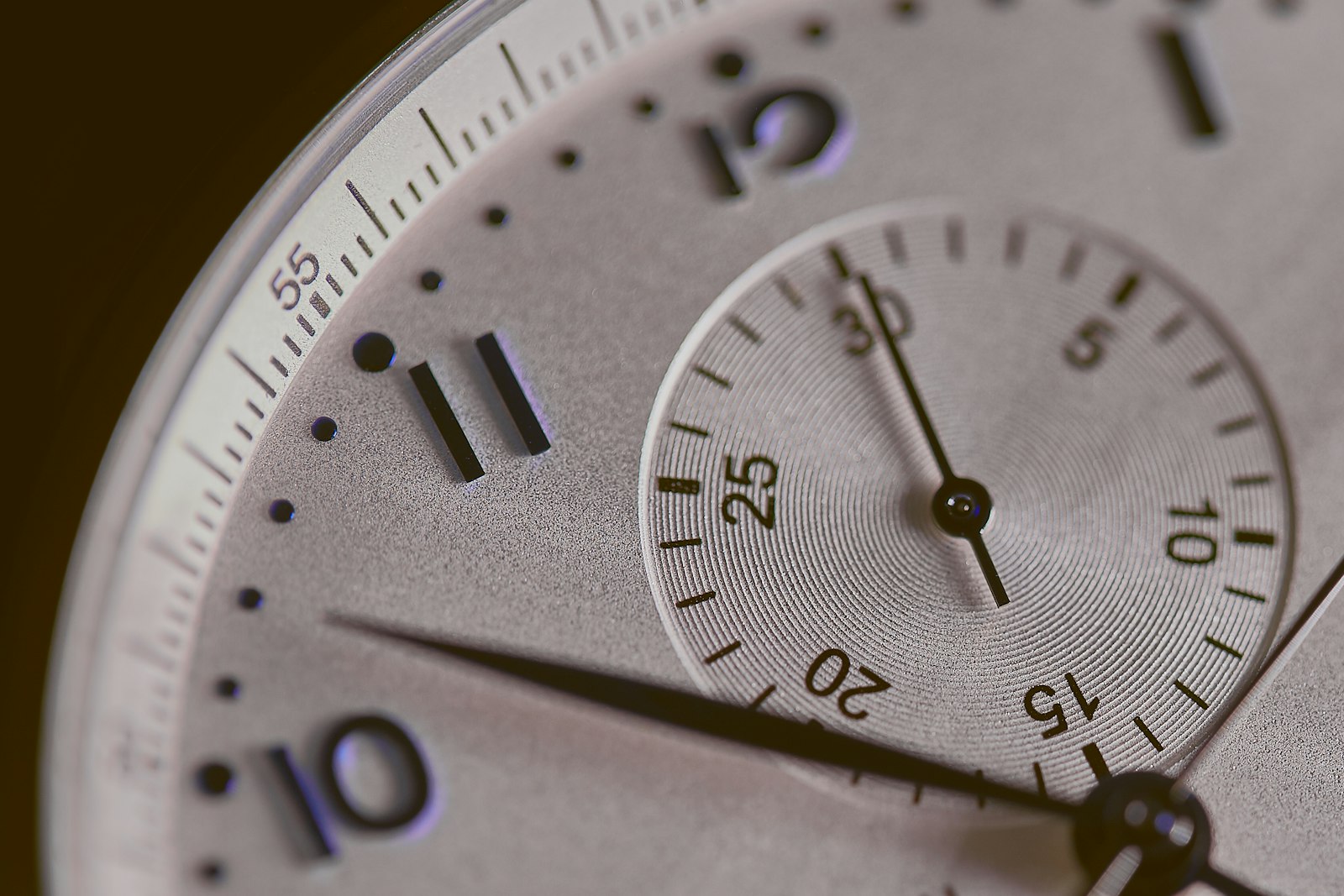
Among the many complications a mechanical watch can carry, few are as genuinely useful as the power reserve, and fewer still are so quietly satisfying to watch. It is, in essence, a fuel gauge for the watch, a small dial or hand that shows how much stored energy remains before the movement runs down and stops. On a manually wound watch especially, it answers the daily question of when to wind, and it does so with a small piece of mechanical theatre that never quite loses its charm. The power reserve watch earns its place through pure practicality, dressed up as it may be in fine finishing.
To understand it properly, you have to understand where a mechanical watch keeps its energy in the first place, because the power reserve is simply a window onto that hidden store.
Where a watch stores its energy
A mechanical watch runs on a coiled spring, the mainspring, housed in a barrel. Winding the watch, whether by hand or by the swing of an automatic rotor, tightens this spring, storing potential energy. As the watch runs, the spring slowly unwinds, releasing that energy in a controlled trickle through the gear train to drive the hands. When the spring is fully unwound, the watch stops. The whole of a movement’s autonomy lives in that single coiled spring, and the deeper mechanics of it are worth knowing, as our notes on understanding watch mainsprings and barrels set out.
The amount of energy the spring can hold, expressed as a length of time, is the watch’s power reserve: forty hours, seventy hours, or in some modern movements many days. The complication simply makes that invisible quantity visible.
How the power reserve indicator works
Displaying how much energy is left is a genuinely clever piece of engineering. The power reserve indicator is driven by a small train of gears, often a differential, that tracks the state of wind of the mainspring in both directions at once: it registers energy going in as you wind, and energy coming out as the watch runs. That combined reading is translated to a hand sweeping across a graduated scale, or sometimes a rotating disc, showing the remaining reserve at a glance.
The power reserve is the rare complication that tells you something you actually need to know, moment to moment: not the date, not the phase of the moon, but simply whether your watch is about to stop.
Reading it is intuitive. The hand sits toward full when the watch is freshly wound and creeps back toward empty as the hours pass, a live gauge of the mechanism’s remaining life. On a hand-wound piece it becomes part of the daily ritual; you glance at it, judge the moment, and top up the spring. The interplay of winding and running that it displays is the same one we explore in understanding watch winding and reserves.
Why it matters most on certain watches
The complication is at its most useful, and most meaningful, in particular cases.
- On a hand-wound watch, it is genuinely practical, telling you exactly when the daily wind is due so the watch never stops unexpectedly.
- On an automatic watch, worn every day, it is less essential but still reassuring, and it comes into its own if the watch has sat unworn.
- On a watch with a very long reserve, it becomes a point of pride, showing off the movement’s endurance across many days.
For anyone taking their first steps into mechanical watches, understanding the power reserve is part of understanding how the whole thing works, and it pairs naturally with the broader grounding we offer in a guide to buying your first mechanical watch.
The quiet pleasure of it
Beyond its usefulness, the power reserve indicator is simply a pleasure to own. Watching the hand climb as you wind, and slip back as the day passes, connects you to the mechanism in a way a sealed, mysterious dial never does. It makes the invisible visible, turning the abstract idea of stored energy into something you can read and respond to. On a beautifully finished dial, an elegantly executed reserve display is also a genuine aesthetic pleasure, a small subdial or an arcing sector that adds depth and interest to the face.
Where it sits on the dial
Watchmakers have found many ways to display the reserve, and the choice says a good deal about a watch’s character. The most common is a small arced sector, a fan-shaped scale swept by a hand, tucked onto the dial or set into a subdial. Others use a linear scale, a straight track along which an indicator travels, or a small rotating disc glimpsed through an aperture. The most theatrical designs place the indication on the back of the watch, visible through the display caseback, so the wearer turns the watch over to check its reserve and admire the movement at the same time.
Each approach is a small exercise in the watchmaker’s art, balancing legibility against the crowding of the dial. A well-integrated reserve indicator adds symmetry and interest to a face; a poorly placed one clutters it. The finest examples feel inevitable, as though the dial were designed around them, which of course it was.
A complication with a long pedigree
The power reserve is no modern gimmick. It has its roots in the marine chronometers of past centuries, where knowing exactly how much running time remained was a matter of navigational safety, not convenience; a chronometer allowed to stop unnoticed could throw a ship’s position badly out. That serious, functional origin gives the complication a gravity that many prettier ones lack. When it migrated to the wristwatch it kept that sense of genuine purpose, and it remains one of the few complications that a watchmaker includes because it is useful first and handsome second. That honesty is much of its enduring charm.
The power reserve is proof that the most rewarding complications are often the most practical. It tells you what you need to know, it draws you into the daily life of the watch, and it does so with real mechanical elegance. For anyone who values a watch that is as useful as it is beautiful, it is among the most quietly satisfying complications there is. For more on the mechanisms that make a fine watch tick, our Style & Watches pages keep exploring the craft beneath the dial.
Daniel has spent fifteen years arguing that the best watch is the one you never take off.