The Quiet Luxury of the Vicuna Scarf
Softer than cashmere, rarer than almost anything you can wear, the vicuna scarf is the most discreet luxury of all. A look at why it costs what it does.
 By Daniel Koh
1 September 2026 · 6 min read
There is a hierarchy of soft things, and at the very top of it, beyond cashmere, beyond the finest merino, sits a fibre most people will never touch: vicuña. A vicuna scarf is the quietest luxury in fashion, precisely because almost no one can identify it by sight. It carries no logo, no obvious sheen, no shout. It simply feels, when it meets the skin, like nothing else — and that private, almost secret sensation is the whole point.
What the vicuña is, and why it matters
The vicuña is a small, wild relative of the llama that lives at altitude in the Andes. It cannot be farmed in any conventional sense; historically it is captured, shorn and released, and only every couple of years, yielding a tiny quantity of the finest animal fibre known. The individual filaments are extraordinarily thin, which is what produces that impossible softness and a warmth wildly out of proportion to the cloth’s weight. A vicuña scarf weighs almost nothing and yet holds heat like a secret.
That scarcity is the engine behind vicuna wool luxury. Where cashmere is rare, vicuña is rarer by an order of magnitude, and the price follows. This is not a marketing markup; it is arithmetic. There is only so much fibre in the world in any given year, and it does not stretch. The shearing is tightly regulated to protect the animal, which keeps supply deliberately, permanently scarce.
The look of restraint
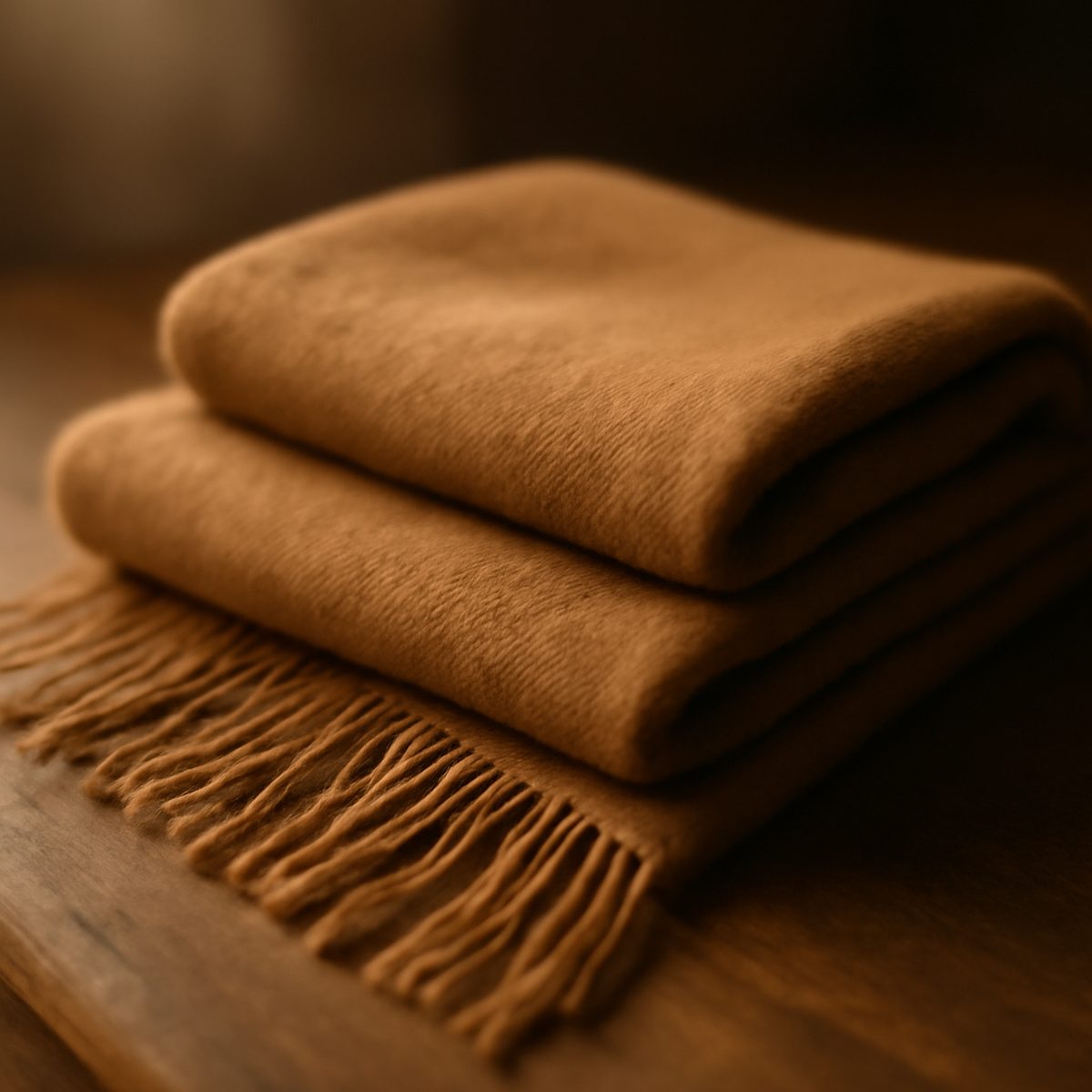
Part of what makes vicuña so appealing to the genuinely discerning is that it refuses to advertise. Left undyed, it comes in a narrow band of warm, natural tones — honey, caramel, a soft cinnamon brown — that no dyehouse improves upon. There is a faint, natural lustre and nothing more. To the untrained eye it looks like a nice tan scarf. To the wearer it is a daily, private pleasure. This is the essence of the quiet-luxury argument the discerning dresser keeps returning to: the best things whisper.
It sits, in that sense, at the far end of a spectrum that begins with more accessible pleasures. The quiet luxury of the cashmere scarf is the sensible everyday version of the same idea; vicuña is its rarefied cousin. And the same instinct runs through the wider world of everyday vicuña and fine-fibre knits, where the fibre occasionally appears in a jumper for those with very deep pockets and very warm feelings about softness.
Vicuña is the only luxury that costs a fortune and looks, to the uninitiated, like almost nothing. That is exactly its appeal.
Is it worth it?
Let us be honest about the practicalities. A vicuña scarf is not a rational purchase in the way a good coat is. It is warm, yes, but a fine cashmere scarf at a fraction of the price is also warm. What you are buying, beyond the fibre, is the specific, unrepeatable sensation of the softest thing in the world against your neck, and the quiet knowledge of what it is. Whether that is worth the outlay is a question only the wearer can answer, and the answer depends entirely on how much a private pleasure is worth to you. Those who want rarity without quite the same outlay might consider the hardier fibre explored in our piece on the quiet luxury of the yak wool scarf. For a softer, more attainable route to the same quiet pleasure, our piece on the baby alpaca scarf is worth reading alongside this one.
For most people, most of the time, the sensible route is the finer end of cashmere — and understanding cloth quality generally, as we discuss in understanding the difference in wool weights, will serve you better than chasing the rarest fibre. But for the person who already owns the sensible things and wants one truly extraordinary object, vicuña is the answer, and there is no shame in it.
Buying without being fooled
Because the name commands such a price, it attracts dishonesty, and the prudent buyer should know the pitfalls. Genuine vicuña is sold with proper provenance and certification tracing it back to a regulated Andean source; a scarf offered impossibly cheaply, or vaguely described as a blend, is almost certainly neither pure nor honestly sourced. Trust reputable houses with a long relationship to the fibre rather than a bargain that seems too good to be true, because at this rarefied end of the market a bargain always is. The genuine article should feel weightless and impossibly dense with warmth at once, and it should come with paperwork that a serious seller will happily produce. If in doubt, handle a known genuine example first; once you have felt the real thing, imitations rarely fool the fingers again.
An ancient prestige
The reverence for vicuña is not a modern invention of the luxury houses. In the old Andean empires the fibre was reserved, quite literally, for royalty; to wear it without rank was, by some accounts, a crime, and the animals were protected as a treasure of the state. Centuries of over-hunting later brought the vicuña to the edge of disappearance, until careful conservation slowly restored the wild herds and, with them, a tightly controlled, humane shearing that allows a trickle of the fibre back into the world. Knowing this history changes how one holds a vicuña scarf. It is not merely an expensive object but the continuation of a prestige thousands of years old, and a small conservation success besides — the rare luxury whose scarcity protects rather than exploits the creature that provides it. For the buyer who cares about such things, that lineage is part of what makes the fibre worth its price, and worth wearing with a certain quiet respect.
Caring for something so fine
A fibre this delicate demands respect. Never wash vicuña at home in anything but the gentlest hand-cold soak, if at all; better still, air it and brush it and let a specialist handle the rare deep clean. Store it flat or loosely rolled, never on a hook that will distort it, and keep it away from perfume and rough wool that will pill against it. The general principles in our guide to caring for fine knitwear apply here with knobs on. Treated well, a vicuña scarf will outlast fashions and, quite possibly, the person who bought it.
That, in the end, is the quiet luxury of the thing: an object of almost no visible drama and almost limitless tactile pleasure, made from a fibre the world produces in tiny quantities, worn by people who feel no need to explain it. More of these considered pleasures live in the Style & Watches section.
Daniel has spent fifteen years arguing that the best watch is the one you never take off.