Understanding the Craft of Real Prosciutto
Behind a slice of real prosciutto lies a year or more of salt, air and patience. Here is the craft that separates the genuine article from the pale imitation.
 By Renée Tan
1 September 2026 · 6 min read
By Renée Tan
1 September 2026 · 6 min read
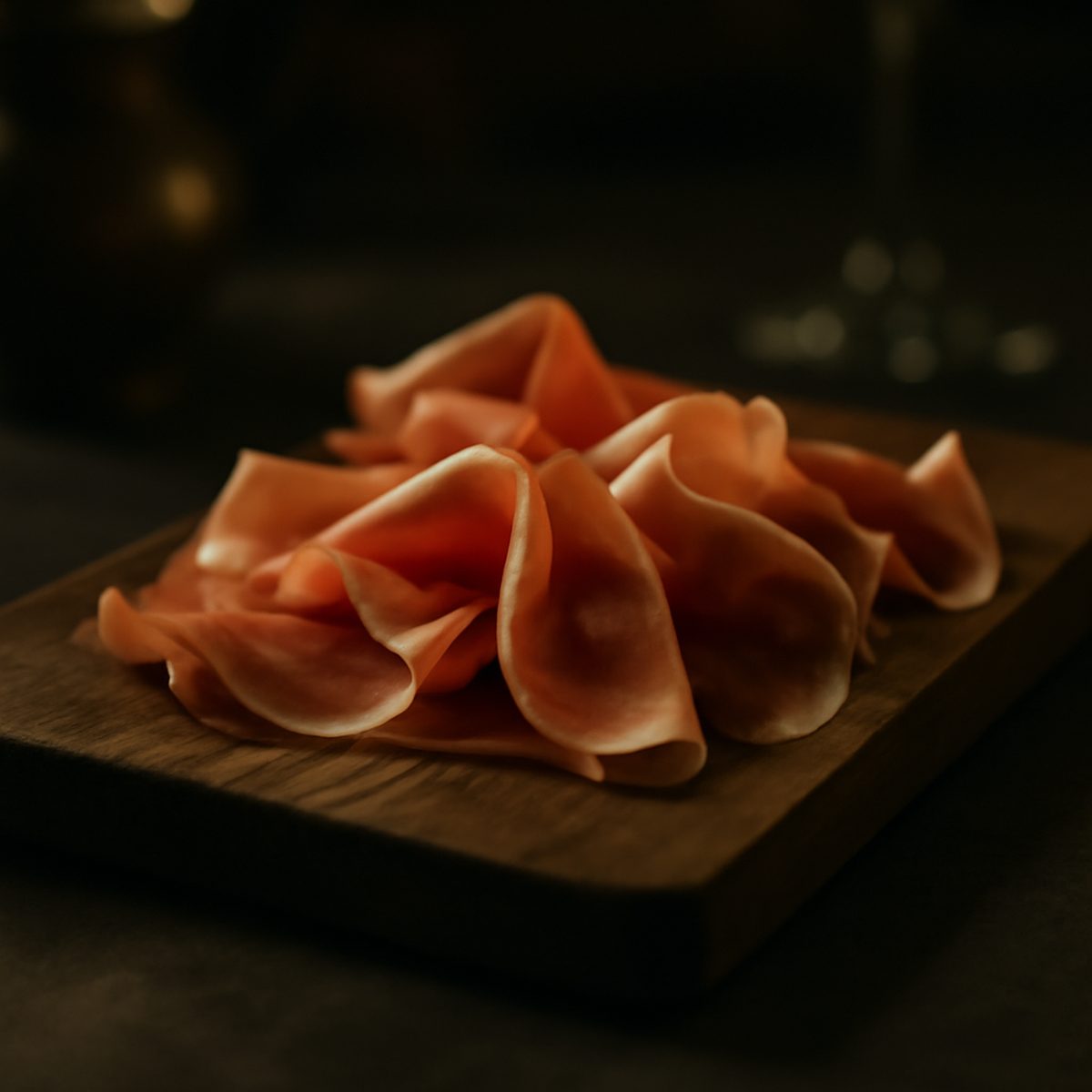
Hold a slice of real prosciutto to the light and it glows, faintly rose, marbled with pearly fat, so thin you can almost read through it. Lay it on your tongue and it dissolves into sweetness and salt and a deep, savoury complexity that seems out of all proportion to its simplicity. For this is a food made of almost nothing: a pork leg, salt, air and an extraordinary amount of time. That is the quiet miracle of great cured ham, and understanding the craft behind it changes the way you buy it and the way you eat it.
Most of us have eaten prosciutto that is merely fine and assumed that was all there was to it. The genuine article, aged long and made with care, is a different thing entirely: less salty, more complex, sweeter and more melting. The gap between the two is the gap between an industrial product and a craft one, and it is worth learning to tell them apart.
Salt, air and time, and nothing else
True prosciutto crudo, the raw cured ham of Italy, is made without smoke, without additives and often without anything but salt. The leg is salted, rested, cleaned, and then hung to age in cool, airy conditions for many months and often well over a year. During that long hang the meat loses moisture, concentrates in flavour, and undergoes slow enzymatic changes that develop the sweet, nutty complexity that defines a great ham.
The finest examples, such as the celebrated hams of Parma and San Daniele, owe as much to place as to technique: the particular air of certain valleys, the breezes that cure the meat, the traditions of families who have made ham the same way for generations. It is a pure expression of terroir, meat shaped by climate and time, and in that it belongs to the same considered world as the slow art of ageing fine cheese, where patience and environment do the real work.
The role of salt and fat
Two things make prosciutto what it is, and both are often misunderstood. The first is salt, used with restraint by the best makers so that it cures and preserves without dominating; a ham that tastes aggressively salty is usually a lesser one, cured fast and cheap. The best salt-curing is a matter of judgement, the same judgement explored in our notes on how different salts behave in the kitchen, where more is emphatically not better.
The fat is not a flaw to be trimmed but the whole point. In great prosciutto the fat is soft, sweet and almost buttery, and to cut it away is to throw away half the pleasure.
The second is fat, and here habits often let us down. Good prosciutto should carry a generous rim and marbling of creamy white fat, and that fat should be eaten, not discarded. It carries much of the aroma and nearly all of the melting texture, and a slice of lean ham with the fat cut off is a diminished thing. Ask for it sliced with the fat left on, and eat it as it comes.
Buying and slicing
The way prosciutto is cut matters almost as much as how it was made. It must be sliced whisper-thin, ideally to order, because thickness ruins it; a thick slab is chewy and salty where a thin one is melting and sweet. If you can buy it freshly sliced from a good counter rather than sealed in plastic, do, and eat it soon after, as it loses its bloom quickly once cut.
Look for a deep rosy colour shot through with fat, a clean sweet smell, and a supple rather than dry texture. Price is a rough guide but not a guarantee; provenance and a knowledgeable seller tell you more. A good ham deserves good company on the plate, and it sits at the heart of any well-built spread, the anchor around which you assemble a properly considered charcuterie board of cured meats, pickles and bread.
How to serve it
Real prosciutto needs almost nothing. At room temperature, never fridge-cold, so the fat softens and the aromas open, draped rather than folded so each slice keeps its delicacy. The classic pairings endure because they work: sweet melon or fresh figs against the salt, a knob of good butter and bread, a few shavings of hard cheese. It belongs naturally beside the other potted and cured pleasures of a generous, unhurried board, the kind of eating that is really about time and company as much as food.
It rewards a little seasonal thinking, as well. In the warmer months, real prosciutto is at its most beguiling served with cold, sweet fruit and eaten outdoors with a glass of something crisp; in cooler weather it turns towards richer company, wrapped around grissini, laid over warm bread, or draped at the last second over a hot dish so that its fat softens and its aroma blooms. It is not a one-note luxury to be trotted out identically all year, but a versatile ingredient that shifts its character with the season and the setting, which is exactly what you would hope for from something made with such patience.
Storage, once you have bought well, is the last small skill worth having. Whole or in a piece, prosciutto keeps for weeks wrapped and chilled, the cut face protected so it does not dry; sliced, it is at its best within a day or two, as the delicate fat and open texture fade quickly in the fridge. Bring it back to room temperature before serving, always, so the aromas wake and the fat softens to its proper silkiness. These are tiny disciplines, but they are the difference between honouring a year of patient curing and quietly wasting it.
Once you have tasted properly made, properly sliced prosciutto and understood the year of patience folded into each translucent slice, the ordinary stuff never quite satisfies again. That is the reward and the mild curse of learning the craft: you cannot unlearn the difference. Buy the good ham, ask for it thin, eat the fat, and taste what salt, air and time can do. For more on the ingredients worth understanding properly, our Dining & Drinks pages are the place to keep reading.
Renée has covered Singapore's restaurants for over a decade, with a soft spot for the kitchens most people walk past.