Understanding the Craft of Real Comte
Comte is more than a cheese; it is a landscape in a wheel. A guide to the craft behind it, how ageing shapes its flavour and the right way to taste it.
 By Renée Tan
1 September 2026 · 6 min read
By Renée Tan
1 September 2026 · 6 min read
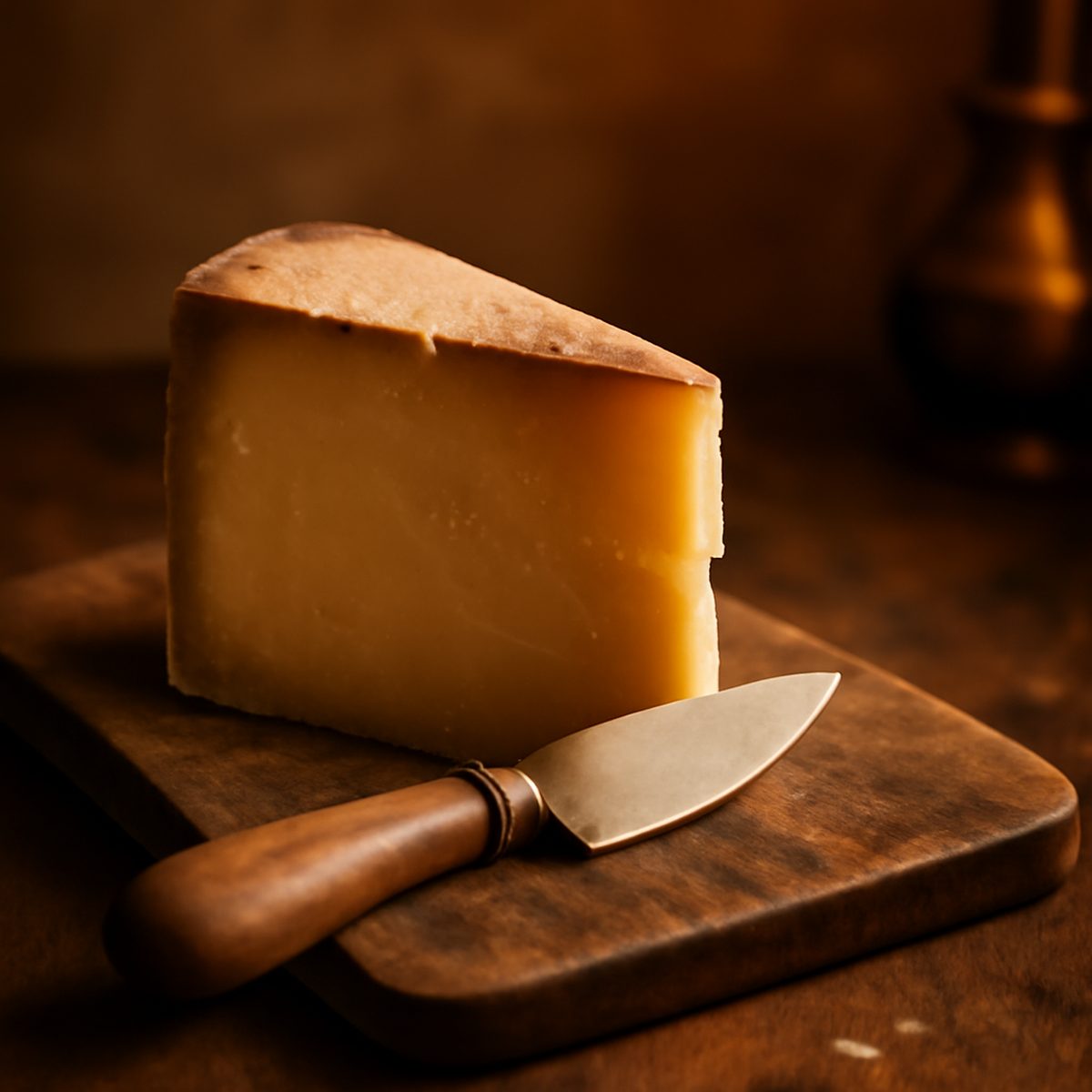
Cut into a properly aged Comté and you are tasting a place. The cheese carries the character of high alpine pastures, of a particular breed of cow, of copper cauldrons and cool ageing cellars and months of patient turning. It is one of the great cheeses of the world, and yet it is also everyday food in its home region, eaten without ceremony. Understanding the craft behind it deepens every bite.
A cheese of its landscape
Comté comes from the Jura massif in eastern France, a region of mountain pasture and long winters. Everything about the cheese is tied to that geography. The milk comes from local mountain-breed cows grazed on alpine meadows dense with grasses and wildflowers in summer, and fed on hay from those same meadows in winter. The rules that govern the cheese forbid the intensive shortcuts of industrial dairying, insisting instead on a slow, pasture-based rhythm.
This connection between land, animal and cheese is what the French call terroir, and in Comté it is unusually direct. The flavour of a wheel shifts with the season the milk was gathered, summer pasture giving a fruitier, more complex cheese than winter hay. It belongs to the noble alpine tradition, alongside the great mountain wheels celebrated in our note on Piedmontese and alpine Italian cooking, where high pasture and long ageing produce cheeses of remarkable depth.
How it is made
The making of Comté is a study in patience and scale. It takes a great deal of milk to make a single wheel, which is why the cheese has always been a communal effort. Traditionally, farmers pooled their milk at a local fruitière, a cooperative dairy, so that no single farm’s herd could supply a wheel alone. This cooperative structure has shaped the cheese’s character and its economics for centuries.
The milk is gently warmed in large copper cauldrons, curdled, cut and cooked, then pressed into the broad wheels that define the cheese. Copper matters here; the metal is traditional and believed to influence the final flavour and texture. The young wheels are salted and then handed to the affineurs, the ageing specialists whose work turns fresh cheese into something profound. The transformation is the same alchemy explored in our primer on cheese ageing and affinage.
Comté is not made by one person but by a whole valley — the herd, the dairy, the affineur, the season. You taste the collaboration in every wedge.
The long work of ageing
Ageing is where Comté earns its reputation. The wheels rest in cool cellars for many months — sometimes well over a year, occasionally far longer — during which they are regularly turned, brushed and rubbed to develop the rind and coax the flavour inward. A young Comté is mild, milky and supple; a long-aged one is deep, complex and firm, its flavour concentrating with time. Italy offers a very different lesson in what time and cellar can do, as our piece on the craft of real Gorgonzola explains.
The changes are dramatic and worth learning to read:
- Young (around a year): gentle, creamy, nutty, with fresh butter and hazelnut notes.
- Aged (eighteen months plus): firmer, more intense, with brown butter, toasted nuts and dried fruit.
- Long-aged: dense and crystalline, with deep savoury notes and sometimes crunchy amino-acid crystals.
Those little crunchy crystals in an old wheel are not a flaw but a mark of maturity, prized by anyone who loves aged cheese. Storing such a cheese well matters as much as buying it well; our guide to choosing and storing cheese at home will help you keep a wedge at its best.
How to taste and serve it
Comté rewards attention. Bring it to room temperature before eating — cold dulls its complexity — and taste it slowly, letting the flavours build across the palate. A good wedge moves from creamy through nutty to a long, savoury finish, and comparing a young and an aged piece side by side is one of the most instructive things a cheese lover can do. The same side-by-side comparison of young and aged pieces works well with Spanish sheep’s cheese, as our piece on the craft of real Manchego explains.
On the table, Comté is generous and adaptable. It anchors a cheese board beautifully, melts superbly into a fondue or a gratin, and makes an incomparable grilled cheese. It pairs naturally with the wines of its home region, particularly the distinctive yellow wines of the Jura, and with lightly sweet accompaniments — a few walnuts, a little dried fruit, a slick of honey. For those building a full spread, our thoughts on matching wine and cheese will point the way.
Why the craft matters
The everyday grandeur of it
What is most beguiling about Comté is the way it holds greatness and ordinariness together. This is a cheese of real complexity, capable of standing beside the finest wines and rewarding the closest attention, and yet in its home region it is simply what people eat — grated over supper, melted into a midweek gratin, cut into a child’s lunch. That doubleness is part of its charm and a lesson in how the best food behaves. It does not demand ceremony, though it repays it; it slips as easily into a quick weeknight meal as onto a considered cheese board. Buying a good wedge and living with it over a week or two, tasting it in different moods and contexts, is one of the most satisfying ways to understand it. You begin to notice how its flavour shifts with temperature, how it changes beside a glass of wine versus a piece of fruit, how the aged crystals crunch differently from the creamy young paste. Few foods reward this kind of daily familiarity so generously, and fewer still carry so much craft into something so genuinely everyday.
It would be easy to treat Comté as just another hard cheese, pleasant enough on a sandwich. But to do so is to miss what makes it remarkable: a food that carries its landscape, its season and the collective labour of a whole valley in every wedge. The copper cauldrons, the cooperative dairies, the long months of turning in cool cellars — none of it is efficient, and all of it is the point. Buy a well-aged piece from someone who cares, taste it slowly, and you will understand why some cheeses are worth the wait. The wider dining and drinks section is full of the same regard for things made properly.
Renée has covered Singapore's restaurants for over a decade, with a soft spot for the kitchens most people walk past.