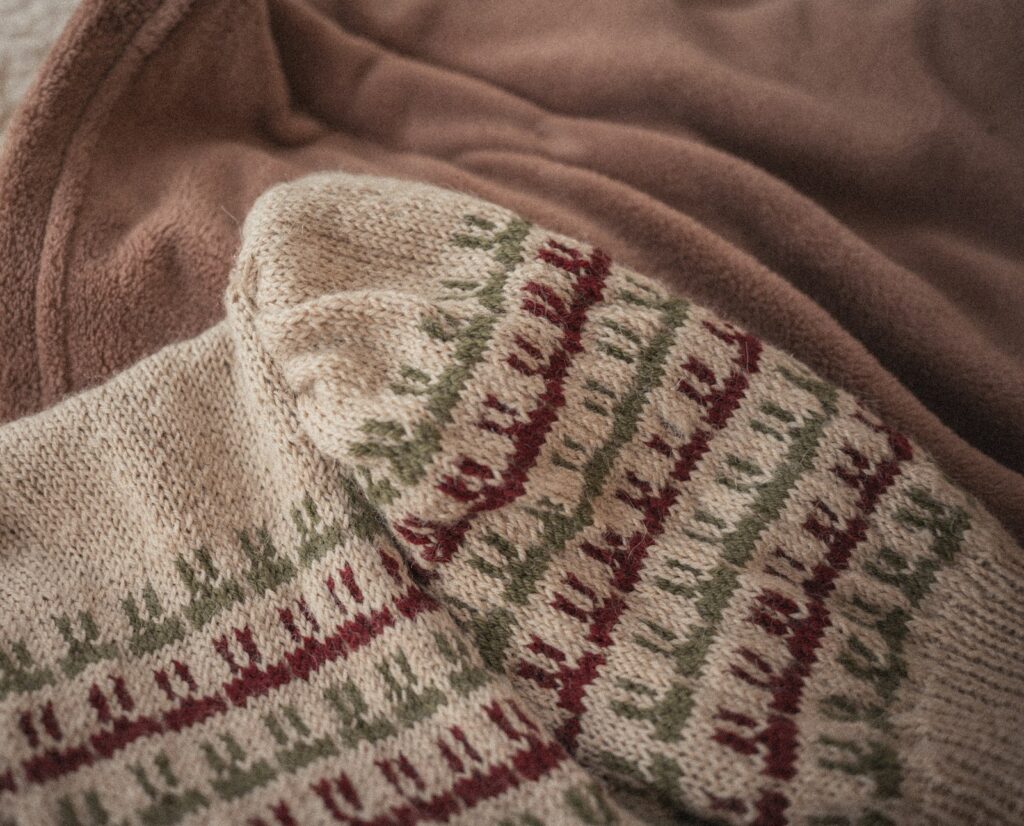
The Quiet Luxury of the Guanaco Scarf
Rarer than cashmere and impossibly soft, guanaco wool makes a scarf that whispers luxury. Here is why this Patagonian fibre deserves your attention.
 By Daniel Koh
2 September 2026 · 6 min read
By Daniel Koh
2 September 2026 · 6 min read

Luxury, at its best, is a private matter. It does not announce itself with a logo or a colour that carries across a room; it reveals itself only to the person wearing it and, perhaps, to the one who leans in close. Few things embody that idea more completely than a scarf made from guanaco, the wild Patagonian cousin of the llama and alpaca, whose fine undercoat yields a fibre rarer than cashmere and softer than almost anything you will ever wrap around your neck. It is the definition of quiet luxury: extraordinary to the touch, invisible to the crowd.
A fibre from the wild
The guanaco roams the high, cold, wind-scoured plains of the southern Andes and Patagonia, and its coat has evolved to survive them. Beneath a coarse outer layer lies a downy undercoat of astonishing fineness, measured in microns finer than the best cashmere, and it is this down that spinners prize. Because the animal is wild and the yield per creature is tiny, gathered rather than farmed at scale, genuine guanaco has always been scarce, and scarcity is written into its price and its mystique.
That rarity places it in the small, exalted family of the world’s finest natural fibres, alongside the vicuña scarf that shares its Andean origins and the musk-ox down behind the qiviut scarf. These are not everyday materials; they are the fibres people seek out once the more familiar luxuries have lost their power to surprise, the connoisseur’s choices in a category most people never explore past cashmere.
What it feels like to wear
The first thing anyone notices about guanaco is the weight, or rather the absence of it. A guanaco scarf is impossibly light for its warmth, insulating the neck against real cold while feeling like almost nothing at all, a paradox that only the finest fibres manage. The second thing is the hand, that untranslatable word for how a cloth feels: guanaco is silken and dense at once, with a faint natural warmth to the colour that no dye quite replicates, running from soft fawn to cinnamon to a deep, peaty brown.
You do not buy a guanaco scarf to be seen. You buy it for the private pleasure of wearing it, which is the truest kind of luxury there is.
It drapes rather than bulks, falling in soft folds against a coat collar and staying put without the stiffness of coarser wools. Worn against the skin it does not itch, which cannot be said of many warm fibres, and that gentleness is part of why it feels so indulgent. It belongs to the same considered register as the cashmere scarf, only turned up a quiet notch, warmer, lighter and rarer for anyone who has worn cashmere long enough to want more.
How to wear it, and why less is more
A fibre this special asks for restraint around it. The mistake would be to treat a guanaco scarf as a statement piece; its whole character is against that. It looks best doing exactly what a scarf should, warming the neck under a good overcoat, its natural tones reading as depth rather than colour.
- Let the undyed or lightly dyed naturals do the work; a guanaco scarf in fawn or brown flatters almost every coat.
- Wrap it simply, a single loop or a loose drape, and let the softness of the drape speak for itself.
- Pair it with quiet materials, a camel-hair or navy overcoat, so nothing competes with the fibre’s understated warmth.
- Keep the rest of the outfit calm; extraordinary softness at the throat is enough.
This is the same instinct that governs the finest knitwear, where rare fibres are treated with a light hand rather than shown off, the logic behind the best guanaco and rare-fibre knits. The material is the luxury; the styling should simply get out of its way.
It helps to understand where guanaco sits in the small hierarchy of the world’s rare fibres, because the differences are real and worth knowing. Vicuña, the most celebrated of them, is finer still and carries a price to match, a fibre so scarce it has become almost mythical; qiviut, the down of the musk ox, is prized for a warmth out of all proportion to its weight and an almost weightless hand. Guanaco slots in beside these, less famous than vicuña but sharing its Andean lineage and much of its extraordinary softness, and for many wearers it represents the sweeter spot, offering a great part of the magic without quite the same rarefied cost. To hold examples of each side by side is a quiet education in touch, teaching the fingertips distinctions the eye can barely register, and it is precisely this connoisseurship of the hand that the finest fibres reward. Once your fingers learn what guanaco feels like, ordinary wool never quite feels the same again.
Caring for something rare
A fibre this fine deserves fitting care. Store a guanaco scarf folded and flat, away from light and damp, ideally with cedar to guard against moth, and give it room to breathe rather than crushing it in a drawer. Clean it rarely and gently, by hand in cool water with a wool-safe soap or through a specialist, and never wring or hang it wet; lay it flat to dry so the weight of water cannot pull it out of shape. Treated well, a guanaco scarf is a piece for decades, softening a little more each winter.
The deepest appeal of guanaco is that it refuses to perform. It is warm, it is rare, it is astonishingly soft, and it keeps all of that to itself, sharing the secret only with the wearer. In a world of luxury that shouts, there is something quietly satisfying about a thing that whispers, and it sits naturally among the other understated pleasures gathered across our style and watches coverage. Buy one, wear it for yourself, and understand at last that the finest luxuries are the ones nobody else even notices.
Daniel has spent fifteen years arguing that the best watch is the one you never take off.