The Quiet Islands of the Gulf of Morbihan
An inland sea dotted with islands, the Gulf of Morbihan rewards those who slow to its tidal rhythm. Here is how to find its quietest corners in south Brittany.
 By Marcus Lim
1 September 2026 · 6 min read
By Marcus Lim
1 September 2026 · 6 min read
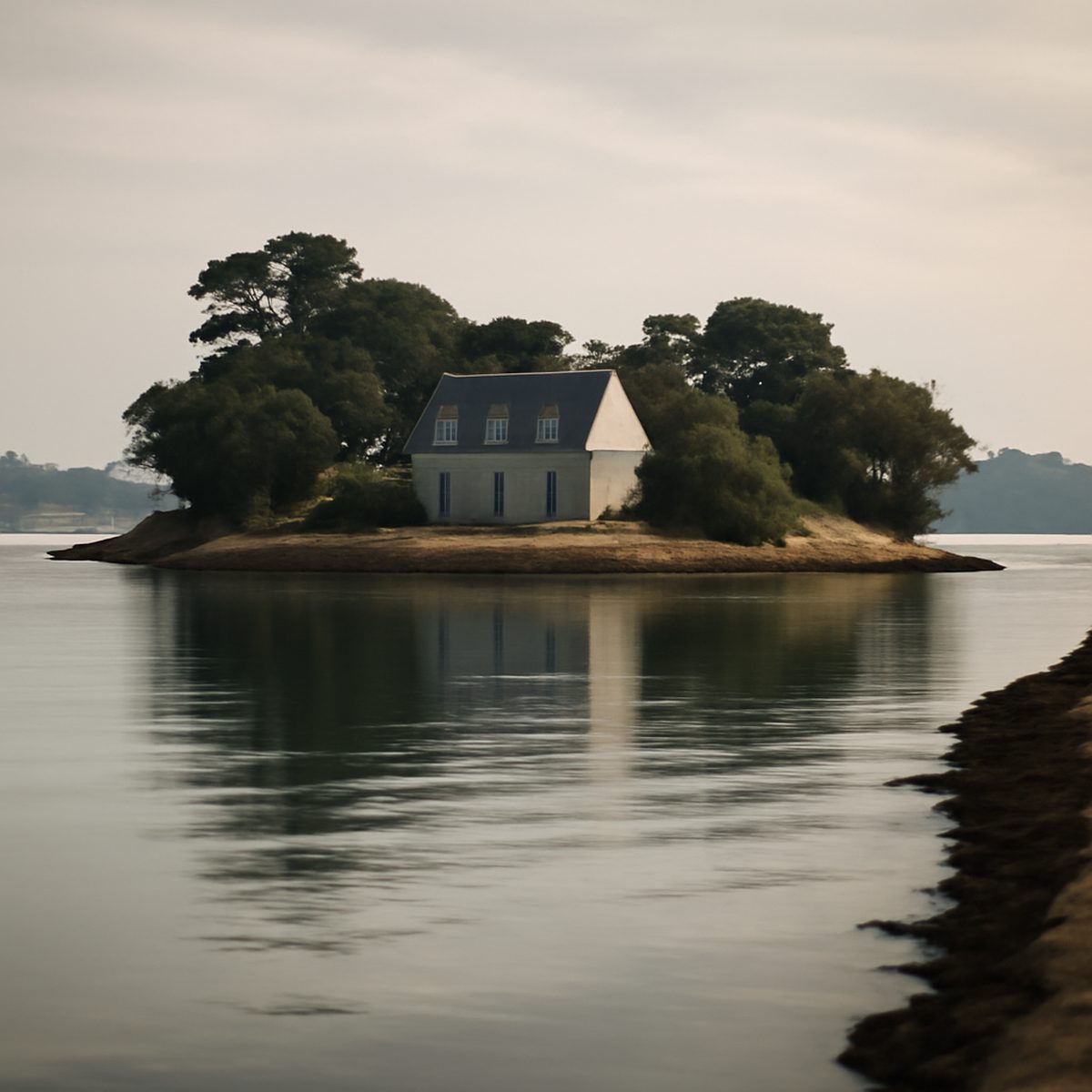
There is a stretch of southern Brittany where the sea comes indoors. The Gulf of Morbihan, whose Breton name means simply little sea, is an almost enclosed lagoon dotted with islands, laced with tides and ringed by oyster beds, a place that seems designed to slow the pulse of anyone who arrives in a hurry. The water here is rarely wild; it fills and empties twice a day through a narrow mouth, leaving the islands to sit in a shifting mirror of channels and mudflats. To travel among them is to surrender to a rhythm older than any timetable.
Local lore holds that the gulf contains an island for every day of the year, a poetic exaggeration that nonetheless captures the scattered, uncountable feel of the place. Only a couple are properly inhabited; the rest are private, birded, grazed or simply left to the tides. For the unhurried traveller, this is the whole appeal: a landscape that cannot be rushed and does not want to be.
An inland sea and its rhythm
The defining fact of the Morbihan is the tide. Twice daily the gulf breathes, and everything on it, the boats, the oystermen, the walkers on the shore, arranges itself around that breathing. Ferries run to the tide; sandbars appear and vanish; a beach that was there at lunch is gone by tea. Understanding this is the first act of travelling well here, and it teaches the same patience that makes the slow ferry such a pleasure elsewhere: arrival is not the point, the passage is.
The reward for that patience is a quality of light and calm that is hard to find on more open coasts. Because the gulf is sheltered, the water is gentle, the reflections still, and the whole scene has the composed serenity of a painting. Sailing dinghies drift across it; herons stand in the shallows; the villages along the shore go about their oyster business as they have for generations.
The two islands worth the crossing
Of the inhabited islands, two draw most visitors, and both reward a slow day. The larger is threaded with lanes too narrow for much traffic, its cottages low and whitewashed, its interior a patchwork of small fields and pines. The smaller, closer to the mouth, is greener and quieter still, best explored on foot along paths that trace the shoreline past hidden coves. Neither offers much to do in the conventional sense, which is exactly why they are worth visiting.
Bicycles are the sensible way to see the larger island, and walking the only way to know the smaller. Take a picnic of local oysters, bread and cider; find a sheltered cove; watch the tide do its slow work. The islands ask for nothing more ambitious, and the traveller who tries to impose an itinerary on them will only be frustrated.
The Morbihan does not reveal itself to the impatient. Give it a tide or two, and it opens like a shell, quietly and completely.
The oyster coast and its table
No account of the gulf is complete without its oysters. The Morbihan is one of France’s great oyster nurseries, its tidal flats ideal for the slow cultivation that gives the local shellfish their distinctive mineral sweetness. Along the shore, modest cabins and family shacks sell them by the dozen, shucked to order and eaten at plain tables looking out over the beds they came from. It is food at its most direct: the sea, a squeeze of lemon, a glass of cold Muscadet.
This is the kind of unpretentious coastal eating that rewards the curious traveller, closer in spirit to a working harbour than a restaurant scene. The pleasure lies in the setting and the freshness, not in ceremony, and it pairs naturally with the gulf’s larger lesson about slowing down.
Finding the quiet corners
To feel the Morbihan at its best, avoid the peak of summer and the middle of the day. The gulf is loveliest in the shoulder seasons and the softer hours, when the light lengthens and the crowds thin. Base yourself in one of the small ports around the shore rather than the busier towns, and let each day take its shape from the tide table rather than a guidebook.
Those drawn to this kind of sheltered, island-scattered travel will find kindred landscapes elsewhere in Europe. The scattered calm here recalls the quiet islands of the Saronic Gulf in Greece, while the granite shores and Breton light connect it directly to the quiet coast of Brittany’s pink granite just up the peninsula. For a different register of island quiet, the whitewashed simplicity of the quiet islands of the Cyclades offers a warmer counterpoint.
The gulf also carries a deeper history that rewards the curious. This corner of Brittany is scattered with some of Europe’s oldest standing stones, the great alignments and dolmens raised by peoples who lived here thousands of years before the oyster farmers, and several of the islands and shores hold their own weathered megaliths. You come upon them without ceremony, a line of grey stones in a field above the water, and they lend the whole landscape a quiet weight, a sense of having been inhabited and cherished for far longer than any guidebook lets on. To walk among them at dusk, with the tide sliding out below, is to feel the gulf’s antiquity as much as its calm.
The Gulf of Morbihan is not a destination for the traveller in search of sights to tick off. It is a place to be still in, to eat well and simply, and to let the tide teach a lesson about patience that most holidays never manage. The traveller who arrives with a full itinerary will leave frustrated; the one who arrives with none will leave restored. Come with time to spare and it will reward you with the rarest thing a coast can offer: genuine quiet, unhurried and complete. For more journeys in the same unhurried spirit, the Travel & Stays section is full of them.
Marcus writes on travel and hospitality across Asia, and is happiest a long way from a lobby.