
The Quiet Coast of the Costa de la Luz
Wide Atlantic beaches, white towns and a wind that keeps the crowds honest: the Costa de la Luz is the coast that time forgot. Here is how you find it.
 By Marcus Lim
1 September 2026 · 6 min read
By Marcus Lim
1 September 2026 · 6 min read
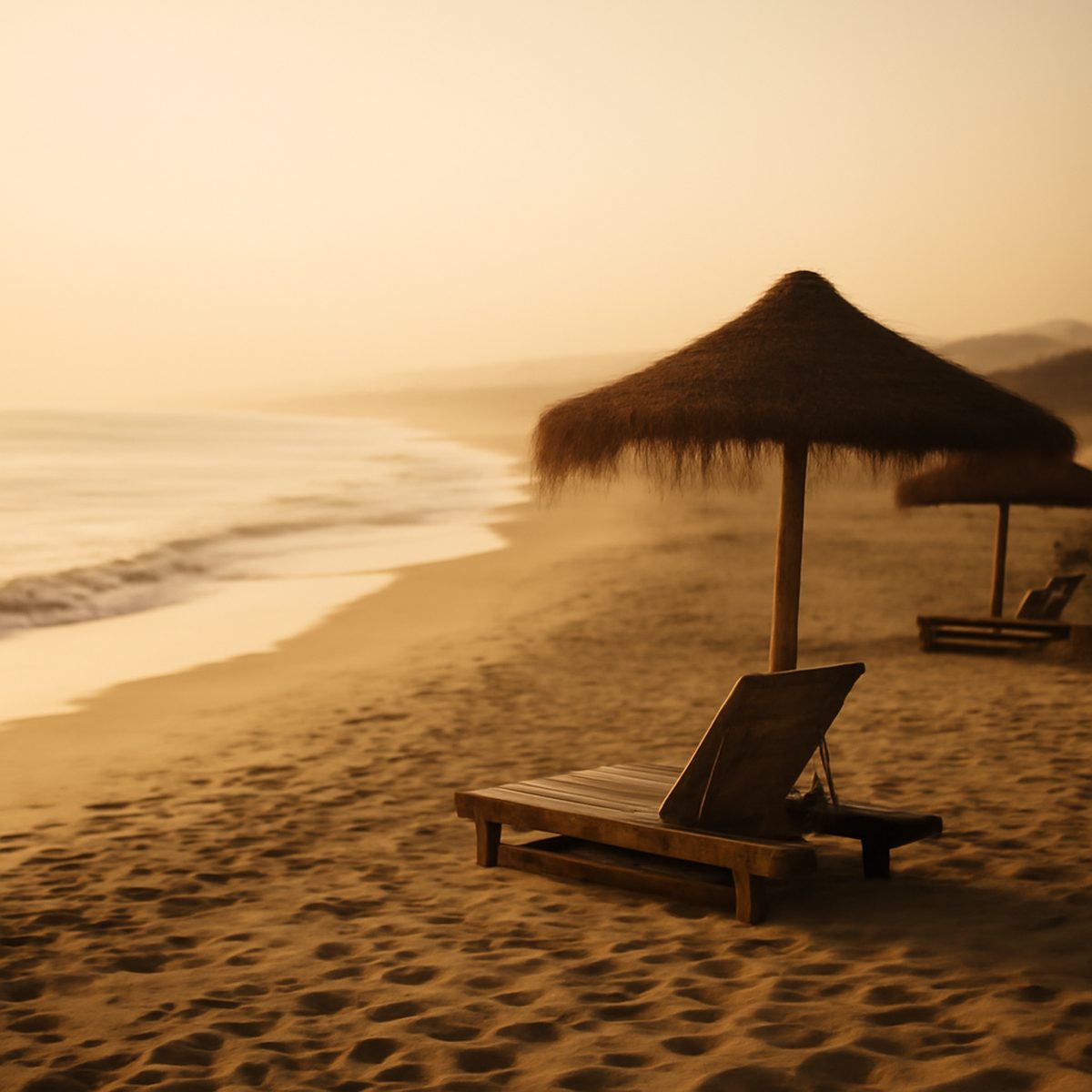
Spain’s coasts are, for the most part, a cautionary tale. The great Mediterranean shores were built over so thoroughly in the last half-century that their old character all but disappeared beneath the concrete. But there is one coast that escaped, tucked into the country’s south-western corner where the Atlantic replaces the Mediterranean and the whole mood of the shore changes. The Costa de la Luz, the coast of light, kept its wide beaches, its white towns and its wind-scoured emptiness, and it remains one of the quietest and most beautiful stretches of coast in southern Europe.
The name is well earned. This is a coast of extraordinary light, the Atlantic sky vast and clean, the beaches so wide and pale that the sun seems to pour off them. It is a landscape built on a larger scale than the cosy Mediterranean, and it rewards the traveller who comes not for a resort but for space, air and quiet.
Atlantic beaches and the wind
The defining feature of the Costa de la Luz is the beach, and its beaches are like few others in Spain. Broad, long and often backed by dunes rather than buildings, they run for kilometres with room to spare even in high season, the Atlantic rolling in clean and cool. This is a different sea from the tideless, gentle Mediterranean: cooler, wilder, more alive, with real waves and real weather.
And there is the wind. The Costa de la Luz is famously breezy, the Atlantic air funnelling along the coast in a way that has made it a haven for kitesurfers and, more importantly, has kept it from being overdeveloped. The wind is the coast’s quiet guardian, deterring the package crowds who prefer their beaches still and hot, and preserving instead a shore for those who like their coast with a bit of movement and air. Anyone who values the bracing character of an Atlantic shore will recognise the appeal that also animates the quiet coast of the Costa Verde in Spain’s green north.
White towns above the shore
Behind the beaches rise the white towns, the pueblos blancos of Andalusia in their coastal form, their whitewashed houses stacked on bluffs and hillsides above the sea. These are working Spanish towns rather than resorts, their squares full of local life, their old quarters a maze of narrow, shaded lanes, their character entirely intact. To base yourself in one is to have the beach by day and a real Spanish town by evening, an unbeatable combination.
The whitewashed hill town is one of Andalusia’s great forms, and the coastal versions share their appeal with the perched villages found all around the Mediterranean; the traveller who has enjoyed the villages of the Basque coast to the north will find here a sun-baked southern counterpart, hotter, whiter and looking out over a wilder sea.
The Costa de la Luz was saved by its wind and its distance. It is the coast Spain forgot to ruin, and it is all the better for having been left alone.
The table and the sherry
This corner of Andalusia eats and drinks superbly, and its coast is inseparable from its food. The Atlantic supplies magnificent seafood, the fish and shellfish that fill the region’s tables, often simply grilled or fried and eaten within sight of the boats that landed it. Inland, the same country produces the celebrated hams and the sherries that give the region its distinctive flavour.
Sherry, in particular, belongs to this coast. The great sherry towns lie just behind it, and a cold glass of the bone-dry local style, drunk with a plate of fried fish as the Atlantic breeze comes in, is one of the definitive pleasures of the Costa de la Luz. It is a taste of place as direct as any in Spain, and it rewards the curious traveller who ventures beyond the beach into the towns and bodegas behind it.
Travelling the coast well
The Costa de la Luz rewards the independent traveller over the package tourist, and a little planning helps you find its best. A few thoughts:
- Base yourself in a white town rather than a purpose-built resort, for a stay with real character.
- Embrace the wind rather than fighting it, choosing sheltered coves on the breeziest days and open beaches on the calm ones.
- Come in the shoulder seasons, when the weather is kind, the sea still swimmable and the beaches close to empty.
- Venture inland to the sherry towns and white villages, since the coast and its hinterland are one experience.
Those drawn to this kind of unspoiled southern shore will find natural companions elsewhere on the Iberian coast. The same quiet, undeveloped spirit survives on the quiet coast of the Algarve West just across the Portuguese border, and on the wilder Mediterranean stretches of the quiet coast of the Costa Brava in the north-east, both of which reward the traveller who prefers space and character to concrete and crowds.
It is worth adding a word about the light itself, since it is more than a pretty name. The Atlantic here produces a clarity and brilliance quite unlike the hazier glare of the Mediterranean, a clean, luminous quality that photographers and painters prize and that gives the coast its character as much as any beach or town. In the long, low light of early morning and late afternoon, the pale sand and whitewashed walls seem almost to glow, and the whole shore takes on the serene, washed radiance that gave it its name. Time your days to catch these hours, walking the empty beaches at dawn or dusk, and you will understand why this modest, overlooked corner of Spain has quietly captivated everyone who has troubled to find it.
The Costa de la Luz is a reminder that not all of Spain’s coast was lost, and that the wildest, windiest and least developed stretches are often the most rewarding. Wide beaches, white towns, superb food and a wind that keeps the crowds honest: this is the Andalusian coast at its best, and it is waiting for anyone willing to look beyond the famous names. For more coastal journeys in this unhurried spirit, the Travel & Stays section is full of them.
Marcus writes on travel and hospitality across Asia, and is happiest a long way from a lobby.


