The Polo Shirt, Perfected
The polo shirt has become shorthand for lazy dressing, but a properly made one, well fitted, is one of the most useful pieces a man can own.
 By Daniel Koh
29 August 2026 · 6 min read
By Daniel Koh
29 August 2026 · 6 min read
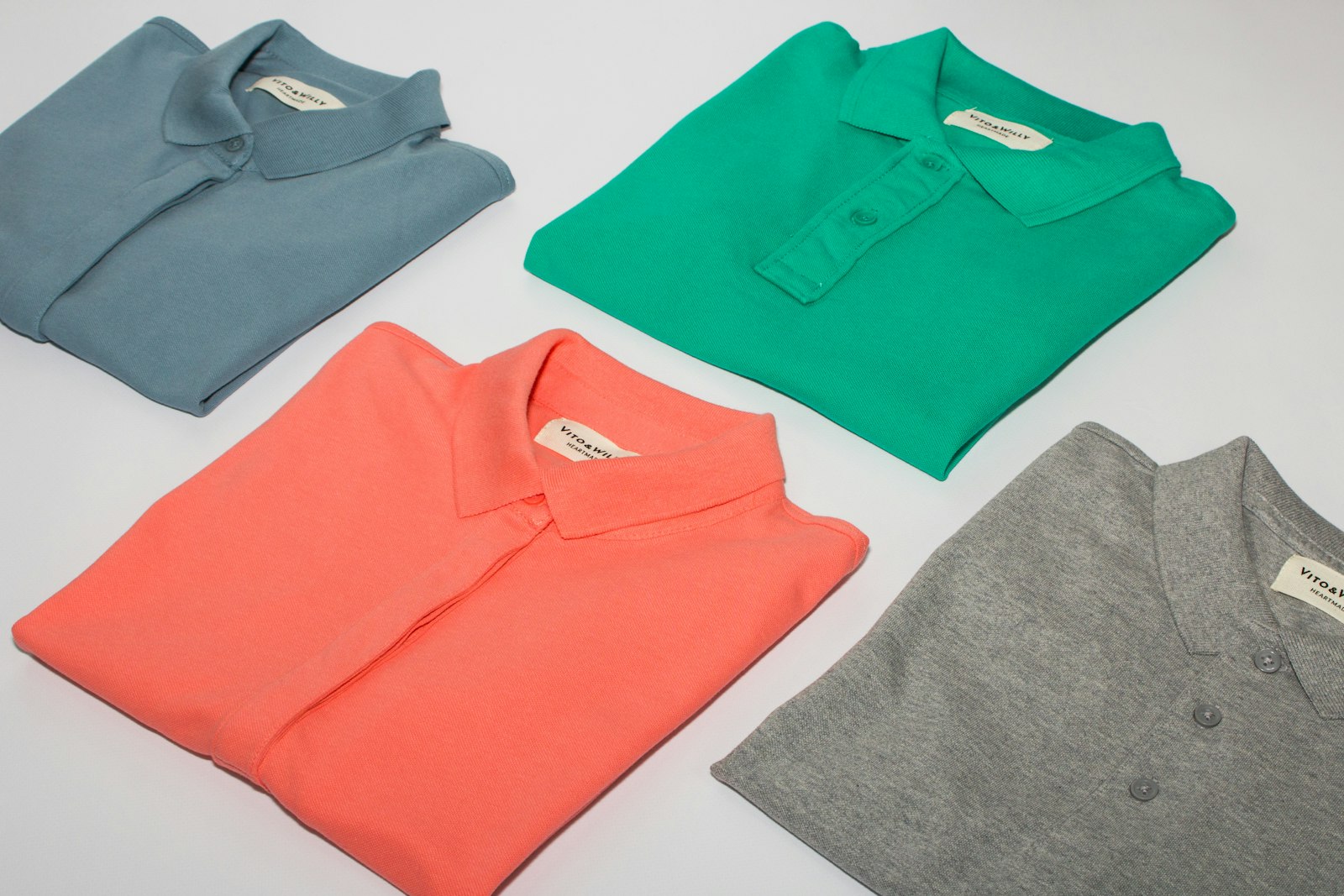
The polo shirt has an image problem entirely of its own making. Decades of corporate uniforms and embroidered logos have flattened a genuinely elegant piece of clothing into shorthand for lazy dressing — the golf-course default, the office-outing giveaway. It’s a shame, because a properly made polo, cut well and worn with intent, remains one of the most versatile pieces a man can own: smarter than a T-shirt, more relaxed than a shirt, and entirely comfortable in the Singapore heat that makes half the Western wardrobe impractical for most of the year.
The gap between a good polo and a forgettable one has almost nothing to do with the logo on the chest and almost everything to do with two things most buyers overlook: the fabric and the fit through the shoulders.
Fabric is where most polos fail first
Pique cotton — the small, waffle-textured weave most associated with the category — remains the gold standard, and for good reason: it holds its shape, breathes reasonably well, and softens attractively with age rather than pilling into something shapeless. Cheaper polos substitute a flatter jersey knit or a synthetic blend that looks fine on the hanger and clings unflatteringly within an hour of wear, particularly in humidity.
Weight matters more than most buyers expect. A polo that’s too lightweight shows every crease and every hint of sweat; one that’s slightly heavier — still breathable, but with real substance — holds its structure through a full day and drapes properly rather than clinging. For a finer, more temperature-forgiving fibre, our guide to the perfect merino polo considers the alternative to cotton pique.
What separates a good polo from a forgettable one
- A collar with enough structure to stand slightly on its own, rather than flopping immediately.
- A placket long enough to allow two buttons undone without gaping awkwardly.
- Side vents at the hem, which allow the shirt to sit properly whether tucked or untucked.
Fit is non-negotiable
The polo shirt is unforgiving of a poor fit in a way that a looser shirt or jacket can disguise. Too tight through the chest and it reads as trying too hard; too loose through the body and it collapses into the exact shapeless silhouette the category is unfairly known for. The shoulder seam is the detail to get right above all others — it should sit precisely at the edge of the shoulder bone, no further, since everything else about how a polo hangs follows from that single point.
A tailor who alters a considerable volume of casualwear for clients each season put it bluntly: “Nobody brings me a blazer to fix the shoulders anymore — they already know. But polos, somehow, people still buy two sizes too big and wonder why they look sloppy.” The fix, in his experience, is almost always the same: size down, and let a proper pique fabric do the rest of the work. The same principle of buying fewer, better things applies well beyond the wardrobe, as our piece on the case for a great umbrella suggests.
Colour and how to wear it
Muted, slightly desaturated tones — a soft navy, a faded olive, an off-white rather than a stark one — read as considered in a way that bright primary colours rarely do outside of genuine sportswear contexts. This connects to the broader principle explored in how to wear colour without trying too hard, where restraint consistently reads as more deliberate than boldness.
Worn with tailored trousers and loafers, a good polo does real work in Singapore’s climate as a smart-casual alternative to a shirt that would otherwise wilt by midday. Worn with well-fitted denim, it becomes the anchor of a genuinely considered weekend uniform, a theme covered more fully in the weekend wardrobe, elevated.
Building it into a wider rotation
The polo pairs naturally with the same fit principles that govern the rest of a considered wardrobe — a subject explored at length in why fit beats everything else, which applies to a fifteen-dollar T-shirt exactly as much as it does to bespoke tailoring. And for anyone assembling a genuinely versatile capsule rotation around pieces like this, building a ten-piece capsule wardrobe makes the case for why two or three well-chosen polos, rather than a drawer full of forgettable ones, do considerably more work.
Caring for pique cotton properly
A good polo, unlike a cheap one, genuinely improves with correct washing rather than degrading with every cycle. Cold water and a gentle cycle preserve both the fabric’s structure and its colour considerably longer than a hot wash, which tends to shrink pique cotton unevenly and dull darker shades faster than lighter ones. Turning the shirt inside out before washing protects the surface texture from friction against zips and buttons in the machine, a small habit that meaningfully extends how long the collar retains its shape.
Air-drying rather than tumble-drying is worth the minor inconvenience, since heat is the single biggest contributor to a polo’s collar losing structure over time. A polo dried flat or on a proper hanger, rather than balled up in a dryer with heavier items, will noticeably outlast one subjected to repeated high-heat cycles, often by several years.
Buying for the long term
It is worth trying a polo on in person wherever possible rather than buying blind online, since fit through the chest and shoulder varies considerably between makers even at similar stated sizes. A size that fits perfectly in one brand’s cut can run noticeably looser or tighter in another’s, and the shoulder-seam test described earlier is far easier to judge standing in front of a mirror than guessing from a size chart alone.
A genuinely good polo is not a cheap purchase relative to a basic T-shirt, and buyers new to the category are sometimes surprised by the price difference. But amortised over the years a well-made pique cotton polo typically lasts — considerably longer than the fast-fashion equivalent, which usually loses its shape within a single season — the actual cost per wear tends to favour the more expensive option decisively. Two or three excellent polos, properly cared for, will comfortably outlast a drawer full of cheaper ones bought to compensate for their own inevitable decline.
For the rest of a warm-climate wardrobe built around similar principles, browse more widely across Style & Watches. The polo shirt deserves better than its reputation. Get the fabric weight right, get the shoulder seam right, and choose a colour with some restraint, and it earns its place as one of the hardest-working pieces in a warm-climate wardrobe — logo optional, and generally better left off entirely.
Daniel has spent fifteen years arguing that the best watch is the one you never take off.