The Case for a Great Umbrella
Singapore's afternoon downpours make the umbrella a daily tool, yet most men still carry a flimsy one that dies within a single wet season and get rebought.
 By Daniel Koh
29 August 2026 · 6 min read
Singapore is, on any given afternoon, roughly one cloud away from a genuine downpour, and yet the umbrella remains one of the most under-considered items most men own. It sits in the same category as socks or phone chargers — a thing bought in a hurry, at a convenience store, during the emergency it was meant to prevent — and replaced just as quickly once a rib snaps in the first proper gust.
This is a shame, because a well-made umbrella is one of the few accessories that improves noticeably with quality, in ways that are immediately obvious the first time it’s used in real weather rather than a light drizzle. The difference between a five-dollar umbrella and a genuinely good one is not subtle.
What actually separates a good umbrella from a disposable one
The frame is where most cheap umbrellas fail first. A proper umbrella uses a fibreglass or steel shaft with reinforced ribs — eight is a reasonable minimum, ten is better — that flex under a gust rather than snapping outright. Cheaper models economise here first, since the frame is the least visible component and the easiest place to cut cost without an obvious drop in appearance on the shop floor.
Canopy fabric matters almost as much. A tightly woven pongee or microfibre canvas sheds water fast and dries within minutes of being closed, rather than sitting damp in a bag for hours and eventually developing the faint mildew smell that plagues cheaper umbrellas within a single wet season.
The details worth paying for
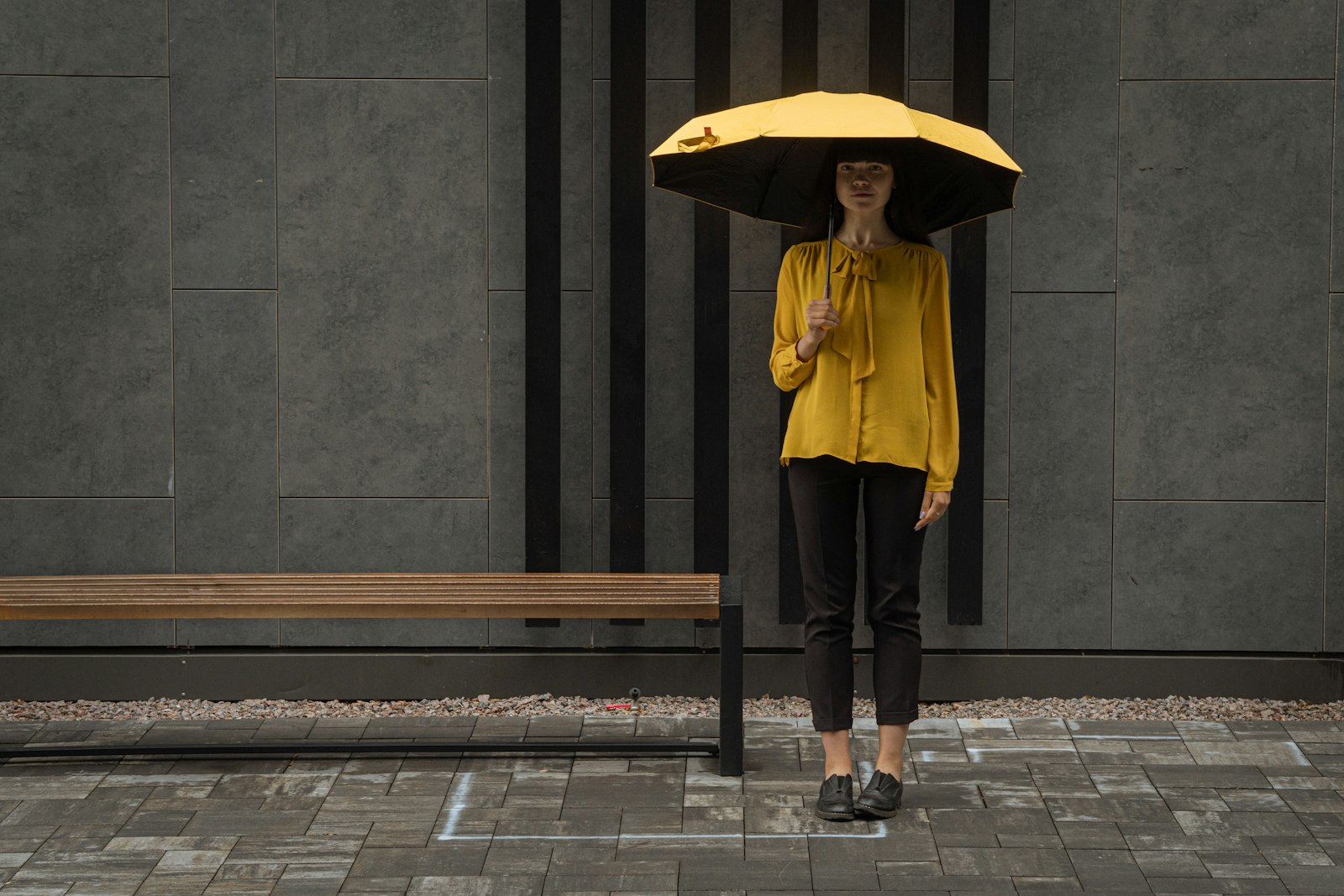
- A canopy that extends fully past the wearer’s shoulders — undersized umbrellas are a false economy in genuine tropical rain.
- A handle made from real wood or leather-wrapped material, which improves grip and simply lasts longer than moulded plastic.
- A manual open-close mechanism over an automatic one, since the automatic spring is almost always the first part to fail.
The case for carrying one properly
A rolled umbrella, carried the way a proper walking stick might be, does something a crumpled one stuffed into a bag never will — it signals a small but real degree of consideration, the same instinct that governs the belt, and other details that matter. It’s a minor detail, admittedly, but minor details are precisely where this kind of quiet attentiveness tends to show.
A shopkeeper who has run a small umbrella and leather goods repair counter for over two decades offered a useful piece of context: “People bring me umbrellas to fix that cost less than the coffee they were drinking when it broke. I tell them the same thing every time — buy one good one and it will outlast six cheap ones, easily.” It is difficult to argue with the arithmetic, particularly in a climate that tests an umbrella several times a week.
Materials and maintenance
A quality umbrella, cared for properly, can genuinely last a decade or more — considerably longer than most wardrobe staples get credit for. The key habits are simple: shake off excess water before folding rather than closing it wet, let the canopy dry fully open before storing it away, and avoid forcing a stuck mechanism, which is the single most common cause of a broken rib. This general philosophy of buying fewer, better things and maintaining them properly runs through much of what makes a wardrobe genuinely considered, a theme explored more broadly in leather goods that age beautifully, where the same buy-once logic applies almost identically.
Pairing it with the rest of the wardrobe
A dark, unpatterned canopy in navy or black works with almost everything and ages far more gracefully than novelty prints, which tend to look dated within a season or two. Paired with a well-considered overcoat during the rare cooler spells, discussed in the quiet power of a great overcoat, or simply carried alongside a well-chosen daily bag, a topic covered in the best everyday carry, refined, a good umbrella becomes less an emergency purchase and more a permanent, quietly considered fixture of daily life.
Compact versus full-size, honestly weighed
The compact folding umbrella has its place — a bag that already carries a laptop and a water bottle has little room for a full-length shaft — but it should be understood as a genuine compromise rather than simply a smaller version of the same product. Folding mechanisms introduce more moving parts and more potential failure points, and the shorter canopy nearly always means a smaller coverage radius, a real disadvantage in genuinely heavy tropical rain rather than a light shower.
For anyone who can manage it, keeping a full-size umbrella at the office and a compact one in the bag for genuine emergencies is a sensible middle path — the full-size umbrella for a properly considered walk to lunch or a dinner reservation, the compact one purely as insurance for the unplanned downpour. Treating the compact umbrella as the only umbrella tends to produce exactly the kind of disappointing five-dollar purchase this whole argument is trying to steer people away from.
A small object that says more than it should
Colour and finish deserve a moment’s thought too, beyond simple durability. A well-chosen umbrella in a dark, understated tone reads as a considered accessory rather than a purely functional necessity, and it tends to coordinate more naturally with the rest of a wardrobe than the novelty prints and bright branded colours that dominate the cheaper end of the market.
There is something quietly telling about how a person treats an object this ordinary. A guest who arrives at a considered dinner having left a good umbrella dripping tidily by the door, rather than shoved wet into a bag, has usually applied that same attentiveness elsewhere in how they dress and carry themselves. It is a minor tell, admittedly, but minor tells are frequently the most honest ones.
Anyone assembling the rest of a considered wardrobe around it will find the wider landscape of accessories and essentials across Style & Watches. Given how often it rains in this city, an umbrella arguably earns more daily use than half the items in a considered wardrobe put together. It deserves, at minimum, the same level of thought given to a good pair of shoes — bought once, chosen carefully, and expected to last.
Daniel has spent fifteen years arguing that the best watch is the one you never take off.