The Art of the Tie, Reconsidered
The necktie keeps getting pronounced dead and keeps quietly returning, worn now by genuine choice rather than obligation, and worn a good deal better for it.
 By Daniel Koh
29 August 2026 · 6 min read
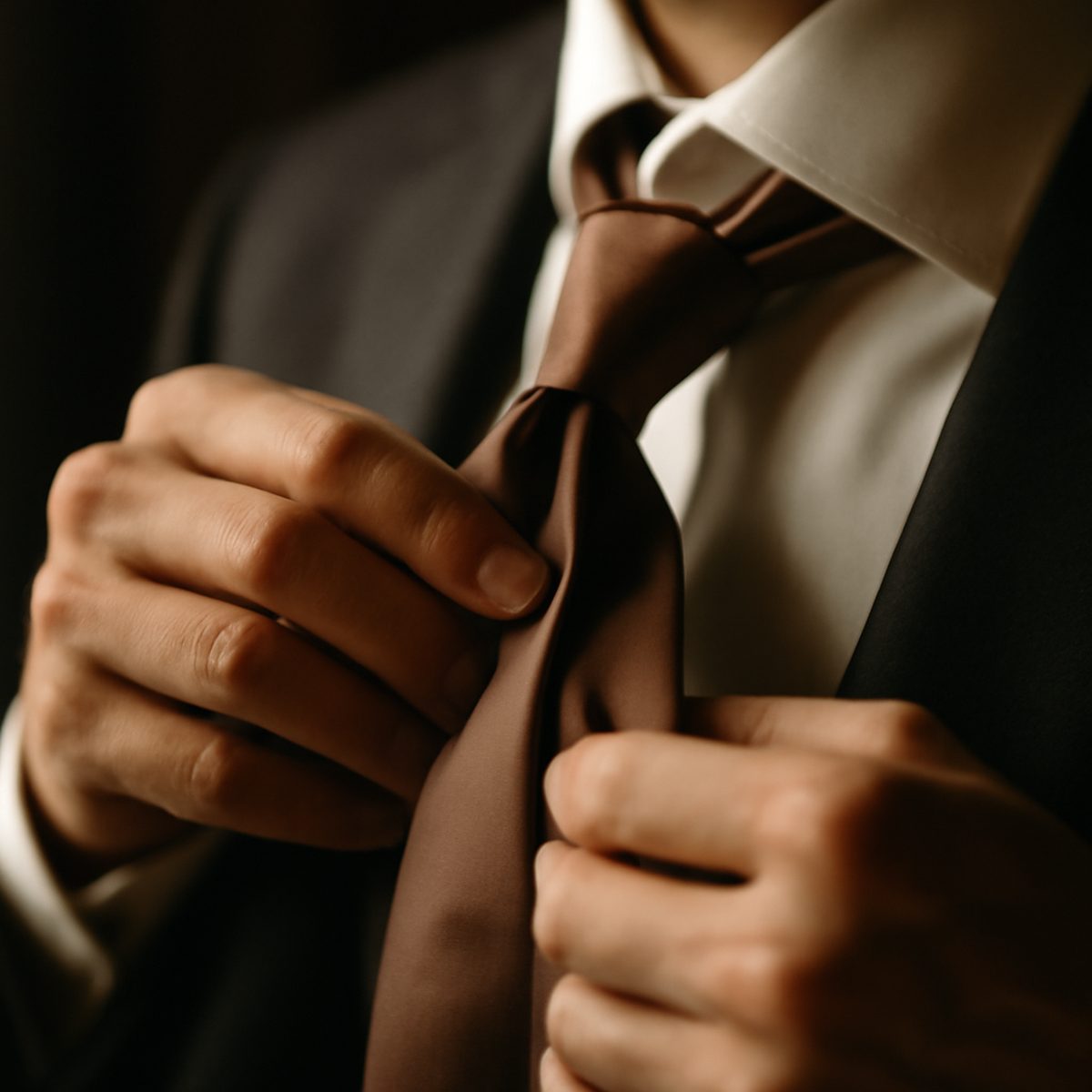
The necktie has been declared obsolete roughly once a decade for the last fifty years, and roughly once a decade it quietly returns, usually in a slightly different form than the one that supposedly died. What’s changed most in its most recent revival is the reasoning behind it — fewer men wear a tie now because an office dress code demands it, and more wear one because they’ve decided, on their own terms, that it does something a bare collar simply cannot.
That shift from obligation to choice has, if anything, improved how ties are worn. A tie chosen freely tends to be chosen with more care than one grabbed reflexively off a rack the morning of a compliance-mandated meeting.
Silk quality is where most ties fail first
The weight and weave of the silk determine almost everything about how a tie behaves — how the knot sits, how the fabric drapes down the chest, and how well it survives repeated wear without crushing permanently out of shape. A genuinely good silk tie, seven-fold or lined properly, holds a knot with real body and springs back after being untied, rather than collapsing into a limp, permanently creased strip after a handful of wears.
Weave matters as much as weight. A twill or grenadine weave has more textural interest and drapes with more life than a flat, printed satin, which tends to look cheaper regardless of the actual silk quality underneath it.
What to check before buying
- A tie that springs back into shape after being scrunched gently in the hand, rather than staying creased.
- Hand-finished edges and a properly weighted tip, both signs of construction quality that machine-made ties often skip.
- A width proportionate to the current lapel width being worn — ties dated faster by width than by pattern.
The knot matters more than the tie
A four-in-hand knot, slightly asymmetric and never forced into perfect symmetry, remains the most versatile and least try-hard option for most ties and most collars. The larger, more symmetrical Windsor knot has its defenders, but it demands a wider spread collar to look proportionate and can read as slightly overdressed in more casual professional settings, where a tie is already doing enough visual work on its own.
A bespoke tailor who has dressed clients for formal events for decades made an observation worth remembering: “The knot should look like it happened, not like it was engineered. The moment a tie looks too perfect, people stop noticing the tie and start noticing the effort.” That’s a useful check on the instinct to over-tighten and over-symmetrise every knot into stiffness.
Knowing when to skip it entirely
The considered modern approach to the tie is as much about knowing when to leave it off as knowing how to wear it. A well-cut jacket over an open-collar shirt reads as more confidently dressed today than a poorly chosen tie forced onto an otherwise casual outfit — restraint, again, outperforming effort, a principle explored more broadly in how to wear colour without trying too hard. The genuinely formal occasions — weddings, black-tie events, significant client meetings — remain where a tie does its most important work, and the art of black tie, done right covers exactly where the line sits for the most formal end of that spectrum.
Pairing it properly
A tie is only ever as good as the shirt collar beneath it, and a poorly chosen collar shape can undermine even excellent silk. The white shirt remains the most dependable foundation for any serious tie, a case made thoroughly in the white shirt, perfected. For the small accessories that finish the look — tie bars, cufflinks, a signet ring worn with genuine intent rather than costume — the signet ring and men’s jewellery is worth reading alongside this piece.
Pattern, and knowing where to stop
A solid tie in a considered colour will always be the safest starting point, but pattern is where a tie collection develops real personality, provided it’s introduced with some restraint. A fine repp stripe or a small-scale foulard print reads as classic rather than loud, while anything with an oversized motif tends to date within a season or two and rarely earns its keep in a genuinely considered wardrobe. The rule of thumb most stylists still reach for — never pairing a patterned tie with a patterned shirt of similar scale — remains sound advice precisely because it’s so often ignored, usually to the outfit’s detriment.
Colour choice matters as much as pattern. Navy, burgundy and a handful of muted greens form the dependable core of a considered tie collection, working with the overwhelming majority of suits and shirts a man is likely to own. Brighter colours have their place for genuinely festive or celebratory occasions, but they demand a confidence in the rest of the outfit that most day-to-day formal dressing simply doesn’t call for.
Caring for silk properly
Ties also deserve to be rotated rather than worn on repeat, a habit that has as much to do with the material’s longevity as with any concern for repetition being noticed. Silk needs time to relax and recover its shape between wears, and a tie worn two or three days running, without rest, tends to develop a permanent crease at the knot point far sooner than one given proper time to recover in between.
A good tie rewards proper storage more than almost any other piece of formalwear — hung or rolled rather than knotted overnight, which stretches and eventually distorts the silk at the point of the knot. Untying a tie the same way it was tied, in reverse, rather than simply pulling it loose over the head, preserves the shape considerably longer and is one of those small disciplines that separates a tie that lasts a decade from one that looks tired within a year.
Anyone building a considered formalwear rotation more broadly will find the fuller picture across Style & Watches, where several adjacent pieces cover the details that make formal dressing feel intentional rather than obligatory. The tie’s survival, against repeated predictions of its demise, comes down to exactly this: worn well, and by choice, it still does something no open collar can quite replicate.
Daniel has spent fifteen years arguing that the best watch is the one you never take off.