The Enduring Style of the Intarsia Knit
Intarsia knits build a pattern directly into the fabric itself rather than printing over it, and the technique's slow, deliberate craft is worth understanding.
 By Daniel Koh
1 September 2026 · 6 min read
By Daniel Koh
1 September 2026 · 6 min read
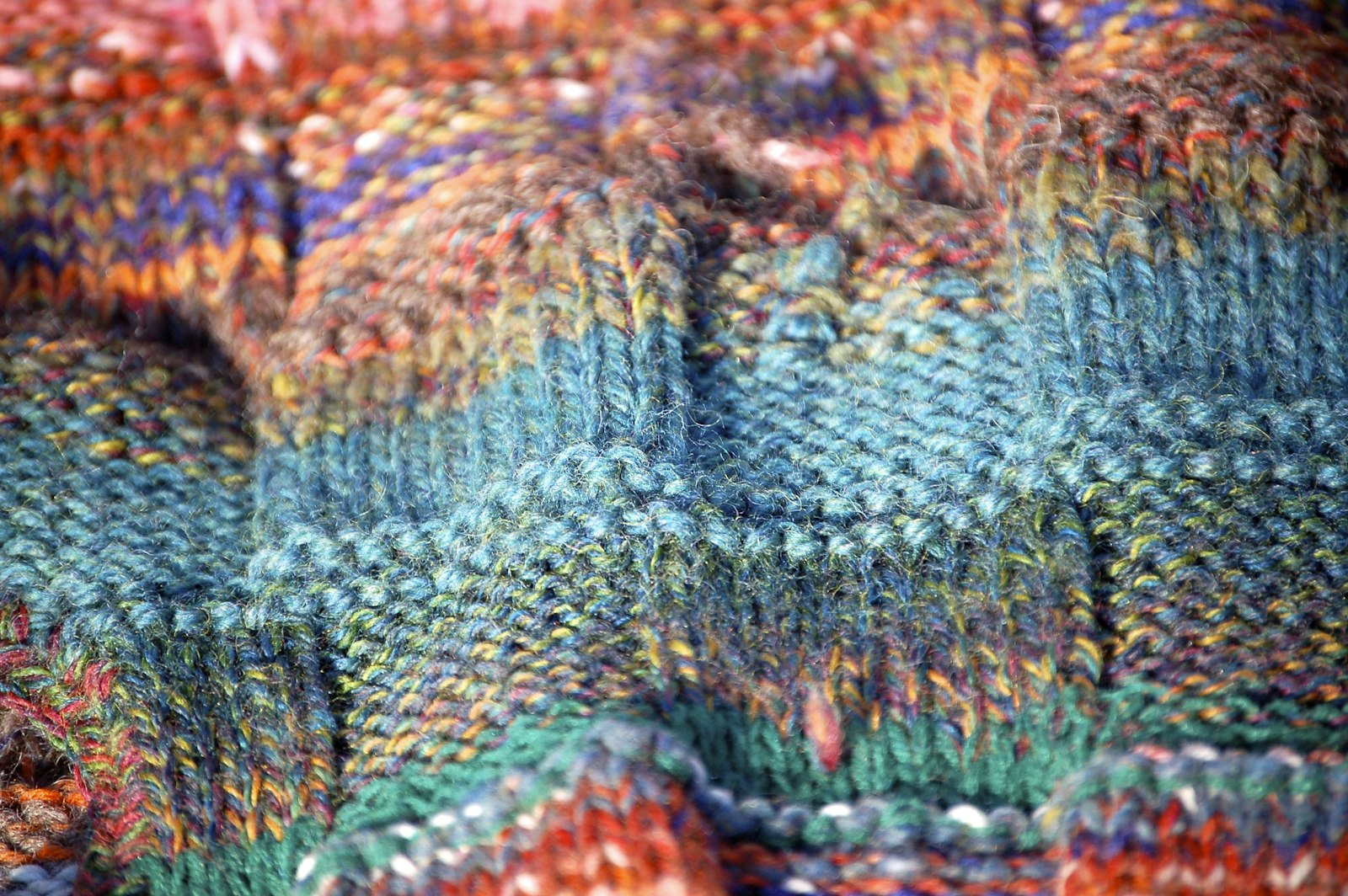
There is a meaningful difference between a jumper with a pattern printed onto its surface and one where the pattern is the fabric itself, each colour change achieved by knitting entirely separate blocks of yarn together rather than layering colour over an already-finished surface. This is intarsia, a technique with roots stretching back centuries, and it remains one of the more labour-intensive and quietly impressive things a knitter can do, producing a garment where the pattern reads identically on both the front and, largely, the reverse, because it was never applied afterward at all.
How intarsia actually works
Unlike Fair Isle knitting, which carries multiple yarns across the back of the work in floating strands to create pattern, intarsia uses entirely separate bobbins of yarn for each colour block within a row, twisted together only at the point where colours meet to avoid holes forming in the fabric. This produces a single-layer fabric with no extra bulk from carried yarns on the reverse, which is precisely why intarsia has historically been favoured for larger, bolder pattern blocks, geometric shapes, single motifs, broad colour fields, rather than the small, repeating patterns more typical of Fair Isle work. The technique demands genuine skill and patience from a knitter; managing dozens of separate bobbins across a single row without tangling them, while maintaining even tension across colour changes, is a discipline that machine knitting has only partially managed to replicate.
A history longer than most assume
While intarsia is often associated in the popular imagination with a particular era of golfing sweaters and mid-century Scandinavian design, the technique itself is considerably older, with evidence of intarsia-style colourwork appearing in European textiles for centuries before it became a fashion statement. Its more recent cultural moment, a wave of bold geometric and pictorial jumpers through several decades of the twentieth century, cemented the technique in the popular imagination, but the craft underlying it has never really gone out of practice among serious knitwear makers, who have continued to work in intarsia through every subsequent shift in fashion.
What to look for in a well-made piece
- Check the reverse side; a well-executed intarsia knit shows minimal loose thread or visible joins.
- Colour transitions should sit cleanly with no visible gaps or puckering along the seam lines.
- Tension should be even across the whole garment, with no colour blocks noticeably looser or tighter than others.
- Genuine hand or careful machine intarsia holds its shape considerably better over time than a printed equivalent.
Intarsia among its knitwear peers
It is worth situating intarsia clearly against the other patterned knitwear techniques it is often confused with. Our guide to the argyle knit covers a specific, historically significant application of intarsia’s geometric colour-blocking principle, one of the technique’s most enduring and recognisable expressions. For collectors interested in how a related but technically distinct approach achieves its own kind of textural pattern, our piece on the sea-island knit makes an instructive comparison, built around an entirely different relationship between fibre and finished texture rather than colour-block construction.
“You can always tell a proper intarsia piece by turning it inside out,” one composite knitwear specialist told us. “If the back looks almost as considered as the front, someone actually knew what they were doing.”
Buying and caring for an intarsia piece
Because intarsia garments are constructed with distinct colour blocks joined at specific points, they benefit from slightly more careful laundering than a solid-colour knit, gentle hand washing or a wool-specific machine cycle, laid flat to dry, since the joins between colour blocks are marginally more vulnerable to stress than an unbroken expanse of fabric. Fibre choice matters here too; a good quality wool or wool blend holds the pattern’s shape and colour saturation considerably better over repeated wear than a lower-grade acrylic yarn, and readers weighing fibre options more broadly should see our coverage of botany wool knits for a sense of what a genuinely good base wool brings to a patterned piece like this.
How to wear it without overdoing it
A genuinely bold intarsia pattern is, by its nature, a statement piece, and the most common styling mistake is pairing it with other equally loud elements, competing patterns, bright accessories, an overall look that ends up fighting itself for attention. The better approach treats the jumper as the single focal point of an outfit, keeping trousers, shoes and any outerwear deliberately restrained in both colour and pattern, so the intarsia work can actually be appreciated rather than lost in visual noise. This is particularly relevant for larger, pictorial or heavily geometric intarsia pieces, where restraint elsewhere in the outfit does more for the overall look than any amount of additional styling could.
Modern applications beyond the classic motif
While the technique’s popular association remains rooted in a particular era of bold, pictorial sweaters, contemporary designers have increasingly applied intarsia to far more restrained, abstract effects, subtle tonal colour-blocking, gradients achieved through careful colour sequencing, and geometric patterns rendered in closely related shades rather than the high-contrast combinations of decades past. This quieter application of an old technique has found real favour among collectors who admire the craft involved but have little interest in wearing an overtly decorative garment, proof that intarsia’s genuine value lies in the construction method itself rather than in any single stylistic era it happens to be associated with.
Why the technique still matters
In an era where a printed or digitally jacquard-knitted pattern can replicate a similar visual effect at a fraction of the production time, genuine intarsia retains its appeal precisely because of, not despite, the labour it demands. A collector who understands the difference tends to feel it too, in the way the fabric hangs, in the honesty of a pattern that exists structurally rather than superficially. For readers building out a knitwear collection that values this kind of considered, slow craft, our broader knitwear worth investing in guide and our full Style & Watches section both carry further direction on where pieces like this earn their place.
Daniel has spent fifteen years arguing that the best watch is the one you never take off.