The Enduring Appeal of the Wing-Back Settle
Part bench, part fortress against the draught, the wing-back settle is the most companionable seat in the house. A guide to its history and place.
 By Priya Nair
2 September 2026 · 6 min read
By Priya Nair
2 September 2026 · 6 min read
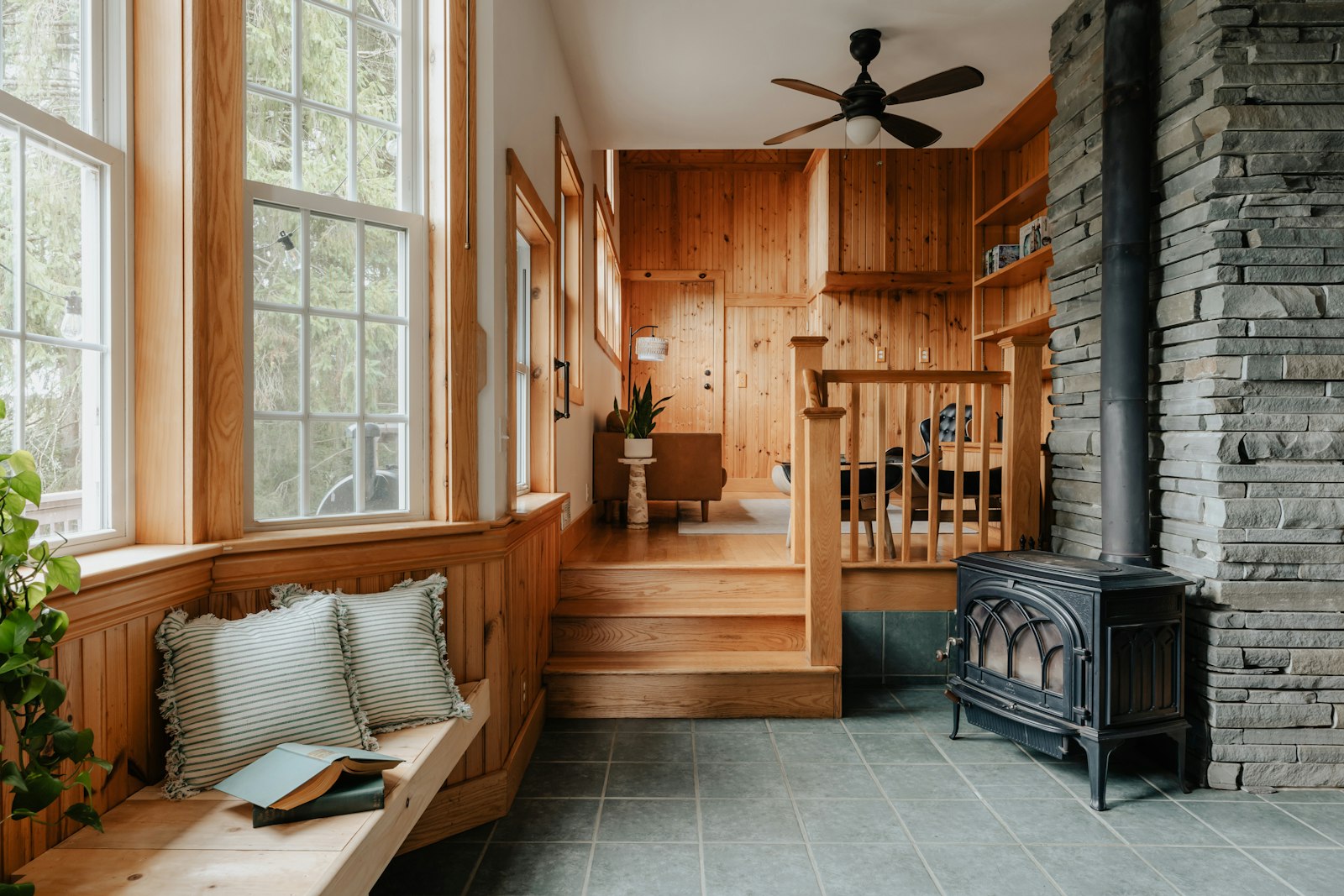
Before central heating, sitting near the fire was a negotiation with the draught. The heat came from one direction; the cold came from every other. The wing-back settle was the furniture that won that negotiation: a high-backed wooden bench with panelled sides that curved forward like wings, trapping the fire’s warmth and cocooning whoever was lucky enough to sit in it. Long after we stopped needing it, the settle endures, because it offers something no armchair quite matches: the deep, sheltered comfort of a seat that wraps around you.
A seat born of necessity
The settle is one of the oldest forms of English furniture, a fixture of farmhouse kitchens and inn parlours for centuries. Its logic is entirely practical. The tall back blocks the draught that pours across a stone-floored room; the wings channel the fire’s heat inward and shield the sitter’s face; and the box beneath the seat, in many examples, stored the dry firewood or the household linen. It was furniture that earned its keep several times over, which is the surest recipe for survival.
That marriage of comfort and utility is exactly the quality we prize in enduring furniture generally, the kind made to be lived with rather than merely looked at. It shares a bloodline with the deep, sheltering pieces gathered in our thinking on the case for the reading chair: seats designed around the body and the long evening.
The pull of the hearth
A settle only makes sense beside a fire. Placed against a cold wall it looks marooned, a bench waiting for a bus; drawn up to a hearth it comes alive, completing the oldest arrangement in the house. The high back defines a room within a room, an inglenook of furniture, and there is a reason the two so often appear together. Our piece on the return of the inglenook fireplace makes the case for that fireside nook, and the settle is its natural companion, the seat the inglenook was practically invented to hold.
Dress it for comfort. Bare oak is handsome but hard, so a settle wants a long squab cushion and a scattering of pillows, ideally in something honest: a heavy linen, a wool check, a faded kilim. The contrast of soft textile against solid timber is half the appeal.
An armchair seats one; a settle gathers a household. It is the most sociable piece of furniture ever built around a fire.
Old settles and new
Antique settles turn up regularly, in oak, elm and pine, ranging from crude farmhouse examples to finely panelled parlour pieces. Buying one is buying a slab of history, and the marks of long use, the worn seat, the scorched wing nearest the fire, are part of the value, not a fault. Our guidance on how to collect vintage furniture applies squarely here: buy the honest, well-worn piece over the suspiciously perfect one, and let the patina do its work.
New settles are made too, by workshops that understand the form. A contemporary settle can shed the box base and the heavy ornament, keeping only the essential geometry of the high, wrapping back. In a modern room it reads as sculpture as much as seat, and it brings the same sheltering comfort without the period baggage.
Placing it in a modern home
The settle is not confined to the country kitchen. In a hallway it makes a handsome place to sit and pull off boots, its box base swallowing scarves and gloves. At a kitchen table it seats a whole side of children more forgivingly than a rank of chairs. In a snug it faces the fire and asks to be curled up in. What it wants, always, is a back to a wall and a fire in view; give it those and it settles in as though it had always been there.
It rewards the room that takes furniture seriously, the room built by makers who value patience over novelty, a sensibility we explore in the furniture makers betting on patience. The settle is patience made solid: a form that has needed no improvement in three hundred years.
The companionable seat
The settle in the hallway and beyond
Though the fireside is its natural home, the settle has always earned its keep elsewhere in the house, and the hallway may be its second-best posting. There is no more sensible thing to put by a front door than a high-backed bench with a box beneath the seat: somewhere to sit and pull off boots, somewhere to drop a bag, and hidden storage for the gloves, scarves and dog leads that otherwise breed on every surface. The tall back gives the hall a sense of architecture, dividing the space and offering a wall against which coats can hang, and in a period house it looks as though it has stood there since the building went up.
In the kitchen, the settle solves the perennial problem of seating a crowd. Where chairs must be counted and matched and forever pushed in, a settle simply seats whoever squeezes along it, three adults or a whole bench of children, and takes up less floor than the chairs it replaces. Drawn up to one side of a farmhouse table, it turns a meal into something more companionable, everyone shoulder to shoulder rather than ranged formally around. And in a garden room or a porch, a settle offers a sheltered perch from which to watch the weather, its high sides doing the same draught-blocking work outdoors that they do within. Wherever it goes, the settle brings the same virtues: solidity, storage, and the particular sociability of a seat built for more than one. It is furniture that refuses to be merely decorative, and that refusal is exactly why it has never gone away.
We have kept the wing-back settle long past the age of draughts because it answers a need central heating never touched: the wish to be gathered in, sheltered, and close to the fire and to one another. It is furniture that draws people together rather than apart, and in a home increasingly full of single-seat comforts, that is no small thing. Find more pieces built to be lived in across our Homes & Culture writing, and give the best seat in the house a back to the draught and a face to the fire.
Priya tours the homes most people only glimpse from the road, and asks how they are really lived in.