The Enduring Appeal of the Chesterfield Sofa
Two centuries of fashion have come and gone, and the Chesterfield has outsat them all. The case for the deep-buttoned leather sofa, and how to buy one for life.
 By Priya Nair
1 September 2026 · 6 min read
By Priya Nair
1 September 2026 · 6 min read
Some pieces of furniture chase fashion and some simply ignore it. The Chesterfield belongs firmly to the second camp. Low and deep, with arms and back rising to the same height, its leather pulled into that unmistakable grid of deep buttoning, it has looked essentially the same for the better part of two centuries. Trends have swirled around it, mid-century legs and modular systems and every colour the season demanded, and the Chesterfield has sat there, unmoved, quietly outlasting them all. That imperturbability is the whole point.
What makes a Chesterfield
The form is precise, and the details are not negotiable if the thing is to be worth having. The defining feature is deep buttoning, the leather drawn down at regular intervals and secured so that it pleats into soft diamonds between the buttons. The arms are rolled, scrolling outward, and crucially they sit level with the back rather than lower, giving the sofa its distinctive squared, enclosing silhouette. Traditionally it stands on short turned legs or castors, and traditionally, though not always, it is upholstered in leather.
Everything about the design serves comfort of a particular, upright kind. This is not a sofa to sprawl on so much as to settle into, and its enclosing arms make it a natural companion to the reading chair and the fireside. It shares that considered, made-to-last philosophy with everything covered in choosing the right sofa for life, and it sits comfortably among the pieces surveyed in the best statement sofas, where presence matters as much as comfort.
Why leather, and why it lasts
The Chesterfield and full-grain leather are made for each other. The deep buttoning that defines the form needs a material with enough body to hold the pleats and enough character to reward close looking, and good leather supplies both. More to the point, leather is the rare upholstery that improves with use. A new Chesterfield in a fine aniline hide looks almost too pristine; a decade of use burnishes the arms, softens the seat, and deepens the colour into a patina that no factory can fake and no fabric can match.
A cloth sofa starts at its best and works downhill. A good leather Chesterfield starts a little stiff and stern, and every year of use makes it handsomer. That is a rare bargain in furniture.
That capacity to age well is exactly what separates furniture worth buying once from furniture bought again and again, a distinction drawn out in the best materials for a durable sofa. Choose the hide well, keep it out of direct sun and fed with the occasional conditioning, and a Chesterfield will comfortably outlast its first owner. The care it asks is modest, and set out in full in how to care for fine furniture.
Placing one in a room
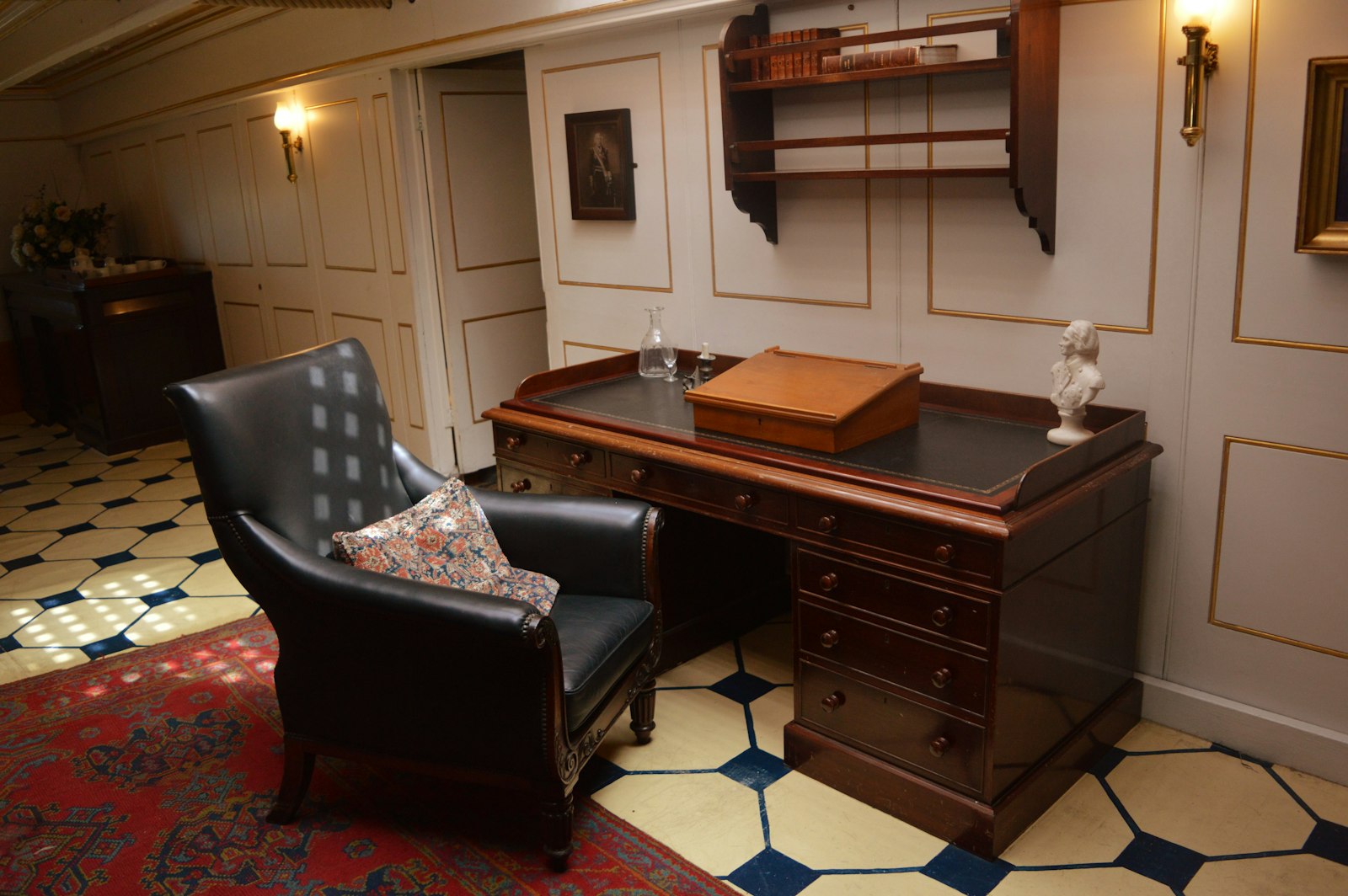
A Chesterfield is a strong statement, so it wants either a room that echoes its formality or one that plays deliberately against it. In a panelled study or a library it is entirely at home, the leather glowing under lamplight among books and a good rug. But it earns its keep just as well as a foil, a dark, buttoned, traditional anchor in an otherwise pale and modern room, where its seriousness stops the space feeling weightless. For a more romantic and less imposing piece of buttoned upholstery, our piece on the enduring appeal of the fainting couch offers a gentler alternative.
Scale matters. The classic Chesterfield is generous, and a small one loses the proportions that make it handsome, so give it room to breathe and a rug substantial enough to hold it. A single well-chosen Chesterfield is worth more than a matching suite; pair it with a contrasting armchair rather than its twin, and let it be the strongest note in the arrangement rather than one of several.
Buying one to keep
- Insist on full-grain or aniline leather; corrected and heavily pigmented hides never develop a proper patina.
- Check the frame is hardwood and the springs hand-tied. A Chesterfield is a long-term commitment and the guts must match.
- Choose a colour you can live with for decades. Deep tan, oxblood and dark green age most gracefully.
- Sit in it before you buy. Comfort in a Chesterfield is upright and particular, and either suits you or does not.
A brief note on its history
The origins are suitably aristocratic and suitably vague. The name is traditionally traced to an eighteenth-century Earl of Chesterfield who is said to have commissioned a leather sofa on which a gentleman could sit upright without creasing his suit, though the story, like most furniture legends, is impossible to verify and improves with each retelling. What is certain is that by the nineteenth century the deep-buttoned leather sofa had become a fixture of the gentleman’s club, the library and the smoking room, its association with those masculine, bookish interiors fixed for good.
That heritage still clings to the Chesterfield and is part of what it offers. To place one in a room is to summon, gently, the atmosphere of the club library and the country-house study, a whiff of leather-bound seriousness that no other sofa quite provides. Some find this too heavy and choose to subvert it, setting a Chesterfield against pale modern walls precisely to play the association off the surroundings. Either way, the history is doing work, and a sofa that carries two centuries of use in its very silhouette brings a weight and a rootedness to a room that this season’s fashionable shape, however handsome, simply cannot.
The long view
The Chesterfield endures because it made peace with its own form long ago and stopped chasing anything. It knows what it is: a serious, enclosing, deep-buttoned leather sofa that becomes more itself with every year of use. In a market forever pushing the next silhouette, that steadiness is worth a great deal, and it is why a good Chesterfield is one of the few sofas you can genuinely buy once and never think about replacing.
Buy the best hide you can afford, place it where the lamplight can reach the leather, and give it thirty years to become the handsomest thing in the room. It will oblige. For more furniture built to be lived with rather than replaced, the Homes & Culture section gathers the argument, and the Chesterfield, unbothered as ever, quietly proves it.
Priya tours the homes most people only glimpse from the road, and asks how they are really lived in.