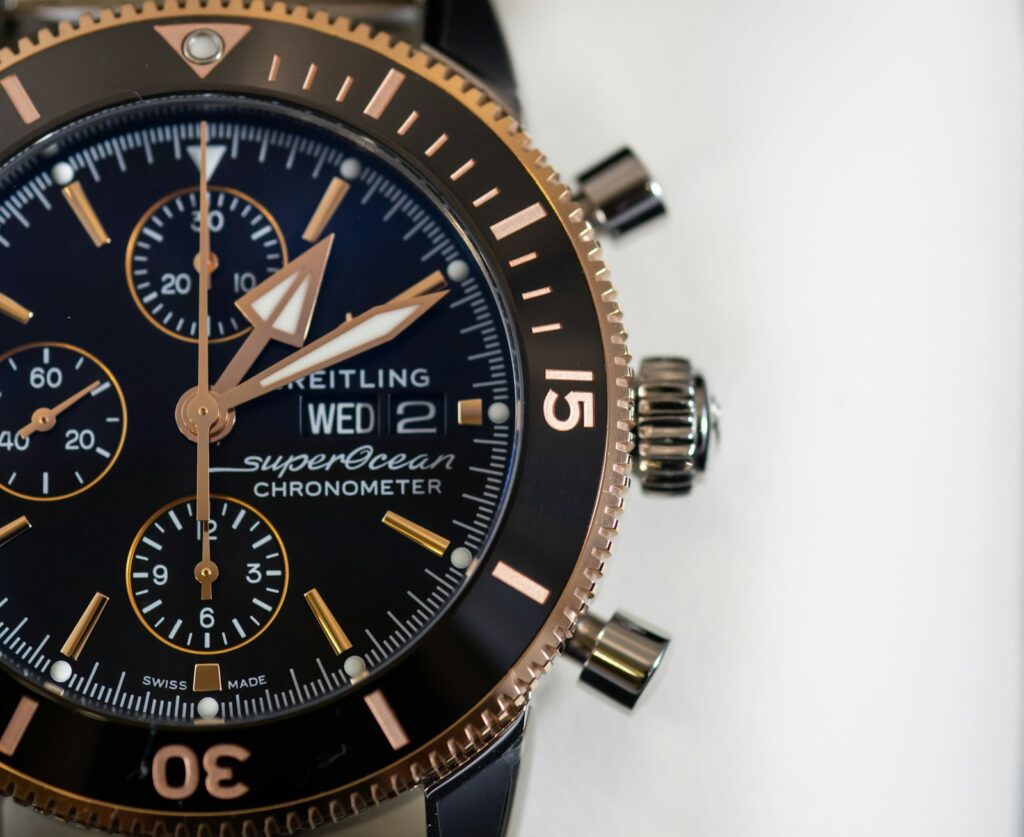
The Dive Watch, Explained
The real standard behind a genuine dive watch, and how to choose between certified capability and a design that simply borrows the tool-watch look.
 By Daniel Koh
29 August 2026 · 5 min read
By Daniel Koh
29 August 2026 · 5 min read

The dive watch has outlived its original purpose by several decades and grown more popular for it. Dive computers made the tool function largely redundant sometime in the 1980s, yet the category has never been more crowded, more collected, or more misunderstood by buyers who assume “water resistant” and “dive watch” mean roughly the same thing. They do not, and the difference is worth understanding before spending real money on one.
What Actually Makes a Watch a Dive Watch
A genuine dive watch is defined by a specific international standard — ISO 6425 — that governs far more than water resistance depth. It requires a unidirectional rotating bezel that can only turn one way, preventing a diver from accidentally extending their calculated bottom time if the bezel is knocked. It requires legibility standards for the hands and markers under low light, a running indicator visible at a glance, and resistance to magnetic fields and shock beyond what an ordinary sports watch needs to survive. This dive watch guide starts here because the ISO certification, not the marketing copy, is the honest dividing line between a watch built for the water and a watch simply styled to look like one.
Reading the Numbers
Water resistance ratings cause more confusion than any other spec on a watch. A rating of 100 metres sounds like a serious depth, but is really intended for swimming and snorkelling rather than any kind of scuba diving. True dive-rated pieces start around 200 metres and the better ones climb into the 300-metre range, which builds in enough of a safety margin to handle real diving conditions, pressure changes and the wear and tear of actual use. The rating is tested in laboratory conditions on a new watch, not a decade-old one with worn gaskets, which is one reason regular servicing matters more for this category than almost any other — a subject covered properly in How to Care for a Luxury Watch.
The Movement Underneath
Nearly all serious dive watches run mechanical movements, either automatic or, less commonly today, manual-wind, and the choice of movement affects everything from accuracy to how the watch handles being submerged for extended periods. Understanding the basics of how these movements work — what a rotor does, why some calibres are rated to higher shock resistance than others — makes the difference between buying on brand alone and buying with genuine understanding, a gap addressed in Understanding Watch Movements: A Primer. Some of the more serious dive references also incorporate complications beyond the rotating bezel — a helium escape valve for saturation diving, for instance — worth understanding in the same way the more elaborate mechanisms discussed in Six Complications Worth Understanding in 2026 reward a closer look before buying.
What the Best Examples of the Category Share
- A case built to genuinely take a knock, not just look robust — screwed casebacks, protected crowns, sapphire crystals resistant to scratching.
- Lume that actually performs in real darkness, not just a faint glow for the first ten minutes after charging.
- A bracelet or strap built for the water, with an extension link for wearing over a wetsuit — a small detail that separates serious tool watches from pieces merely inspired by them.
Assembling any list of the best dive watches worth considering means weighing these functional details as heavily as case design or brand heritage, since the category’s entire appeal rests on genuine capability rather than styling alone.
Buying One That Will Never See a Reef
The honest truth is that the overwhelming majority of dive watches sold today never touch salt water beyond a beach holiday, and there is nothing wrong with that. The category has earned a permanent place in menswear as much as in diving, prized for its legibility, its durability against everyday knocks, and a design language — bold hands, high-contrast dial, rotating bezel — that has aged better than almost any other watch archetype from the twentieth century. Buying one purely for how it wears with a linen shirt on a Saturday is a perfectly legitimate reason, provided the buyer isn’t paying a premium for genuine dive certification they’ll never use.
“Buy the certification if you’re actually diving,” one watchmaker put it plainly. “Buy the design if you’re not. Just be honest with yourself about which one you’re doing.”
Bezels, Materials and the Small Choices That Matter
Beyond the core ISO specification, a handful of secondary details separate a genuinely well-considered dive watch from one that simply ticks the required boxes. A ceramic bezel insert holds its colour and resists scratching far better than the aluminium inserts common on older or more affordable pieces, though at a real cost premium that not every buyer needs to pay. The case material matters too: stainless steel remains the standard for durability and value, titanium offers a meaningful weight reduction that some wearers genuinely prefer over a full day, and precious metal dive watches, while less common, exist mainly as a design statement rather than a practical upgrade for anyone actually diving.
Strap choice is worth as much consideration as the case itself. A rubber or vulcanised strap handles saltwater and chlorine without the maintenance a leather strap demands, while a well-made steel bracelet offers more versatility for pairing with tailored clothing on dry land. Owning two straps for one watch — one built for water, one for everyday wear — is a genuinely practical way to extend a single piece across both contexts without compromising either.
Making the Choice
Start with how the watch will actually be worn, not the aspirational version of that life. A working diver needs the full ISO specification and the servicing discipline to match. Everyone else can prioritise proportions, dial legibility and how the case sits on the wrist, treating the dive watch’s tool-derived design as a style choice rather than an operational requirement. Either way, it remains one of the most versatile categories covered across Style & Watches — a genuinely useful tool that has, almost by accident, become one of the great design objects of modern menswear.
Daniel has spent fifteen years arguing that the best watch is the one you never take off.