The Considered Home Bar Room
The home bar has moved well beyond the trolley in the corner. A guide to building a dedicated bar room around how a household actually entertains.
 By Priya Nair
30 August 2026 · 6 min read
The home bar has moved a long way from the trolley in the corner of the living room, useful but modest, toward something closer to a proper dedicated room in the Singapore homes that have the space for one. This is partly a function of entertaining habits shifting inward over recent years, and partly a natural extension of a household’s growing interest in the craft behind what they’re drinking. Done well, a home bar room becomes one of the more genuinely used spaces in a house; done poorly, it becomes an expensive, underused showpiece.
Deciding what the room is actually for
Before any material or layout decision, it is worth being honest about how the room will actually be used. A household that entertains large groups regularly needs a genuinely functional service area, with enough counter space and glassware storage to mix several drinks quickly without a bottleneck. A household drinking mostly for its own quiet pleasure, one or two people most evenings, needs something closer to a considered nook: a single excellent chair, good lighting, a smaller but carefully chosen selection of spirits rather than a fully stocked back bar that will mostly sit unused.
Building the wrong version of this room for how a household actually lives is the single most common mistake we have seen, and it is entirely avoidable with a moment of honest reflection before the design work begins.
It is worth thinking, too, about where the room sits within the flow of the wider home. A bar positioned near the main living or dining area suits a household that entertains frequently and wants the bar to be a natural extension of a gathering, visible and part of the action. A bar tucked into a quieter corner, perhaps adjoining a study or a snug, suits the household drinking more for private ritual than performance, and the two locations call for genuinely different design decisions from the very first sketch.
The essentials of a working bar
- A proper sink: even a small bar room benefits enormously from its own water source, saving constant trips to the kitchen for ice and rinsing glassware.
- Under-counter refrigeration: a dedicated beverage fridge or wine unit keeps mixers and white wine at the right temperature without raiding the kitchen’s main fridge.
- Real glassware storage: open shelving that keeps glasses visible and accessible does more for a bar’s daily usability than closed cabinetry that looks tidier but adds friction to every drink made.
Our feature on how to build a home bar worth pouring from goes deeper into the specific equipment and spirit selection that separates a bar that gets used from one that becomes decorative within a year of installation.
Materials that suit a bar’s particular abuse
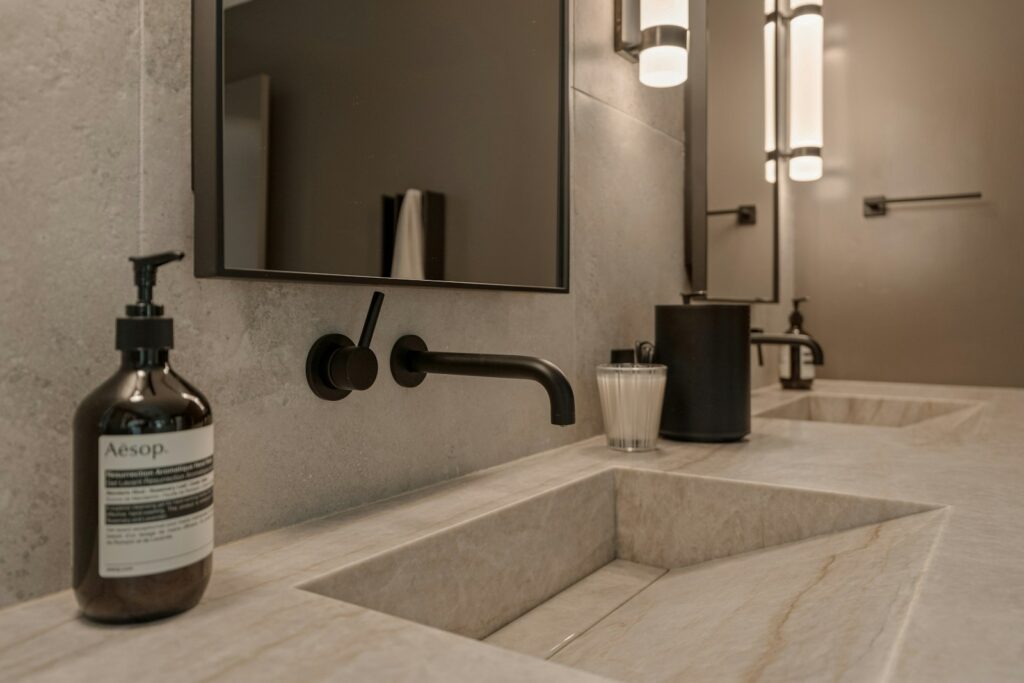
A bar counter takes a specific kind of punishment — citrus acid, ice, the occasional spill of a sticky liqueur — that differs from a kitchen worktop’s daily use, and the material choice should reflect this. A dense, non-porous stone or a well-sealed timber with a hardwearing finish both perform well; softer, more porous stones that might suit a kitchen island less exposed to acidic splashes are a poorer choice here. Brass and blackened metal fittings have become the default finish for taps and hardware in this kind of room, ageing with a patina that suits the slightly theatrical mood a good bar room wants to strike.
Flooring deserves the same practical consideration, since a bar area sees its share of dropped ice and splashed liquid over the years. A sealed timber, a dense stone, or a well-chosen tile all perform reasonably well, but a plush carpet, however atmospheric it might look in a photograph, is a poor practical choice for the room’s actual function and will show wear and staining far sooner than any surface elsewhere in the house.
Sound deserves genuine planning rather than an afterthought. A bar room without music tends to feel unfinished the moment more than one person is in it, and a considered household will run the wiring for a proper speaker system, or at least a discreet outlet for a good portable unit, into the room during construction rather than relying on a phone propped against a glass. This is a small detail on paper that has an outsized effect on how the room actually feels once it is finished and in daily use.
“A home bar should feel like a small, slightly indulgent departure from the rest of the house,” a Singapore bar consultant told us. “It’s the one room that’s allowed to be a bit more atmospheric, a bit less practical, than everywhere else.”
Lighting sets the entire mood
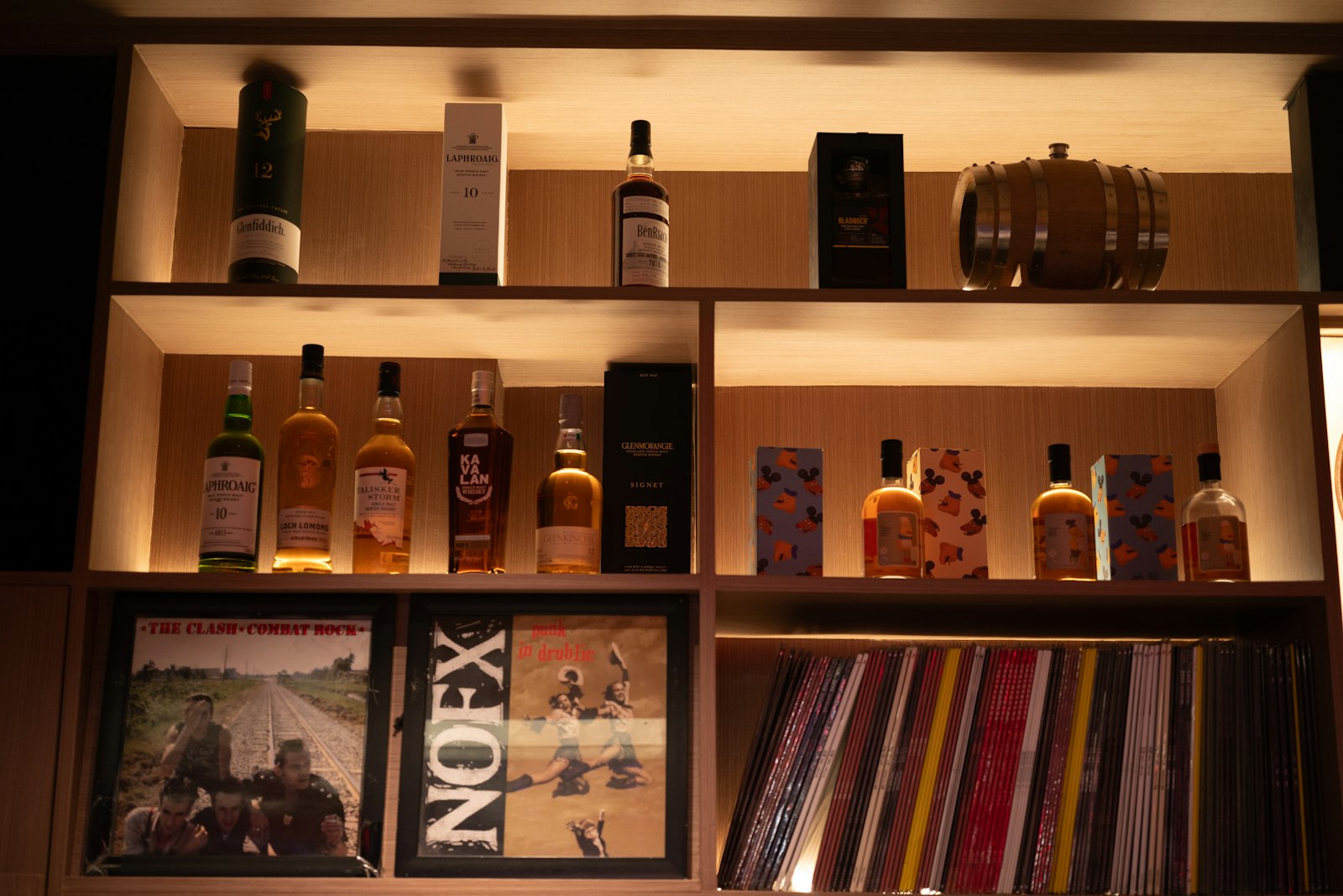
Nowhere in the house does lighting matter more disproportionately to the room’s mood than the bar. Bright, even, kitchen-style lighting kills the atmosphere a good bar room depends on almost instantly. Warm, low, and ideally dimmable lighting, layered from more than one source — a pendant over the counter, a lamp in a seating corner, perhaps a strip of light beneath open shelving to backlight the bottles themselves — does more to make a bar room feel special than any single expensive fixture chosen without regard for how it’s used.
Storage that becomes part of the display
A well-stocked bar’s bottles are, themselves, often beautiful objects worth displaying rather than hiding. Open shelving that shows off a considered spirits collection, arranged with the same care given to any other collected object in a home, turns storage into decoration. Our piece on the return of the bar cart covers the smaller-scale version of this same idea for households without the space for a dedicated room, while the wine room, at home addresses the specific requirements of a serious wine collection for households whose interests run in that particular direction.
A room built for slowness
The best home bars we have visited share a certain unhurried quality that has less to do with money spent than with intention: a single good chair angled toward the counter rather than a bar stool row facing away from the room, a record player or a good speaker rather than background streaming, enough space to actually stand and make a drink properly rather than reach awkwardly across a narrow counter. Get these details right, and the room earns its keep on an ordinary Tuesday evening as readily as at a proper gathering. For more on rooms built around genuine ritual, visit our Homes & Culture section.
Priya tours the homes most people only glimpse from the road, and asks how they are really lived in.