How to Build a Home Bar Worth Pouring From
The best home bars are not the biggest ones. Here is how to build one small enough to use every week, good enough to impress when it truly matters.
 By Renée Tan
29 August 2026 · 6 min read
By Renée Tan
29 August 2026 · 6 min read
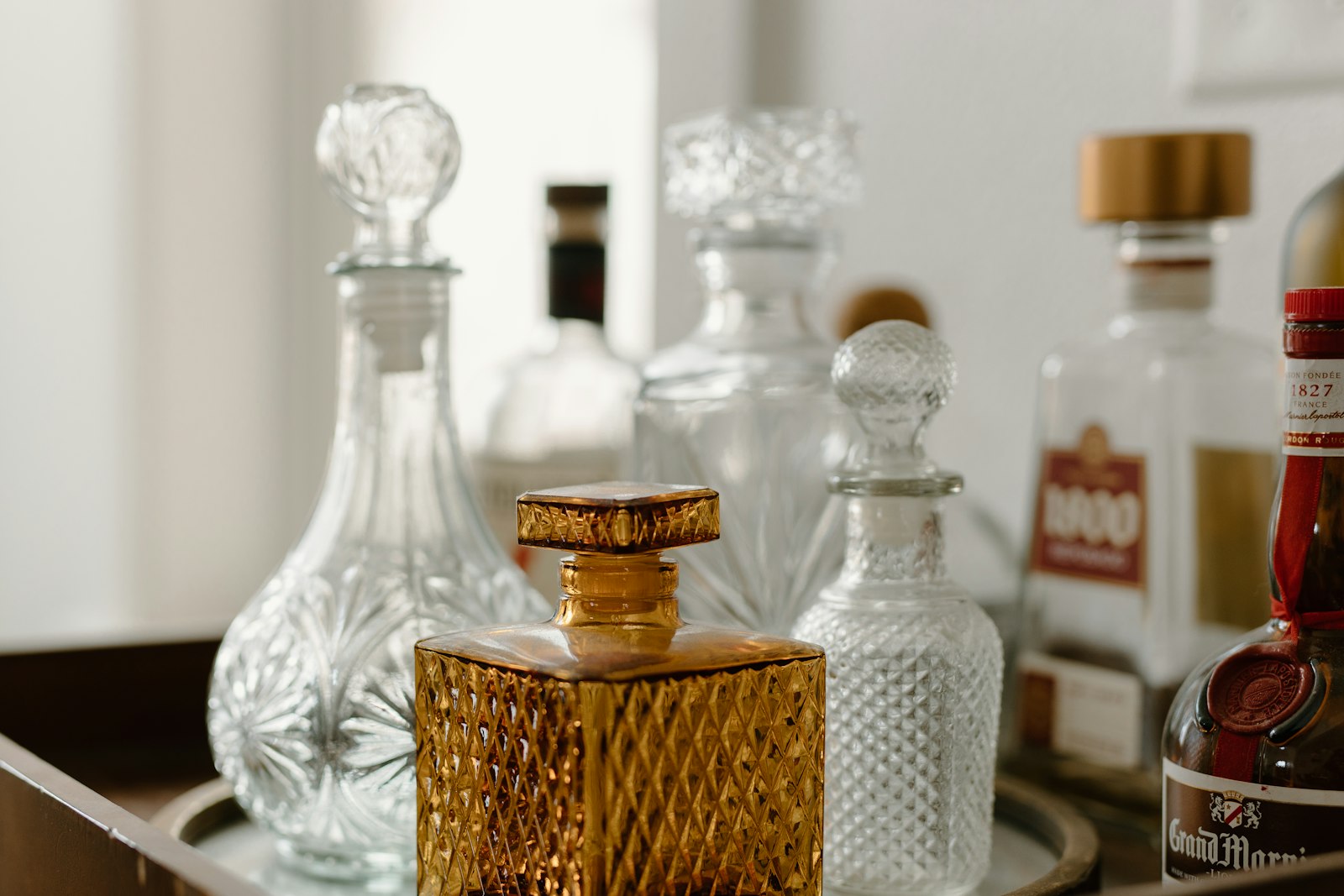
Most home bars fail for the same reason: they are built to impress rather than to be used. A cart crowded with forty bottles, half of them gifts, most of them opened once and left to gather dust, is not a home bar so much as a display case. The ones that actually earn their keep — that get reached for on a Tuesday night as readily as a Saturday — tend to be smaller, more deliberate, and built around a short list of spirits the owner genuinely understands. This is a guide to building that version: fewer bottles, better tools, and a bar you will actually use.
Start with four spirits, not fourteen
A capable home bar can be built on remarkably little. Gin, a good aged rum, an unpeated whisky, and a decent tequila or mezcal will together cover the overwhelming majority of classic cocktails — Martinis and Negronis on one end, Daiquiris and Old Fashioneds on the other. Resist the urge to buy widely before buying well; one genuinely excellent bottle of each teaches you more about what you like than five mediocre ones. For whisky in particular, our field guide to Japanese whisky is a useful starting point if you are choosing a first bottle in that category, since quality varies enormously at similar price points.
Vermouth deserves more respect than it usually gets. A bottle left open on a shelf for six months has typically oxidised past usefulness, and a Martini made with tired vermouth will taste flat no matter how good the gin is. Buy smaller bottles, keep them refrigerated once opened, and replace them more often than feels necessary.
Tools that earn a place, and the ones that do not
A surprising amount of bar equipment is unnecessary for a home setup. What actually matters:
- A proper Boston or cobbler shaker, weighted well enough to seal without a fight.
- A bar spoon long enough to stir a tall glass without your hand entering the drink.
- A jigger with clearly marked measures — eyeballing pours is the single most common cause of unbalanced cocktails at home.
- A sharp paring knife and a channel knife, for citrus peel that actually expresses oil rather than tearing.
- A large-format ice tray. Standard freezer cubes melt fast and dilute drinks unevenly; larger cubes and spheres melt slower and keep a drink properly cold without watering it down.
What you can skip: novelty muddlers, flair-bartending tools, and most of the gadgetry sold in gift sets. A good home bar is closer in spirit to a well-edited kitchen than a professional cocktail lab.
Glassware that does double duty
You do not need a different glass for every cocktail style. A rocks glass, a coupe, and a highball will together cover nearly everything a home bartender is likely to make, and buying six of each rather than one of everything means you can actually host without running out mid-evening. Weight matters more than ornamentation here — a glass with real heft in the hand feels considered even when the drink inside it is simple, in much the same way that well-made leather goods earn their keep through material quality rather than decoration.
“The biggest mistake people make building a home bar is buying bottles instead of learning three drinks properly first,” one Singapore bartender who consults on private home setups told us. “Get your Negroni right before you buy a fifth spirit.”
Learn three drinks properly before adding a fourth
A home bar becomes genuinely useful once you can make a small handful of drinks without consulting a recipe — not because memorisation is impressive, but because it means you understand the underlying ratios well enough to adjust them by taste. A Negroni (equal parts gin, vermouth, Campari), a Daiquiri (rum, lime, sugar, in careful proportion), and an Old Fashioned (spirit, sugar, bitters, patience) between them teach nearly every technique a home bartender needs: stirring versus shaking, sweetness balancing acid, the role of dilution. Master those three and most of the classic canon opens up from there, largely as variations on the same principles.
For anyone building toward a more serious low-intervention or craft-cocktail sensibility, our piece on the low-intervention bar list is a useful next step once the basics are solid — it applies a similar philosophy of restraint and quality over quantity to a more considered style of drink-making.
A bar that gets better with use
Bitters, mixers, and the small things that matter
Beyond the core spirits, a short shelf of bitters and mixers does more to expand a home bar’s range than another bottle of gin ever will. Aromatic bitters, orange bitters, and one more distinctive style, such as a Peychaud’s-style anise-forward bitters, cover the overwhelming majority of classic recipes calling for a dash. Fresh citrus, replaced every few days rather than left to dry out in the fridge, matters more than any other single ingredient in a home bar; a tired lime does more damage to a Daiquiri than a mediocre rum. A good simple syrup, made fresh rather than bought, rounds out the essentials. None of this needs to be elaborate. The point of a home bar worth pouring from is that everything in it gets used, refreshed, and understood, rather than admired from a distance.
None of this needs to happen all at once. A home bar built up slowly, one good bottle and one properly learned recipe at a time, tends to be far more satisfying in the long run than one assembled in a single large purchase, and it leaves plenty of room to keep discovering what you actually like to drink.
The best home bars in Singapore, the ones friends actually ask to be poured from, are rarely the largest. They belong to people who have spent time learning what they like, who replace vermouth before it goes flat, who own one excellent jigger rather than three mismatched ones. Building this kind of bar is less about acquisition and more about editing — buying deliberately, using what you buy, and letting the collection grow slowly around genuine preference rather than gift-shop impulse. It is, in that sense, not so different from the rest of Singapore’s considered dining and drinks culture: less about having everything, more about having exactly what you need, and knowing precisely what to do with it.
Renée has covered Singapore's restaurants for over a decade, with a soft spot for the kitchens most people walk past.