
The Case for the Writing Desk
In an age of laptops on the sofa, the small writing desk makes a quiet case: a fixed place to think, to write, and to keep one's affairs in some kind of order.
 By Priya Nair
1 September 2026 · 6 min read
By Priya Nair
1 September 2026 · 6 min read
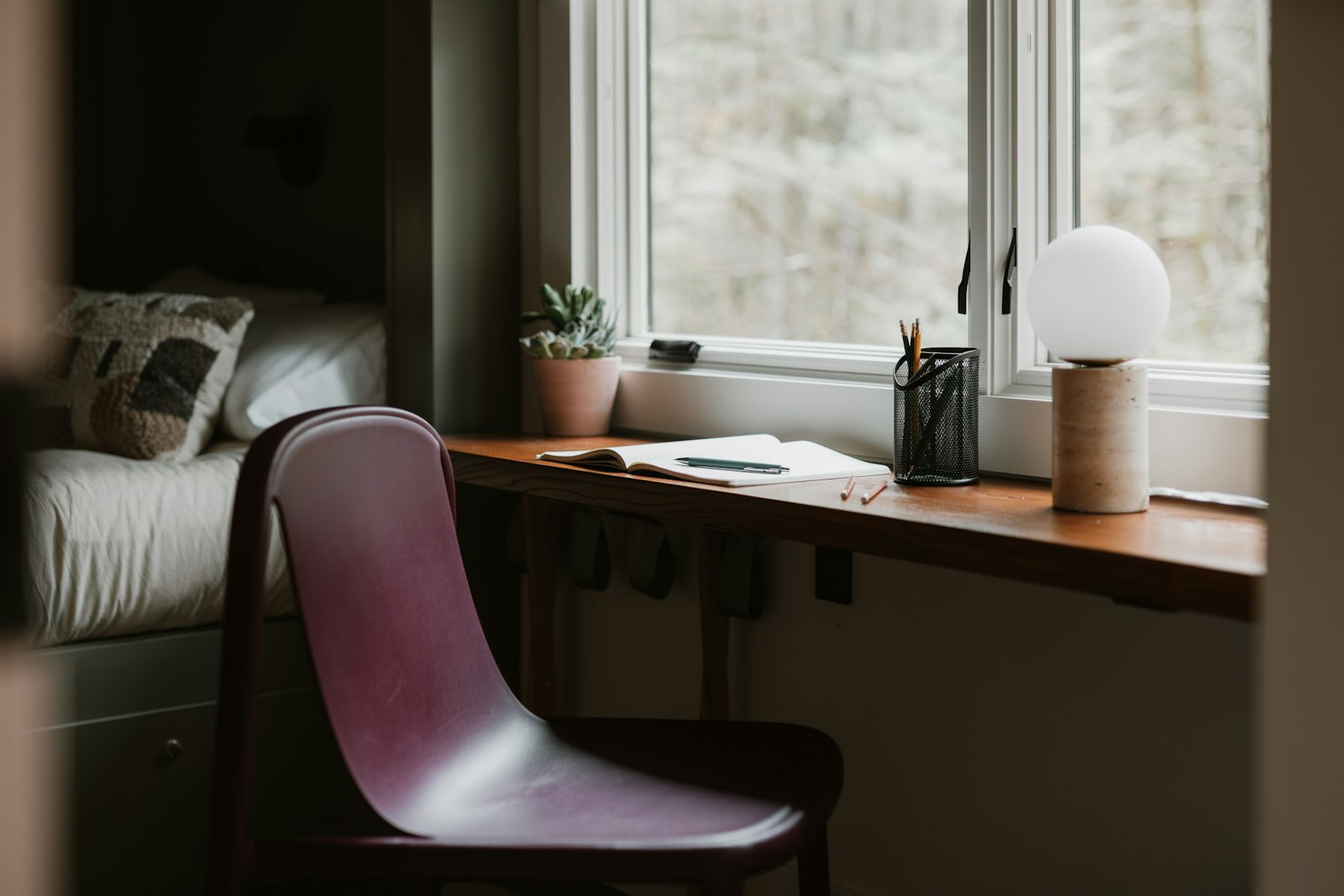
The writing desk is, on the face of it, an anachronism. We write on laptops now, and we do it anywhere — the sofa, the bed, the kitchen counter, the train. The idea of a piece of furniture dedicated to the act of writing seems to belong to an age of ink and letters that has passed. And yet the writing desk is quietly returning to considered homes, not out of nostalgia but because it turns out to solve a very modern problem: how to carve out, in a life lived everywhere at once, a single fixed place to sit down and think.
A place, not just a surface
The whole value of the writing desk lies in its being a dedicated place. When you write on a laptop on the sofa, the writing bleeds into everything else — the television, the phone, the half-attention of the shared room. When you sit at a desk kept for the purpose, the act acquires an edge of intention. You go to the desk to do a particular kind of work, and the going matters. The desk is a small piece of architecture for the mind, a signal to yourself that this is the place and this is the time for focused thought.
This is the same logic that makes a dedicated room for reading and work so valuable, the argument we made at greater length in our appreciation of the wood-panelled study. The writing desk is the study distilled to a single essential piece — the minimum viable version of a room set aside for the life of the mind, small enough to fit in a bedroom corner or a landing, but carrying the same power of intention.
Small is a virtue
The best writing desks are small, and deliberately so. The great slab of an executive desk is a piece of office furniture pretending to be domestic; the true writing desk is modest — a shallow top, a drawer or two, room for paper and a lamp and not much else. This smallness is not a compromise but the point. A writing desk is for the focused, contained tasks of correspondence and thought, not for spreading out; its very compactness keeps you to the task and keeps the piece graceful enough to live in a room rather than dominate it. For those who want compactness with a little more storage built in, our case for the Davenport desk offers a handsome variation.
A desk that holds everything invites you to do nothing. A small desk holds a pen, some paper, and your full attention.
That modest scale also makes the writing desk one of the most collectable pieces of domestic furniture, because the finest examples are small, beautifully made and endlessly various. The market in mid-century and antique desks is deep and rewarding, and choosing a good one is a pleasure of its own, closely related to the wider hunt we describe in our guide to collecting mid-century furniture.
Placing it well
Where a writing desk goes matters as much as which one you choose. The classic and correct position is at a window, so that lifting your eyes from the page gives you distance and daylight rather than a wall. A desk by a window, with good natural light across the working surface and a view to rest the eyes on, is one of the genuine pleasures of a well-arranged home. The morning light is especially kind here, which is why a desk sits so naturally in an east-facing spot.
Light after dark is the other consideration. A single, warm, well-placed desk lamp does far more for the pleasure of writing than a bright overhead ever could, pooling light on the page and leaving the rest of the room soft. Getting this small piece of lighting right repays real attention, of the kind we set out in our guidance on how to choose the right reading-nook lighting, whose principles apply directly to the lit desk.
What a desk asks of you
A writing desk also gently imposes some order. Because it is small and dedicated, it cannot become a dumping ground without immediately looking wrong, and so it encourages the modest discipline of keeping one’s papers and correspondence in some kind of order. There is a quiet satisfaction in a desk kept clear but for the task at hand — a pen, a pad, a lamp, a single letter to answer. It is the opposite of the laptop-on-the-sofa sprawl, and it does something good for the mind.
Choosing the right desk
The market in writing desks is wide, and the type you choose sets the character of the corner it occupies. The slender-legged writing table, little more than a top on four fine legs with perhaps a shallow drawer, is the lightest and most graceful, and it suits a bright room where you want the desk to almost disappear. The bureau, with its hinged fall that closes over a nest of small drawers and pigeonholes, is the most self-contained, hiding the clutter of correspondence behind a flap and turning tidiness into a single gesture. The pedestal desk, more substantial, with drawers to one or both sides, gives real storage at the cost of some grace, and suits a study more than a bedroom corner. There is a right desk for every room; the trick is to match its weight to the space rather than buying the biggest you can fit.
Whichever type you choose, judge it by the things you will touch. The drawer should run smoothly on its runners, the top should be a comfortable height for writing, and the surface should be something you are glad to rest a hand and a page on — a leather inset, a warm timber, a honest patina. A desk is a piece you sit at intimately, day after day, and small failings that you would forgive in a sideboard become daily irritations in a desk. Buy the one that feels right under the hand, not merely the one that looks right across the room.
A civilising piece
In the end the writing desk earns its space not because we still write letters — though we might, more, if we had somewhere proper to write them — but because it quietly civilises a room and a habit. It says that thinking and writing deserve a place of their own, that some tasks are worth sitting up straight for, and that a home is richer for having a corner given over to focused attention. In a world of screens carried from room to room, that fixed and intentional place is worth more, not less. It belongs firmly among the considered, life-shaping pieces of furniture the Homes & Culture section returns to, and it makes a fine companion to the wider effort of building rooms that resist the screen, of the kind we describe in our note on the calm, screen-free living room.
Priya tours the homes most people only glimpse from the road, and asks how they are really lived in.


