A Guide to Collecting Mid-Century Furniture
Buy for quality, not names; learn the materials; live with the pieces. A considered guide to collecting mid-century furniture that lasts you a lifetime.
 By Priya Nair
1 September 2026 · 6 min read
By Priya Nair
1 September 2026 · 6 min read
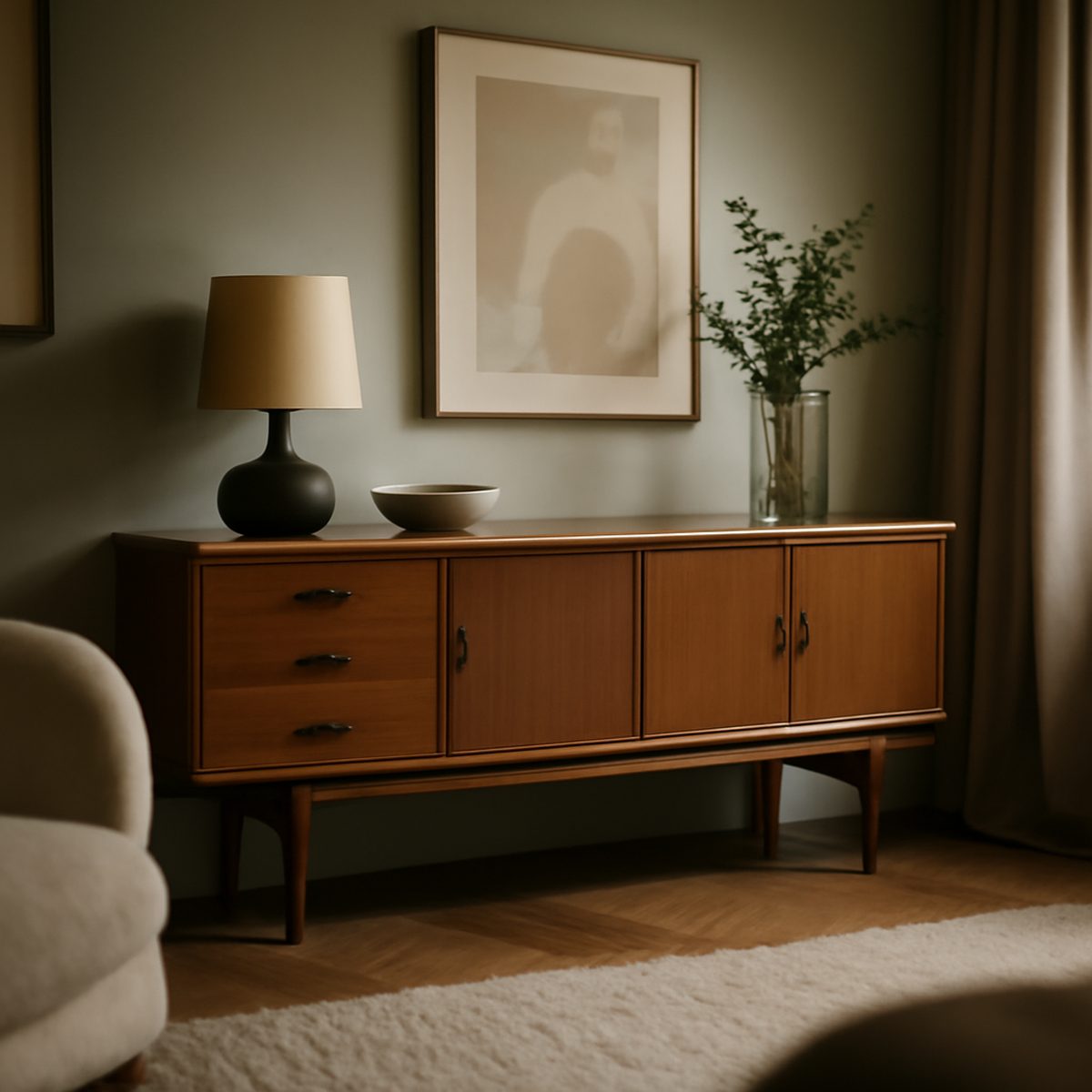
Mid-century furniture has been fashionable for so long now that it risks becoming a cliché, and yet the best of it remains genuinely worth collecting. The period’s great virtue, roughly the two decades after the war, was a marriage of honest materials, intelligent function and quiet beauty that has rarely been equalled since. Collect it well and you acquire pieces that will serve and please for the rest of your life.
Collect it badly, chasing names and paying over the odds for tired reproductions, and you end up with an expensive pastiche. The difference lies in knowing what you are looking at, and buying for the right reasons.
Buy quality, not labels
The first mistake most new collectors make is buying names. A famous designer’s signature can quadruple a price without improving the object, and the market is full of anonymous pieces of equal or greater quality selling for a fraction of the cost. Train your eye on the thing itself, its proportions, its joinery, the honesty of its materials, and the labels will matter less.
This is the collector’s discipline in any field: judge the object, not the provenance. It is the same principle we set out in collecting design objects, not just furniture: buy what is genuinely good and genuinely pleases you, and let attribution be a bonus rather than the point. A well-made anonymous teak sideboard will outlive and outperform a shaky signed chair every time.
Learn the materials
Mid-century furniture is, above all, a celebration of materials, and you cannot collect it well without learning them. Teak, rosewood, oak and walnut each behave and age differently; solid timber is not the same as veneer, though good veneer over a sound carcass is nothing to fear; the moulded plywood and early plastics of the era have their own qualities and their own weaknesses. Understanding how these pieces were meant to live together helps too, and our piece on the mid-century modern interior puts them back in their original setting.
Learn to read a piece by touch and eye. Feel the weight, look at the joints, check how the drawers run and how the timber has been finished. Original pieces were built to last, with joinery that has survived sixty years of use precisely because it was done properly, the same enduring craft our writers admire in how to collect vintage furniture more broadly.
The market will always try to sell you a name. Buy the object instead: the honest timber, the sound joint, the proportion that pleases the eye. Those are the things that hold their value and your affection.
Originality, condition and honest repair
Condition is where judgement really comes in. Original finish, original upholstery and untouched hardware add value, but a piece that has been sensitively restored is far preferable to one left to rot. What you want to avoid is the botched restoration, the heavy modern lacquer over old teak, the wrong replacement handles, the reupholstery in a fabric that fights the period.
Reproductions are the other pitfall. Many classic designs are still made, legitimately and otherwise, and telling a period original from a later copy takes some study, of labels, of construction methods, of the small tells that mass reproduction gets wrong. When in doubt, buy from dealers who guarantee what they sell, and be wary of a price that seems too good to be true.
A word on restoration, since it divides collectors more than almost anything else. The purist keeps everything original, marks and all, on the principle that a piece can only be original once. The pragmatist accepts sympathetic repair, a reglued joint, a careful refinish, a new but faithful upholstery, on the principle that furniture is made to be used. Both positions are defensible; what matters is that any work is done honestly and to a high standard, and that it is disclosed. A well-documented sympathetic restoration harms neither the value nor the pleasure of a piece. A hidden, botched one destroys both.
Building a collection with coherence
A collection is more than an accumulation. The most satisfying mid-century interiors are not showrooms of trophy pieces but rooms where a few well-chosen items live comfortably together and with everything else. Mix periods and origins freely; a Danish sideboard, a British armchair and a Japanese-influenced low table can sit together beautifully if the eye and the materials agree.
You do not need deep pockets to begin, either. Some of the best collections start small and grow slowly, one considered purchase at a time, and our piece on collecting on a budget is the place to start if funds are modest. Patience is the collector’s greatest asset; the right piece at the right price rewards those willing to wait for it.
Where you buy shapes what you learn as much as what you own. Auction rooms teach you to judge under pressure and to set a limit and keep to it; specialist dealers cost more but offer knowledge, guarantees and the chance to handle many pieces and train your eye; house clearances and country sales still turn up the occasional overlooked gem for the collector willing to do the work. Wherever you buy, handle everything you can. Pull out the drawers, turn the piece over, look at the underside where the honest evidence of age and construction lives. Ask questions, and note who answers them well. Over time you build not just a collection but a network of makers, restorers and dealers, and that knowledge compounds quietly, until you find you can read a room of furniture at a glance and know, almost at once, what is worth crossing the floor for.
Live with what you collect
The final rule is the most important: mid-century furniture was made to be used, not preserved. These were working pieces, designed for daily life, and they look and feel best when they are lived with, gently worn, and integrated into a real home rather than roped off like exhibits. A teak sideboard put to honest use in a modern room, as in our tour of a shophouse reborn in concrete and teak, is worth a dozen kept as untouchable investments.
Collect this way, for quality and for use, and you build something better than a portfolio: a home full of objects you love, chosen with care and destined to be handed on. For more on collecting and living with good design, the wider Homes & Culture section is a rich place to browse. The mid-century masters would, I think, have approved.
Priya tours the homes most people only glimpse from the road, and asks how they are really lived in.