Collecting Design Objects, Not Just Furniture
Why collecting design objects, not only furniture, rewards patience and curiosity, and how to start building a collection with real character.
 By Priya Nair
29 August 2026 · 6 min read
By Priya Nair
29 August 2026 · 6 min read

There is a particular kind of home that reveals itself slowly rather than all at once — the kind where a visitor notices, perhaps on a second or third visit, a small ceramic form on a shelf, or a hand-turned wooden bowl beside the door, and realises the whole space has been quietly assembled around genuine curiosity rather than a single decorating decision made all at once. That is the pleasure of collecting design objects specifically, as distinct from furnishing a home purely with furniture: the collection becomes a kind of ongoing record of taste, built object by object, often over many years.
Why Objects, and Not Just Furniture
Furniture, however considered, is chosen largely to solve a functional problem — somewhere to sit, somewhere to eat, somewhere to sleep. A collected object answers no such practical brief, which is precisely what makes it valuable as an expression of taste. A hand-thrown vessel, a small bronze, a piece of studio glass — these things exist in a home purely because someone found them genuinely compelling, and that quality shows. Rooms built entirely from functional furniture, however expensive, can feel curiously impersonal; rooms with even a handful of collected objects woven through them tend to feel unmistakably like someone’s home rather than a showroom.
Starting Somewhere Specific
The most common mistake for a new collector is trying to collect everything at once, resulting in a home full of disconnected objects that never quite add up to a coherent collection. A more rewarding approach is choosing a narrower focus to start — a single material, such as studio ceramics, or a single form, such as small sculptural bowls regardless of maker — and letting genuine expertise and a trained eye develop within that focus before expanding outward. How to collect vintage furniture covers a parallel discipline, but the underlying advice is identical: depth of knowledge in one area, built patiently, produces a far more satisfying collection than breadth without any real understanding behind it.
Ceramics: A Natural Entry Point
Studio ceramics remain one of the most accessible and rewarding categories for a new collector, offering genuine handmade craft at a wide range of price points, from a young maker’s first solo show to an established name’s most sought-after pieces. The ceramicists shaping the modern table are producing work that functions equally well as a genuinely usable object and a considered piece of collectible design, which gives a new collector the useful option of buying pieces that earn their keep on the table daily rather than sitting purely on display.
Furniture as Design Object, Not Just Seating
Certain pieces of furniture cross fully into collectible territory — not chosen for how many people they can seat, but for the maker’s hand evident in the joinery, the material choice, or the design lineage behind the form. The furniture makers betting on patience represent exactly this shift: small-batch, deliberately slow production, often using traditional joinery techniques, aimed at a buyer who wants a piece with genuine provenance rather than another catalogue item. A single such piece, placed with intention, can anchor an entire room the way a good painting anchors a wall.
Where to Actually Find Things
- Design fairs and craft markets: the most direct route to meeting a maker in person, seeing a body of work in full, and understanding a piece’s context before buying.
- Small independent galleries: increasingly showing collectible design alongside conventional art, and generally more willing than a large gallery to discuss a piece’s story and process at length.
- Studio visits: where accessible, visiting a maker’s actual studio remains the single richest way to understand a body of work and to buy directly, often at a fairer price than through a third-party retailer.
Displaying a Growing Collection
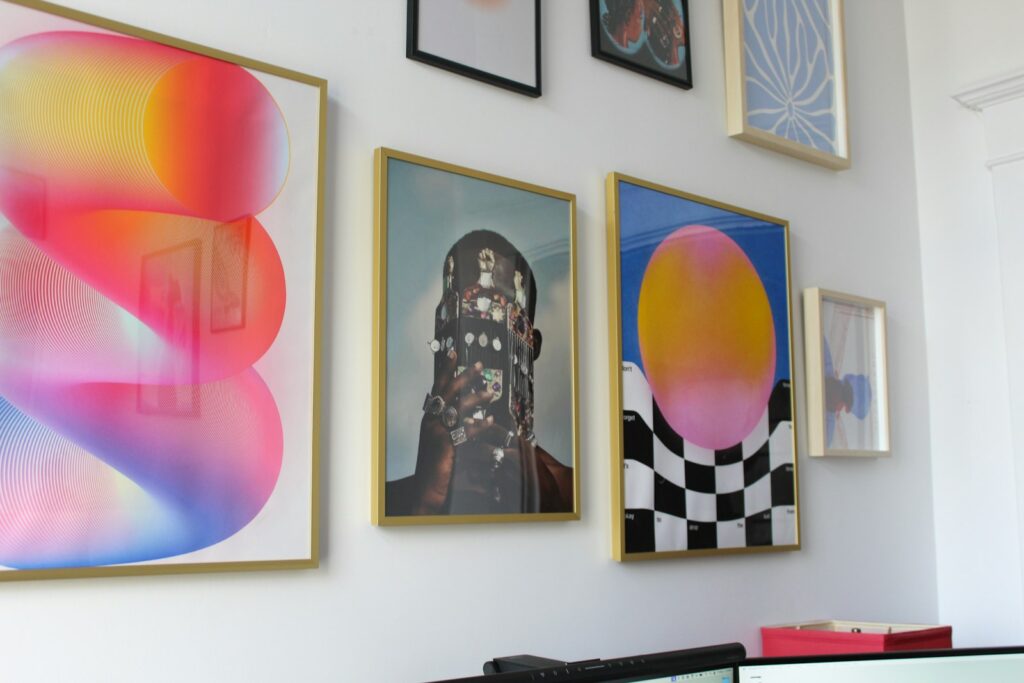
How a collection is shown matters as much as what is in it, and how to display a collection at home becomes essential reading once a handful of pieces have accumulated. Objects grouped with intention — by material, by colour, by maker — read as a genuine collection; objects scattered individually throughout a home simply read as clutter, however good each individual piece might be on its own.
A true collection is not defined by its size. It is defined by whether every piece in it could be explained, with genuine enthusiasm, by the person who owns it.
Collecting as a Long, Patient Practice
The most satisfying collections, without exception, are built slowly — a piece bought on a trip, another discovered at a local market, one more gifted by a friend who understood exactly what the collector was looking for. Rushing a collection, buying broadly and quickly to fill shelves, tends to produce exactly the impersonal effect a genuine collection is meant to avoid. Patience is not a limitation here; it is, quite genuinely, the entire method.
Provenance and Keeping a Record
As a collection grows, it is worth keeping a simple, ongoing record of what has been bought, from whom, and when — a habit collectors of any category eventually adopt, usually after regretting not starting sooner. A short note on where a piece was found, what the maker said about it, and roughly when it entered the collection turns a shelf of objects into something closer to a personal archive, and it becomes genuinely useful if a piece is ever insured, sold, or passed on to family. It also, more immediately, deepens the pleasure of living with a collection, since each object carries a specific memory rather than simply blurring into the general décor of a room.
This record-keeping habit becomes particularly valuable with ceramics and glass, where a maker’s early work can be genuinely difficult to distinguish from their later output without notes, and where a collector’s own memory, however sharp, tends to fade faster than the objects themselves. A simple photograph and a few lines in a notebook, kept up as pieces arrive rather than reconstructed years later from memory, is all the discipline this really requires.
A Home That Tells a Story
A home built partly around a genuine collection of design objects ends up telling a story that furniture alone never quite can — where its owner has travelled, what they have grown curious about over time, whose work they discovered early and stayed loyal to. It is, in the end, one of the more durable forms of personal expression available in a home, precisely because it cannot be bought all at once, no matter the size of the budget behind it. The wider Homes & Culture section returns to this same idea of a home built slowly, with intention, again and again.
Priya tours the homes most people only glimpse from the road, and asks how they are really lived in.