The Best Yakiniku and Wagyu Specialists
Smoke, marbling and the discipline of restraint: what separates Singapore's serious yakiniku and wagyu tables from the ones simply trading on price.
 By Renée Tan
30 August 2026 · 6 min read
By Renée Tan
30 August 2026 · 6 min read
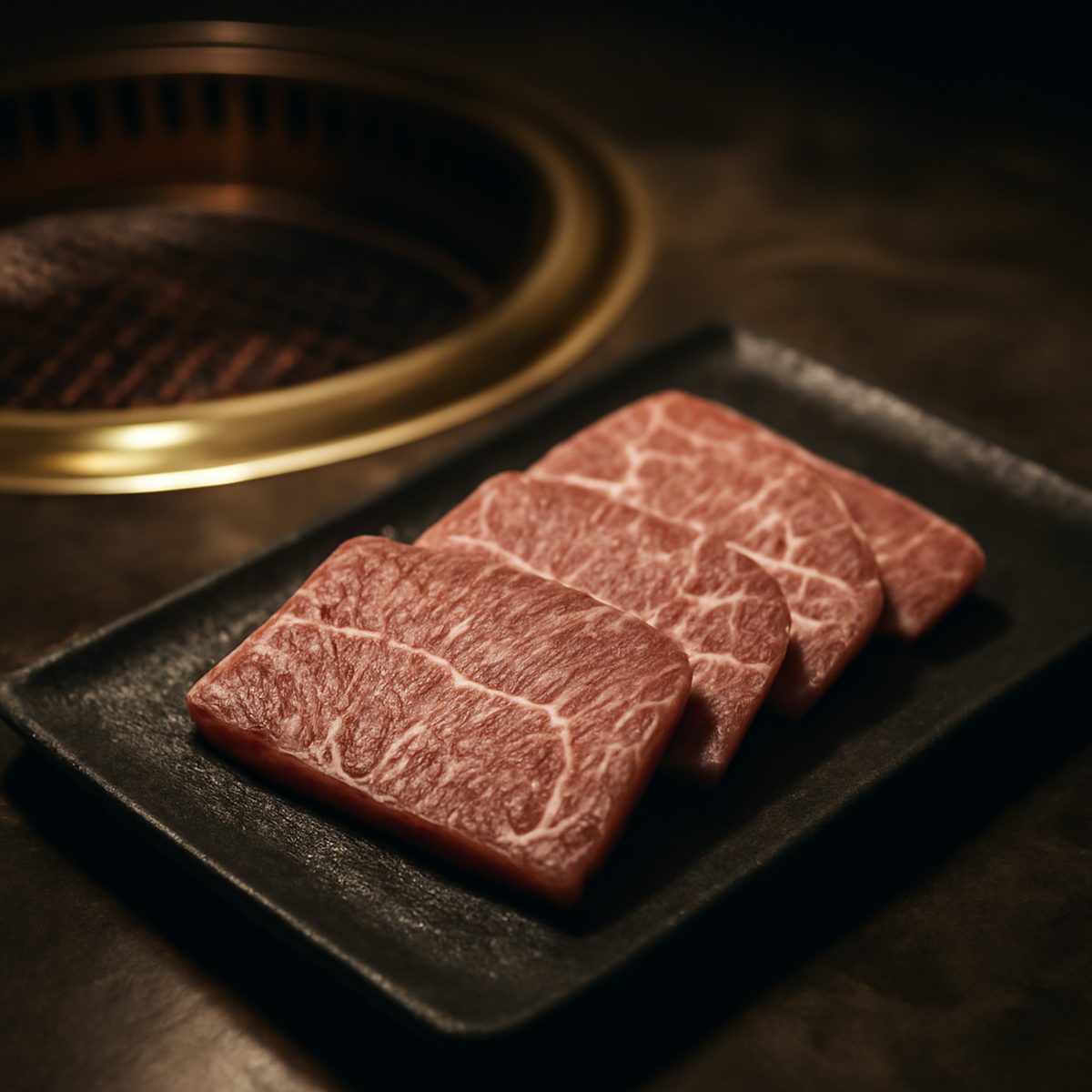
There is a particular moment at a good yakiniku table when a slice of well-marbled beef hits a hot grill and briefly seems to shimmer, the fat rendering almost instantly at the edges while the centre stays pink. It lasts seconds. Get the timing wrong in either direction — too little heat and the fat never renders properly, too much and it turns to little more than smoke and regret — and an expensive cut is wasted. This is the quiet tension at the heart of every serious yakiniku restaurant: the ingredient is often extraordinary, and the margin for technical error is almost nonexistent.
Understanding What You Are Actually Paying For
Wagyu grading is more specific than most diners realise, and worth understanding before spending seriously on it. The Japanese system assesses yield grade and quality grade separately, with the quality score built from marbling, colour, firmness and fat quality — the famous A5 designation refers to the top yield grade (A) combined with the top quality score (5), not marbling alone, though marbling tends to dominate the conversation. A high marbling score does not automatically mean a better eating experience for every cut or every diner; some prefer the more moderate marbling of a lower grade, particularly for larger portions, since intensely marbled beef can become genuinely difficult to eat in quantity. A restaurant staff who can explain this distinction clearly, rather than simply pointing to a grading letter on the menu, is usually a good sign of a kitchen that takes the ingredient seriously.
The Grill Matters More Than the Cut
Charcoal remains the gold standard for yakiniku, prized for the way it renders fat cleanly while imparting a specific, slightly mineral smokiness that gas simply cannot replicate. Binchotan, the dense Japanese charcoal favoured by the best operators, burns hotter and cleaner than standard charcoal, with minimal smoke and a long, steady heat that makes it considerably easier to cook thin slices precisely. A restaurant using a well-maintained binchotan grill, changed or refreshed regularly through service, is worth the modest premium over gas-grill competitors — the difference shows up directly in the final bite.
Cut thickness is the other major variable, and one diners rarely think to question. Thinner slices, more common with fattier cuts, cook in seconds and are meant to be eaten immediately; thicker cuts, generally reserved for leaner sections like the sirloin, need a slower approach and benefit from resting briefly off the grill before eating. The best yakiniku specialists vary their cut thickness deliberately by cut, rather than slicing everything to a uniform width for convenience. The same specialist precision over the grill defines another Japanese tradition, as our guide to unagi and eel specialists explains.
Wagyu Beyond the Grill
Singapore’s wagyu specialists have increasingly branched beyond straightforward grilling into more considered preparations — lightly seared tataki, wagyu served raw as sashimi with just a touch of soy and wasabi, or folded into a rice bowl where the fat’s richness plays against warm, seasoned rice. These variations are worth ordering precisely because they showcase different aspects of the beef; a raw or lightly seared preparation reveals texture and fat quality in a way that heavy grilling can sometimes obscure. It is a similar philosophy to the one explored in our guide to Japanese whisky, where subtlety and restraint, rather than intensity alone, tend to separate the genuinely excellent from the merely expensive.
“The biggest mistake people make is ordering only the fattiest cuts,” one Japanese grill chef working in the Robertson Quay area told us. “Balance a meal properly and the leaner cuts make the marbled ones taste even better by contrast.”
How to Order a Balanced Meal
- Start lean, finish rich. Ordering fattier cuts too early dulls the palate for what follows; work up to the most marbled cuts rather than leading with them.
- Ask about origin, not just grade. Different prefectures and breeding lines produce meaningfully different flavour profiles even at similar grading levels.
- Pace the grill. Resist the urge to load it up entirely; cooking a few pieces at a time preserves the grill’s heat and prevents overcrowding-related steaming.
- Order rice and banchan-style sides to cut the richness. A purely meat-focused meal, however good the beef, tends to fatigue the palate faster than one with proper counterpoints.
Yakiniku’s Korean Cousin
It is worth distinguishing yakiniku from Korean barbecue, a related but distinct tradition with its own grilling philosophy, marinades and side-dish culture — our separate guide to where to find great Korean barbecue covers that territory properly. The two traditions share obvious DNA but diverge meaningfully in seasoning and pacing, and conflating them does a disservice to both. Diners genuinely curious about grilled meat across East Asian traditions would do well to explore both guides rather than treating them as interchangeable.
Sauces, Salt and the Case for Restraint
A properly graded, well-rested cut of wagyu needs remarkably little embellishment, and the best yakiniku tables understand this instinctively. A simple flake of sea salt, perhaps a light brush of tare sauce for leaner cuts, is usually enough; drowning a fatty, well-marbled slice in a heavy, sweet barbecue sauce mutes exactly the qualities that made the cut worth ordering in the first place. Some of the more considered restaurants now serve a small selection of finishing salts alongside the meat — a yuzu salt, a smoked variant, occasionally a citrus-pepper blend — allowing diners to adjust seasoning per cut rather than committing to one sauce for the entire meal. This kind of small, deliberate flexibility tends to distinguish kitchens that have thought carefully about the eating experience from those simply trading on the price tag of the beef itself. The same respect for good pork and beef, handled without fuss, also defines a very different Japanese tradition, as our guide to tonkatsu and cutlet specialists shows.
Portion size deserves consideration too. Because well-marbled wagyu is extremely rich, a little goes further than diners often expect, and the better specialists will actively discourage over-ordering purely fatty cuts, steering the table instead towards a mix that includes leaner options like the sirloin or rump. A restaurant confident enough to talk a table down from over-ordering, rather than upselling relentlessly, is usually one worth trusting with a return visit.
An Ingredient Worth Respecting
The best yakiniku and wagyu specialists in Singapore share a common trait: restraint. They do not oversell the marbling, they do not drown good beef in sauce, and they trust diners to appreciate technique over spectacle. Alongside the city’s broader appetite for modern Japanese cooking beyond sushi, it reflects a dining culture increasingly comfortable paying for genuine craft rather than novelty. For more of the island’s essential grilled and smoked cooking, our Dining & Drinks section is the place to keep exploring.
Renée has covered Singapore's restaurants for over a decade, with a soft spot for the kitchens most people walk past.