The Best Portuguese and Iberian Dining
Piri piri, bacalhau and open-flame grilling: Portuguese and Iberian cooking is having a quiet moment here. Where the craft is genuinely taken seriously.
 By Renée Tan
30 August 2026 · 6 min read
By Renée Tan
30 August 2026 · 6 min read
For a cuisine built on some of the most confident flavours in Europe — salt cod, smoked paprika, good olive oil, and fire — Portuguese and Iberian cooking has taken an unusually long time to find its footing in Singapore. That is beginning to change. A small but serious wave of restaurants is now treating bacalhau, presunto and open-flame grilling with the same rigour once reserved for French or Italian tables, and the results are worth genuine attention.
What makes the cuisine distinct
Portuguese cooking is, at its heart, a coastal cuisine built around restraint: excellent salt cod, good bread, olive oil worth naming, and grilling done properly over live coals rather than a gas flame standing in for the real thing. Spanish cooking, its neighbour across the peninsula, shares this reverence for raw material but leans harder into technique — the precision of a well-run asador, the layered patience of a proper paella, the theatre of a jamón carved to order. Together they form what is loosely called Iberian dining, and the best Singapore kitchens working in this idiom understand that the two traditions, while related, are not interchangeable.
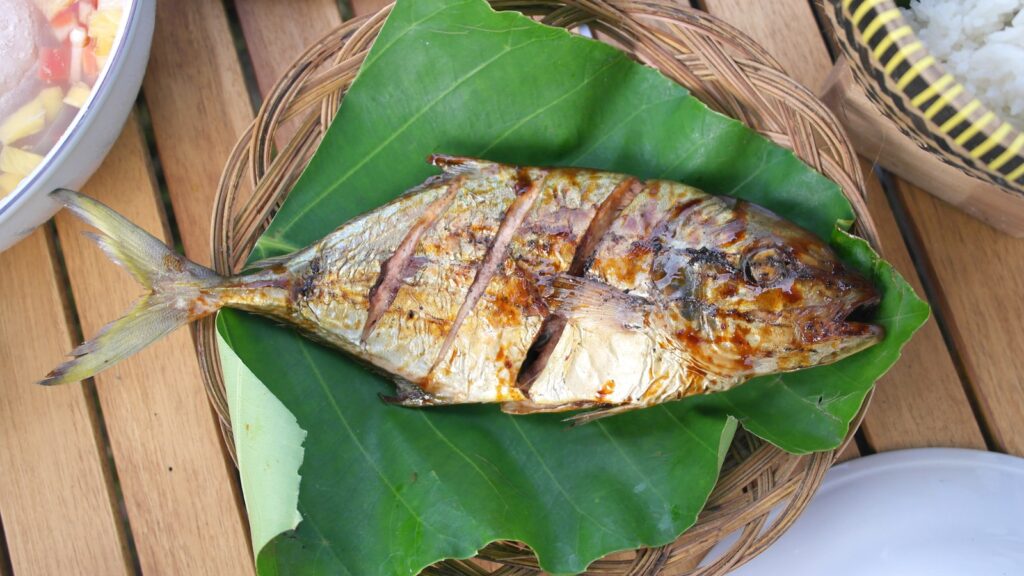
Bacalhau, the salt cod at the centre of Portuguese cooking, is the clearest test of a kitchen’s seriousness. Properly desalted over days rather than hours, then treated with real care — baked with potato and cream in the style of bacalhau com natas, or simply grilled with olive oil and garlic — it should be firm, flaky and never fishy in the wrong way. Kitchens that rush the desalting process produce something either unpleasantly salty or bland, and it is usually the first thing worth ordering to judge a new opening by.
There is a folk claim, repeated often enough in Portugal to have become a kind of national in-joke, that there exists a different bacalhau recipe for every day of the year. The exaggeration aside, the underlying truth is real: this is a fish with an extraordinary range, equally at home shredded through a golden potato cake, layered into a casserole, or served simply grilled with nothing more than good olive oil and a scattering of parsley. A kitchen that offers more than one preparation, and executes each with equal care, is usually one worth returning to more than once.
The grill, treated properly
Where Iberian dining truly separates itself from the pack is at the grill. A proper Spanish asador or Portuguese churrasqueira runs on live coals, not gas, and the difference is not subtle — smoke penetrates the meat or seafood in a way no amount of marinade can replicate. Piri piri chicken, perhaps the most internationally recognisable Portuguese export, is a genuine test case: the char has to develop before the meat dries out, and the piri piri itself should carry real chilli heat balanced by garlic and citrus rather than arriving as a generic hot sauce afterthought.
The Spanish side of the ledger brings its own set of tells. A proper paella, cooked in a wide shallow pan over direct heat, should develop socarrat — the thin, deliberately caramelised layer of rice at the bottom of the pan — which is a mark of skill rather than a mistake, though it is routinely misunderstood as one by diners unfamiliar with the dish. Equally, a tortilla española, deceptively simple as a dish of egg and potato, is a genuine test of a Spanish kitchen’s fundamentals: the potato should be soft rather than crisp, the egg barely set in the centre, and the whole thing held together with confidence rather than served as a dry, overcooked wedge.
What to order on a first visit
- Bacalhau, prepared any way the kitchen is proudest of — it tells you everything about their standards.
- Grilled octopus, a dish that rewards patience at the stove far more than most diners realise.
- A proper jamón or presunto board, sliced to order rather than pre-cut and left waiting.
- Something from the grill finished simply, with good olive oil rather than a heavy sauce.
How it compares to the wider Mediterranean scene
Singapore’s appetite for Mediterranean cooking has grown considerably, and it is worth placing Iberian dining alongside Black Cow’s coverage of the best Greek and Mediterranean dining and, for those chasing the grill specifically, the best Spanish restaurants and asadors, which goes deeper into the specifics of live-fire technique. The throughline across all of them is the same: a confidence in raw ingredient over embellishment, and a willingness to let smoke and salt do most of the talking.
“We don’t hide behind sauce here,” one chef working in the idiom told us. “If the fish or the fire isn’t right, there’s nowhere for it to go.”
What to drink alongside
Portuguese and Iberian tables are also, not coincidentally, some of the better places in the city to drink seriously — vinho verde with the seafood, a structured Douro red with anything off the grill, or a glass of properly chilled sherry to open the meal. It is worth cross-referencing a visit against the best wine lists in Singapore before booking, since the strongest Iberian kitchens tend to pair their cooking with equally serious cellars rather than an afterthought list of safe, familiar bottles.
Sherry in particular deserves more attention than it typically receives at the table, since a good fino or manzanilla, served properly chilled and slightly saline, is one of the more versatile aperitifs available anywhere — sharper and more food-friendly than most people give it credit for, and a genuinely elegant way to begin a meal that will otherwise lean heavily on salt, smoke and char. The kitchens that take this seriously tend to stock more than one style, and it is worth asking rather than defaulting to the house pour.
For the fuller context of where this fits into the city’s dining landscape more broadly, Black Cow’s Dining & Drinks section tracks the ongoing shift toward cuisines that have, until recently, been underserved here. Portuguese and Iberian cooking’s moment feels overdue rather than trendy — a return to a style of eating built on fire, salt and patience, done by kitchens finally willing to take it seriously rather than treat it as a novelty.
Renée has covered Singapore's restaurants for over a decade, with a soft spot for the kitchens most people walk past.