The Best Places for Autumn Colour in Japan
Koyo season rewards those who plan around it rather than for it. Here is where the colour runs deepest, and how to see it without the queues.
 By Marcus Lim
30 August 2026 · 6 min read
By Marcus Lim
30 August 2026 · 6 min read
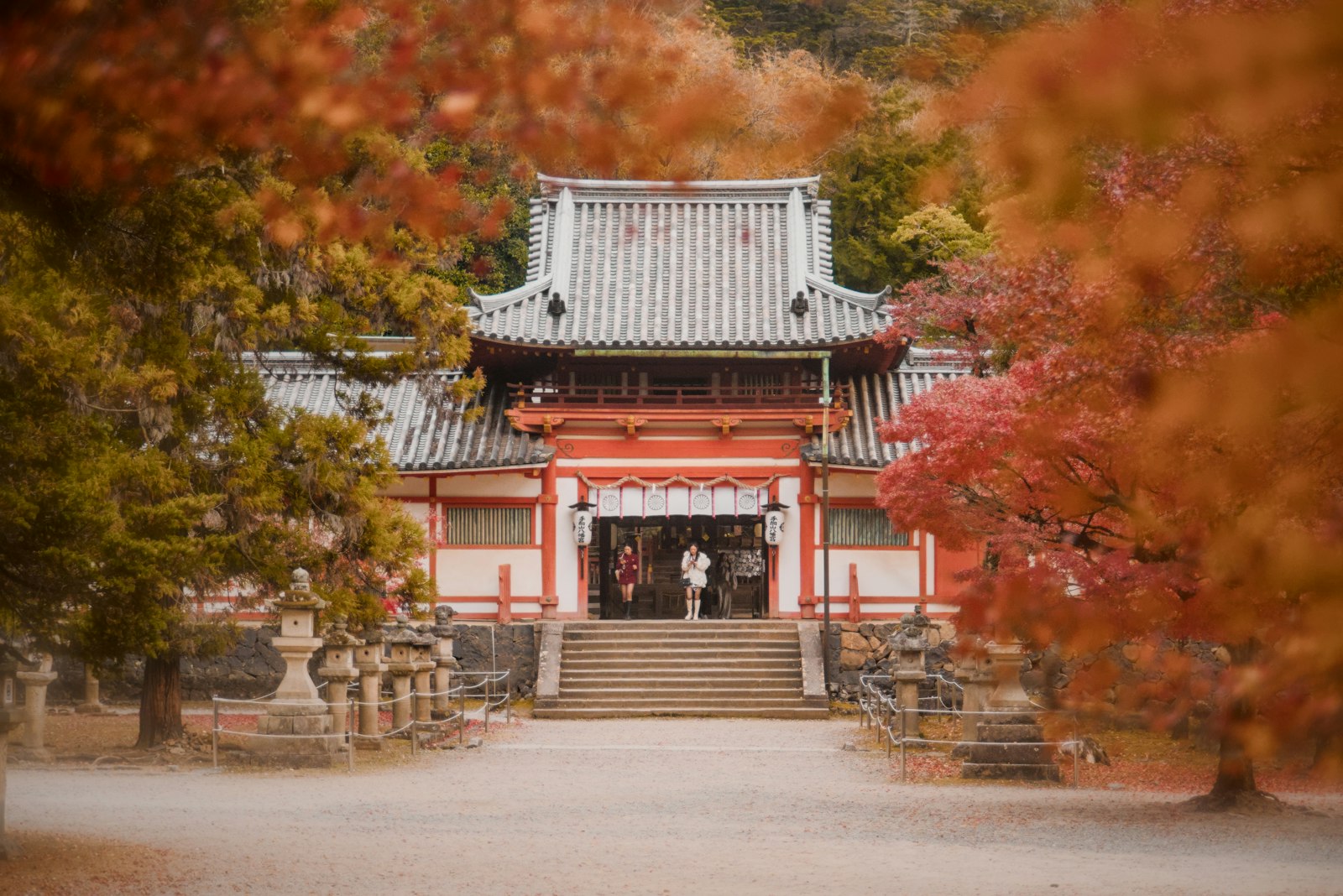
There is a particular week each year, somewhere between the last humid breath of a Japanese summer and the first frost, when the maples along a mountain valley turn from green to a red so deep it looks lacquered. The Japanese have a word for chasing it: koyo, the autumn counterpart to cherry blossom’s hanami, and it draws a smaller, quieter, arguably more devoted crowd. Where sakura season is a national festival, koyo is closer to a private ritual — best done slowly, on foot, with a flask of hot tea and no fixed itinerary beyond a general direction and a willingness to be stopped in your tracks.
Reading the Colour Map
The colour does not arrive everywhere at once. It begins in the northern mountains of Hokkaido in late September, drifts south through the Tohoku ranges in October, reaches Kyoto and the central valleys by mid-November, and finally settles over Kyushu’s lower hills into early December. Serious koyo travel means reading this progression like a tide chart rather than booking a fixed date months in advance — the difference between a hillside at its peak and the same hillside a week past it is the difference between a postcard and a memory of one.
The most reliable approach is to pick a region rather than a single destination, and to build in a few unstructured days either side of the forecast peak. Weather shifts the timing by a week in either direction, and the operators who track it closely — small ryokan, mountain bus companies, temple offices — are usually a better source than any app.
The Mountain Temples of Kyoto’s Northern Hills
Kyoto in autumn is crowded, and worth it anyway, provided you go early and go north. The temples tucked into the hills above the city — moss gardens framed by maple canopies, wooden verandas overlooking ponds that double the colour above them — are at their best in the hour after opening, before the tour groups arrive. A short train ride further out, the valleys around the city’s northern edge hold quieter temple complexes where the maples are older, taller, and largely left to their own arrangement rather than manicured for photographs.
Evenings bring illuminated viewings at several temple grounds, where lanterns are strung through the canopy and reflected in still water — a spectacle that borders on theatrical but earns its place once a year. For a broader sense of the city beyond its famous sights, our guide to Japan beyond Tokyo and Kyoto is worth reading alongside any Kyoto plan.
The Alpine Valleys of the Central Mountains
Further north and higher up, the central mountain ranges hold gorges and hot spring towns where the colour arrives earlier and burns hotter — sharper reds against granite rock faces, with the added theatre of steam rising from open-air baths as the temperature drops. These valleys are less visited than Kyoto’s temple circuit, largely because they demand a longer journey, but the reward is colour experienced at eye level rather than through a viewfinder shared with fifty other people. For colour doubled in still water, our guide to the best places for autumn reflections and lakes widens the search.
A number of small ryokan in these valleys build their entire autumn calendar around the koyo window, offering kaiseki menus that shift with the season and rooms positioned specifically for the view. Booking here should happen the moment dates are confirmed, as the best rooms go early to returning guests.
What to Pack for a Colour-Chasing Trip
- Layers rather than one heavy coat — mountain mornings are cold, midday sun is not
- A proper walking shoe, since the best viewpoints are rarely beside the car park
- A thermos, filled at the ryokan, for the inevitable long wait at a viewpoint
- A camera you are willing to put down — some views are better kept than shot
The Quieter South
By the time colour reaches Kyushu in Japan’s south, the northern circuits have gone bare, and this later window offers a genuine advantage: fewer travellers, milder weather, and a landscape that pairs maple colour with volcanic terrain and coastal views unavailable further north. It is here that koyo overlaps briefly with the tail end of Japan’s hot spring season, making it possible to soak in an open-air bath with a burning hillside for a backdrop.
The best koyo I ever saw was not the most famous — it was a single tree, alone on a temple path, that a groundskeeper told me had been planted by his grandfather. You cannot plan for that kind of moment. You can only leave room for it.
For those extending a Japan trip into winter proper, our guide to the best places for snow in Japan picks up almost exactly where the maples leave off, and the country’s ski towns share many of the same mountain valleys.
Building the Itinerary Around Timing, Not Sights
The single best piece of advice for a koyo trip is counterintuitive: choose your dates before your destinations, then let the forecast guide the route within a chosen region. Trying to fix an itinerary a year in advance around specific named viewpoints is a recipe for arriving either too early or too late. A better model treats the whole trip as a loose corridor — Kyoto to the central mountains, say, or Tokyo north into Tohoku — with two or three fixed hotel bookings and open days between them to chase the colour as it moves.
Spring travellers to Japan often build trips around a single fixed festival date; autumn rewards the opposite instinct. Those planning a spring visit instead might find our guide to the best spring festivals in Japan a useful counterpoint — a season built on fixed dates rather than a moving one.
Wherever the itinerary lands, the constant is patience: a good koyo trip is not measured in temples visited but in mornings spent standing still, coffee cooling, waiting for a particular slant of light to catch a particular hillside. Plan loosely, travel slowly, and the colour will do the rest. For more on building trips around a season rather than a checklist, our wider Travel & Stays coverage follows the same principle across the region.
Marcus writes on travel and hospitality across Asia, and is happiest a long way from a lobby.