The Best Materials for a Timeless Landing
A landing sees heavy daily traffic and little design attention. Here is how to choose materials that stay handsome for decades rather than dating fast.
 By Priya Nair
31 August 2026 · 6 min read
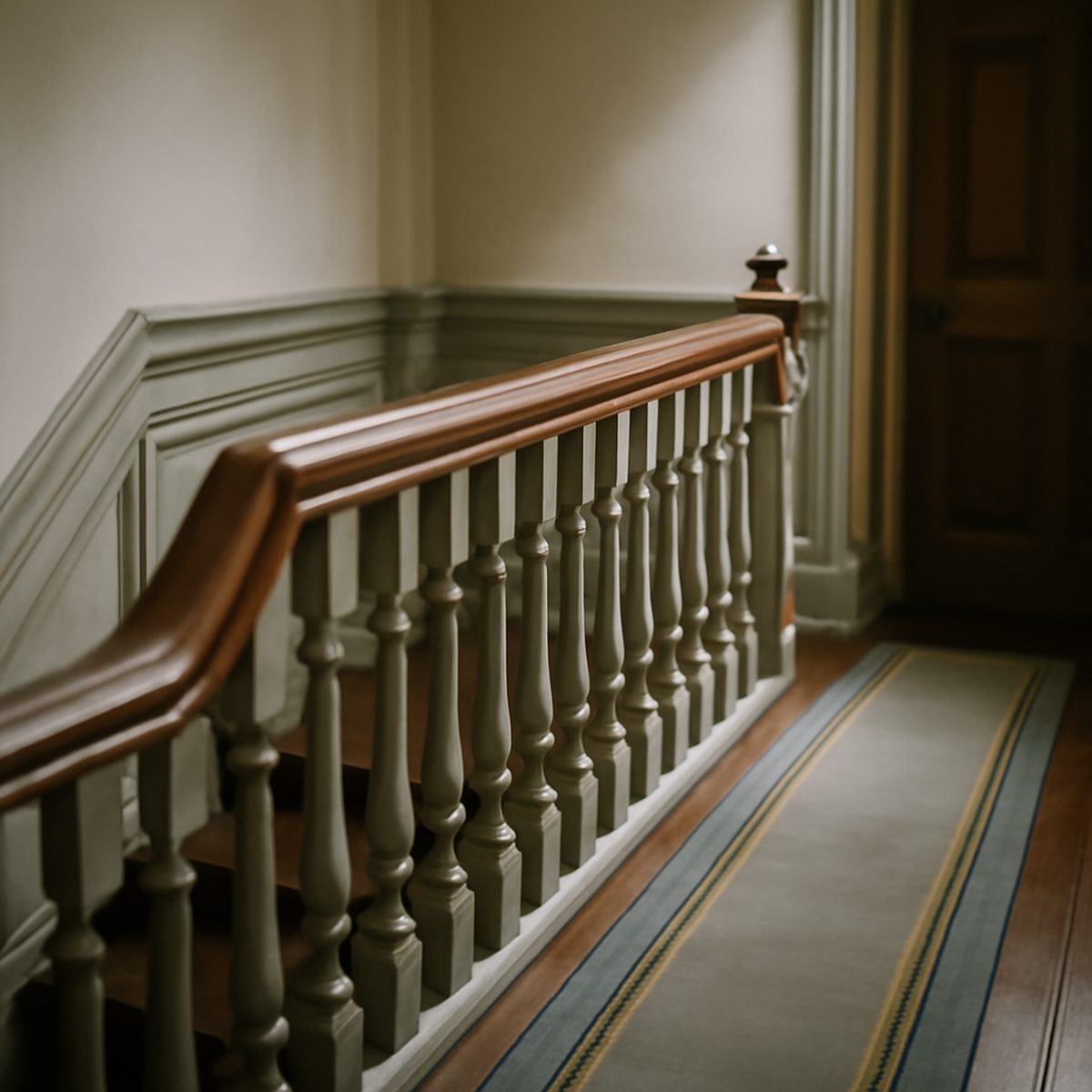
A landing occupies an odd position in most homes: heavily trafficked, rarely photographed, and consequently one of the last spaces to receive genuine design attention. Yet it connects nearly every room upstairs, sees daily footfall in both directions, and, precisely because it is passed through rather than lived in, needs to look good for considerably longer between renovations than a bedroom or living room might. Choosing materials that age well rather than simply look current is the whole exercise here — a landing finished in whatever was fashionable at the time of renovation will date faster than almost any other space in the house.
Flooring: Durability Over Trend
Because a landing typically connects several rooms and sees traffic from every one of them, its flooring needs to withstand more wear than a room used by one household activity at a time. Solid timber, properly finished, remains the benchmark for a reason: it can be sanded and refinished repeatedly over decades, unlike an engineered or laminate alternative that wears through its top layer and cannot be restored in the same way. Where a runner or carpet is preferred for warmth and sound-dampening underfoot, a genuinely classic pattern — a simple stripe, a subtle geometric, a plain wool in a considered colour — will outlast almost any bolder, more fashionable print by a significant margin.
Flooring options worth weighing
- Solid oak or walnut boards, refinishable indefinitely with proper care.
- A wool runner over timber, adding warmth and sound absorption without covering the floor entirely.
- Natural stone, in homes where the landing connects to a similarly finished ground floor.
Balustrade and Handrail: The Detail That Ages a Landing Fastest
Few elements date a landing as quickly as a poorly chosen balustrade. Ornate, heavily turned spindles read as distinctly of their era once that era passes, while a simple painted or timber balustrade, with clean vertical lines and a well-proportioned handrail, has remained essentially unchanged in its appeal for well over a century. Painted timber, in particular, offers considerable longevity: it can be refreshed with a new coat every several years far more easily and affordably than a full balustrade replacement, keeping the landing looking cared-for without requiring a structural change.
“We inherited a landing with a balustrade from the 1980s, and no amount of styling around it ever made the room feel current. Replacing it with something simple was the single change that made the whole upstairs feel timeless again.”
Wall Finishes That Wear Well
A landing’s walls take more incidental damage than most rooms — furniture carried up a staircase, bags brushing past, the general friction of a well-used connecting space. A durable, washable paint finish, in a mid-sheen rather than a flat matte, withstands this wear considerably better while still reading as considered rather than institutional. Timber panelling to dado height, a classic treatment in period homes, offers similar practical resilience while adding genuine architectural character, and ages, if anything, more gracefully than paint alone as it develops a soft patina over years of use.
Lighting and Hardware as Supporting Materials
Though not a surface material in the strictest sense, a landing’s light fittings and door hardware contribute enormously to whether the space reads as timeless or dated, and are worth choosing with the same longevity in mind as flooring or balustrade. Simple brass or bronze fittings, rather than a trend-driven finish, tend to age into their surroundings rather than announce a particular decade, and both patinate attractively rather than simply looking worn. A pendant or wall light chosen for proportion and material quality over passing style will still suit the landing a decade after installation in a way a more fashion-forward fixture rarely does.
Door hardware deserves the same discipline. Handles and hinges finished in an unlacquered brass or a similarly ageing metal will only improve with the years of handling a well-used landing subjects them to, whereas a plated or lacquered finish, once it begins to wear unevenly, tends to look tired rather than characterful — a difference worth understanding before specifying hardware across an entire floor.
Storage and Furniture That Suit a Passing Space
A landing often accumulates a modest amount of furniture — a console table, a chair rarely sat in, perhaps a bookcase absorbing overflow from a nearby bedroom — and the same logic of restraint applies here as to the surfaces around it. A single well-made piece, in a material consistent with the rest of the landing’s palette, does more for the space than several smaller, mismatched items competing for attention in a room nobody lingers in long enough to appreciate visual clutter. Built-in storage, where the landing’s proportions allow for it, is often the more elegant solution than freestanding furniture, since it can be designed to disappear into the wall rather than occupying floor space in an already narrow, heavily trafficked area.
Skirting and architrave, though easy to overlook, contribute meaningfully to how timeless a landing feels. A generously proportioned skirting board, painted to match the walls or picked out in a soft contrasting tone, grounds the space in a way a thin, modern strip rarely achieves, and — like the balustrade — tends to read as classic regardless of decade, provided the proportions are handled with the same care given to the rest of the joinery. The same logic extends to door casings and architrave throughout the landing, which are worth specifying to match rather than treating as an incidental detail left to a builder’s standard stock profile.
Choosing for the Long Term
The through-line across every material choice here is restraint: a landing rewards simplicity and quality over expression, precisely because it is a space passed through rather than settled into, and because its heavy traffic means any material chosen needs to earn its keep over decades rather than a single design cycle. Getting this right means a landing that continues to feel considered and unremarkable-in-the-best-sense long after more expressive rooms elsewhere in the house have needed refreshing. For related material guidance, our notes on the considered landing and stairwell, materials for a warm hallway and the considered galleried landing are useful companion reading, alongside the wider Homes & Culture section for further guidance on choosing finishes built to last, and on resisting the temptation to chase whatever finish happens to be fashionable this particular renovation season.
Priya tours the homes most people only glimpse from the road, and asks how they are really lived in.