The Best Hot Springs Beyond Japan
Japan gets all the credit for onsen culture, but Taiwan, Indonesia and mainland China each have thermal traditions worth crossing borders for.
 By Marcus Lim
29 August 2026 · 6 min read
Ask most people where to find a proper hot spring in Asia and the answer arrives instantly, almost reflexively: Japan. It is a fair reflex — Japan’s onsen culture is centuries deep and rightly celebrated — but it has also crowded out a handful of other thermal traditions across the region that deserve just as much attention, and that come without the peak-season crowds now common at Japan’s best-known springs.
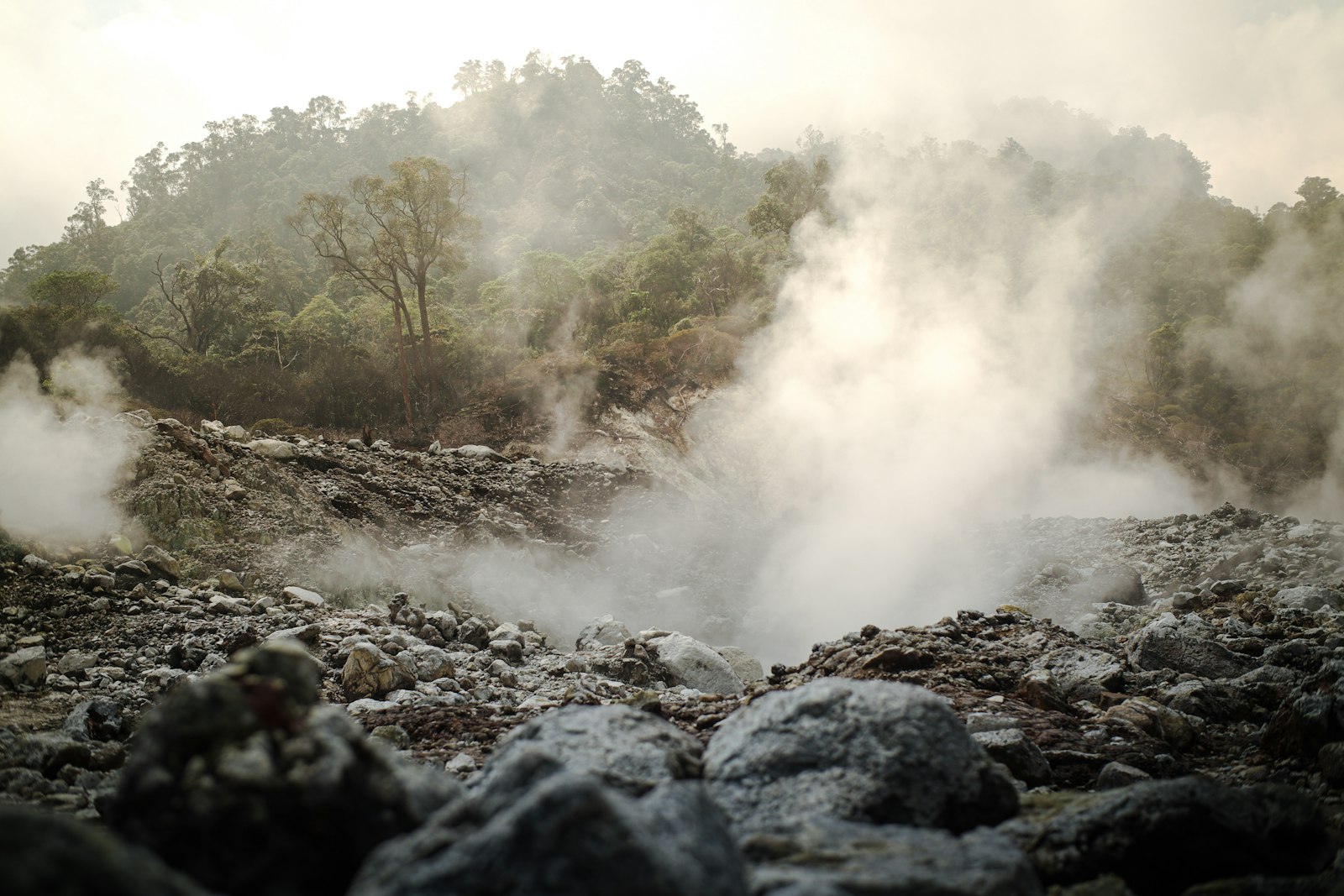
Volcanic activity runs the length of the Pacific Ring of Fire, which means genuine geothermal water bubbles up across Taiwan, Indonesia, the Philippines and parts of mainland China — each with its own bathing culture, mineral profile and etiquette, developed independently of Japan’s onsen tradition rather than in imitation of it.
Taiwan’s underrated thermal belt
Taiwan sits on some of the most mineral-rich hot spring water in Asia, a legacy of the same volcanic activity that shapes its mountainous interior. The country’s thermal towns — clustered mostly in the north and along the east coast — range from convivial public bathhouses to genuinely serious private ryokan-style retreats built by Japanese developers during the colonial period and since restored with real care. What makes Taiwan’s springs distinct is the mineral variety: sulphur springs near the capital sit within an hour of milkier, carbonate-rich pools further south, each said locally to suit different ailments, a claim worth taking with the same good humour as similar claims anywhere else.
Indonesia’s volcanic pools
Java and Bali both sit atop active volcanic systems, and the resulting hot springs range from rustic village pools to a handful of considered resort developments that have built spas directly around a natural source rather than piping in heated water artificially. The genuine article — water drawn straight from the ground, still faintly mineral-scented — is a different experience entirely from a heated infinity pool with a good view, however photogenic the latter might be. For a very different perspective on dramatic terrain, the best hot air balloon experiences trade the warm pool for a quiet dawn flight above the landscape.
What to look for in a genuine spring
- A visible source, ideally within sight of the pool itself, rather than a pipe disappearing into a wall.
- A faint but present mineral smell — usually sulphurous — which heated tap water simply cannot replicate.
- Local bathers alongside guests; a spring used only by resort visitors is often a manufactured one.
The etiquette worth knowing
Unlike Japan’s onsen, where a fairly rigid set of customs governs everything from washing before entry to the treatment of tattoos, thermal bathing elsewhere in Asia tends to be more informal, though no less deserving of respect. A rural Taiwanese bathhouse and a Balinese village spring both operate on unwritten codes that reward quiet observation before diving in — watch how locals approach the water before assuming Japanese-style rules apply wholesale.
A spa director who has spent years developing thermal properties across the region summed it up neatly: “Everyone assumes onsen culture invented respectful bathing. It just wrote the rules down first. The instinct existed everywhere the water was hot.” It is a useful corrective for travellers who arrive elsewhere in Asia applying a Japanese etiquette rulebook to a tradition that predates it.
Pairing a soak with the rest of the trip
Hot springs rarely justify a standalone trip on their own, and the best itineraries build them in as a component of a longer, slower journey rather than the headline. Taiwan’s thermal towns pair naturally with a broader loop through the island’s mountains, while Indonesia’s springs sit well alongside the kind of unhurried island stay covered in the best spa resorts in Bali right now. For travellers who prefer the reliability of Japan’s onsen tradition but want to widen the search beyond the well-trodden hot spots, the onsen ryokan worth the journey remains a useful companion piece, and the broader case for slowing down entirely is made well in wellness escapes within two hours of Singapore, for those who cannot spare a full week away.
When to go
Thermal bathing is, counterintuitively, at its best in cooler months, when the contrast between the hot mineral water and the surrounding air delivers the full sensory effect — the same logic that makes a winter onsen more atmospheric than a summer one. Taiwan’s dry season from October to April is ideal, while Indonesia’s higher-altitude springs are pleasant year-round given the tropical baseline temperature rarely drops enough to matter.
Anyone planning a longer regional trip around this theme should browse more broadly through Travel & Stays, where several other Southeast Asian wellness itineraries are covered in more depth. But the core case stands on its own: Japan did not invent the hot spring, and travellers willing to look sideways at Taiwan, Indonesia and beyond will find water just as mineral-rich, traditions just as considered, and crowds meaningfully thinner.
Mainland China’s lesser-known thermal towns
Beyond the well-trodden onsen circuit, several provinces across mainland China hold thermal traditions dating back well over a thousand years, largely overlooked by international travellers despite genuine historical depth. Certain mountain towns built entire local economies around a natural hot spring centuries before the concept of a destination spa existed anywhere else in Asia, and the bathhouses that grew up around them retain a distinctly local, unpolished charm that more commercialised destinations elsewhere have largely lost.
These towns reward a slower, more independent style of travel than a packaged spa holiday — expect fewer English-language signs, simpler facilities, and a bathing culture that locals, not tourists, still largely define. For travellers comfortable with that kind of independence, the reward is a genuinely unmediated version of thermal bathing, closer to how the practice would have looked long before it became a hospitality category in its own right.
Combining a soak with the rest of a trip
Few travellers will build an entire itinerary around hot springs alone, and the destinations above tend to work best as a component within a longer, more varied trip rather than the sole reason for travel. Taiwan’s thermal towns pair naturally with time in Taipei or a loop through the island’s eastern coastline; Indonesia’s volcanic pools sit well alongside a broader Bali itinerary that mixes culture, food and rest in roughly equal measure.
The real luxury of a good hot spring was never the marble surround or the branded robe. It was always the water itself, and the quiet that settles over anyone sitting in it long enough to stop checking their phone.
Marcus writes on travel and hospitality across Asia, and is happiest a long way from a lobby.