The Best Fabrics for a Travel Blazer
A travel blazer lives a harder life than any other jacket you own. Here is what to look for in a fabric that survives it and still looks considered.
 By Daniel Koh
31 August 2026 · 6 min read
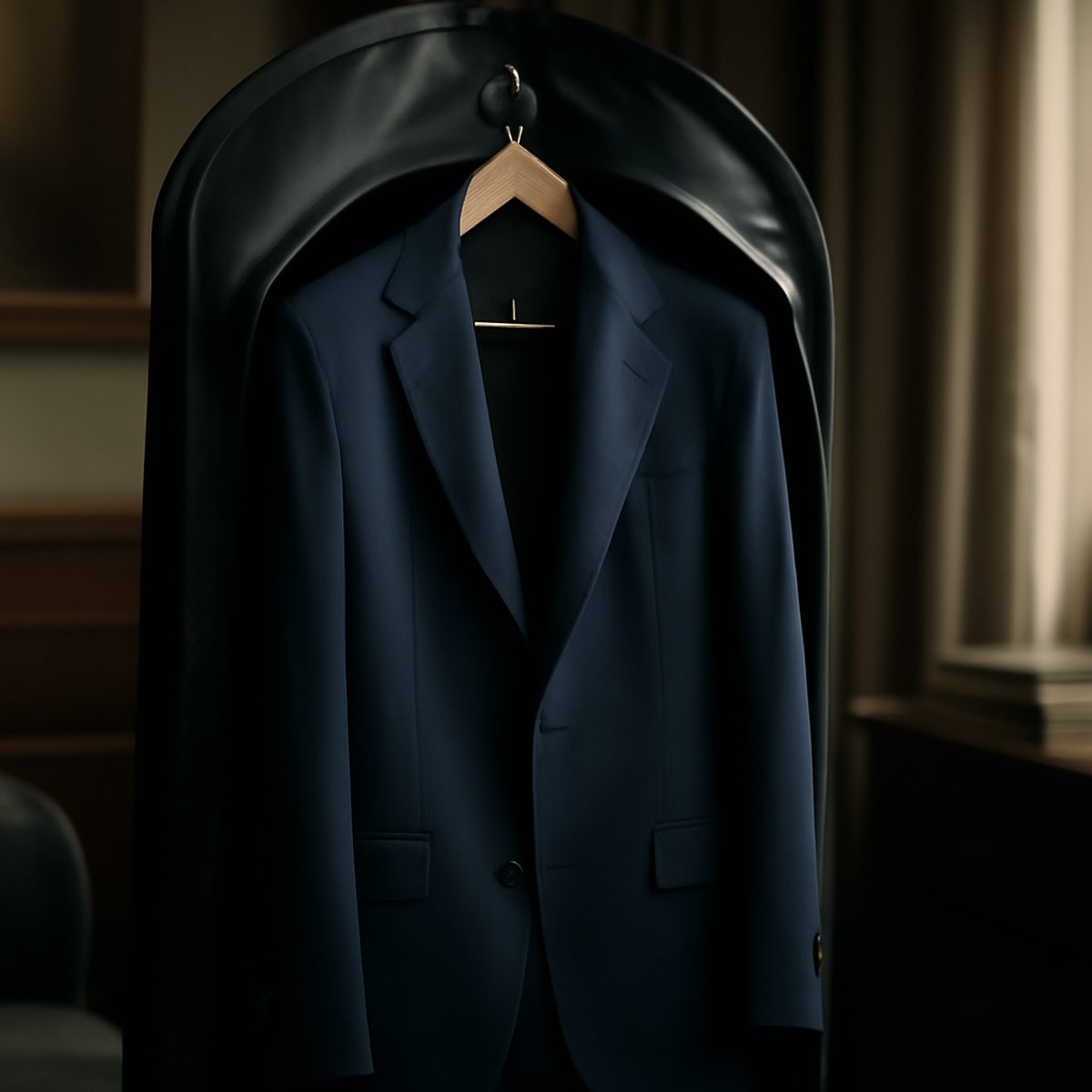
A travel blazer is asked to do something no other jacket in a wardrobe is asked to do: sit folded in a case or crushed under an armrest for hours, then emerge looking as though it has done neither. Most blazers, built for a wardrobe rail rather than a suitcase, fail this test badly. The right fabric is the difference between arriving looking considered and arriving looking as though you slept in your clothes — which, on a long-haul flight, you may well have.
Why wool, properly chosen, still wins
The instinct to reach for a synthetic travel blazer, marketed on its crease-resistance, is understandable but usually a mistake. Synthetics resist creasing by refusing to breathe, which means arriving in Singapore’s heat in a jacket that traps warmth exactly when you least want it to. A high-twist wool — spun tightly enough that the fibres spring back into shape rather than holding a crease — does the crease-resistant job of a synthetic while still breathing like a natural fibre. Look for wools described as “travel” or “high-twist” weaves, often in the 240–280 gram range, which is heavy enough to hold structure but not so heavy it becomes a burden in the tropics. This is closely related to the fabric logic in the best fabrics for a travel suit, where the same high-twist principle applies across a full two-piece.
Wool-blend options worth considering
A small amount of stretch fibre — typically under five percent elastane or a similar synthetic — woven into a wool base adds real recovery without compromising the wool’s breathability or hand-feel. This differs from a full synthetic blazer, where the base fibre itself is the problem; here the wool remains dominant and simply gets a helping hand at the fold lines, which is where creasing actually happens — across the back, at the elbows, along the lapel roll.
A wool-linen blend is worth considering for anyone travelling primarily within the region rather than to cooler climates. The linen content adds breathability and a slightly more relaxed drape, at the cost of a touch more visible creasing than a pure high-twist wool — a fair trade for many, provided the creasing reads as texture rather than dishevelment. We go into this trade-off properly in our guide to the best fabrics for a summer blazer.
What to check before buying
- Fold a swatch or the jacket’s own fabric tightly for thirty seconds and release it — a good travel weave springs back within a minute or two
- Check the lining separately; a full synthetic lining traps heat even in a breathable outer fabric, so half-lined or unlined construction matters as much as the shell
- Ask about the twist rather than just the weight — two wools of the same gram weight can behave very differently depending on how tightly the yarn is spun
Colour and weave as much as fibre
A fine herringbone or birdseye weave hides the inevitable travel creases far better than a smooth flannel or a solid worsted, simply because the texture breaks up light reflection across the fabric surface. Navy remains the most forgiving colour for exactly this reason — it hides both creasing and the general wear of repeated packing better than lighter shades. For anyone building a single do-everything travel blazer rather than several, the art of the navy blazer is worth reading alongside this piece; the colour argument and the fabric argument reinforce each other.
Packing technique matters as much as fabric
Even the best fabric performs badly if packed badly. Rolling a blazer, rather than folding it flat, avoids the sharp crease lines that folding creates at the shoulders and back panel — wrap it around a soft item like a jumper or a shirt to keep the roll’s diameter generous rather than tight. If a case allows it, packing the blazer last, on top of everything else, and unrolling it as close to arrival as practical, reduces the total time under compression. None of this replaces a good fabric choice, but a high-twist wool packed badly will still out-perform a poor fabric packed well.
A garment bag, even a simple fold-over one, is worth the extra weight in hand luggage for anyone travelling for a specific occasion — a client dinner, a wedding, a launch — where the blazer needs to arrive genuinely presentable rather than merely acceptable. Hanging it as soon as possible on arrival, ideally in a bathroom during a hot shower so the steam works into the fibres, resolves most residual creasing within twenty minutes without needing an iron at all. This is a habit worth adopting regardless of how good the fabric is; wool responds to humidity and heat far more readily than most people expect, and a hotel bathroom does the job a pressing service would charge for.
“Most people blame the jacket when a travel blazer arrives creased,” one Singapore tailor who works with frequent flyers told us. “Half the time it’s the folding, not the wool.”
What to avoid
A handful of fabric choices consistently disappoint on the road, regardless of how they present on a rail. Fully bonded or fused jackets, common at lower price points, hold their shape until the fusing itself begins to separate from repeated packing and heat, at which point the jacket develops a bubbled, uneven surface that no amount of steaming will correct. Very lightweight tropical wools under about 210 grams, while wonderfully breathable, tend to show every crease with almost no natural recovery — fine for a jacket that lives on a hanger between wears, poor for one that spends half its life folded in a case. And heavily structured jackets with a stiff, fully canvassed chest, built for a cooler climate’s tailoring tradition, simply do not compress or recover the way a softer, half-canvassed construction does.
Building it into a travel wardrobe
A single well-chosen travel blazer, in a high-twist navy wool with a light half lining, earns its place across a surprising range of trips — client meetings, dinners, even a smarter flight itself — without needing a second or third option. It sits naturally alongside the rest of a considered travel wardrobe, where the same principles of high-twist, breathable, texture-forward fabric apply across shirts and trousers too. Get the fabric right once, and a travel blazer becomes one of the few pieces in a wardrobe you genuinely stop thinking about — which, for a jacket that has to survive a twelve-hour flight and still look presentable at the other end, is precisely the point. For further reading on building out a considered wardrobe for warm-climate travel, our Style & Watches section has more on the pieces worth prioritising.
Daniel has spent fifteen years arguing that the best watch is the one you never take off.