The Best Contemporary Hakka Tasting Menus
Hakka food has long been considered too humble for fine dining. A small number of Singapore chefs are proving, course by course, that this was never true.
 By Renée Tan
31 August 2026 · 6 min read
By Renée Tan
31 August 2026 · 6 min read
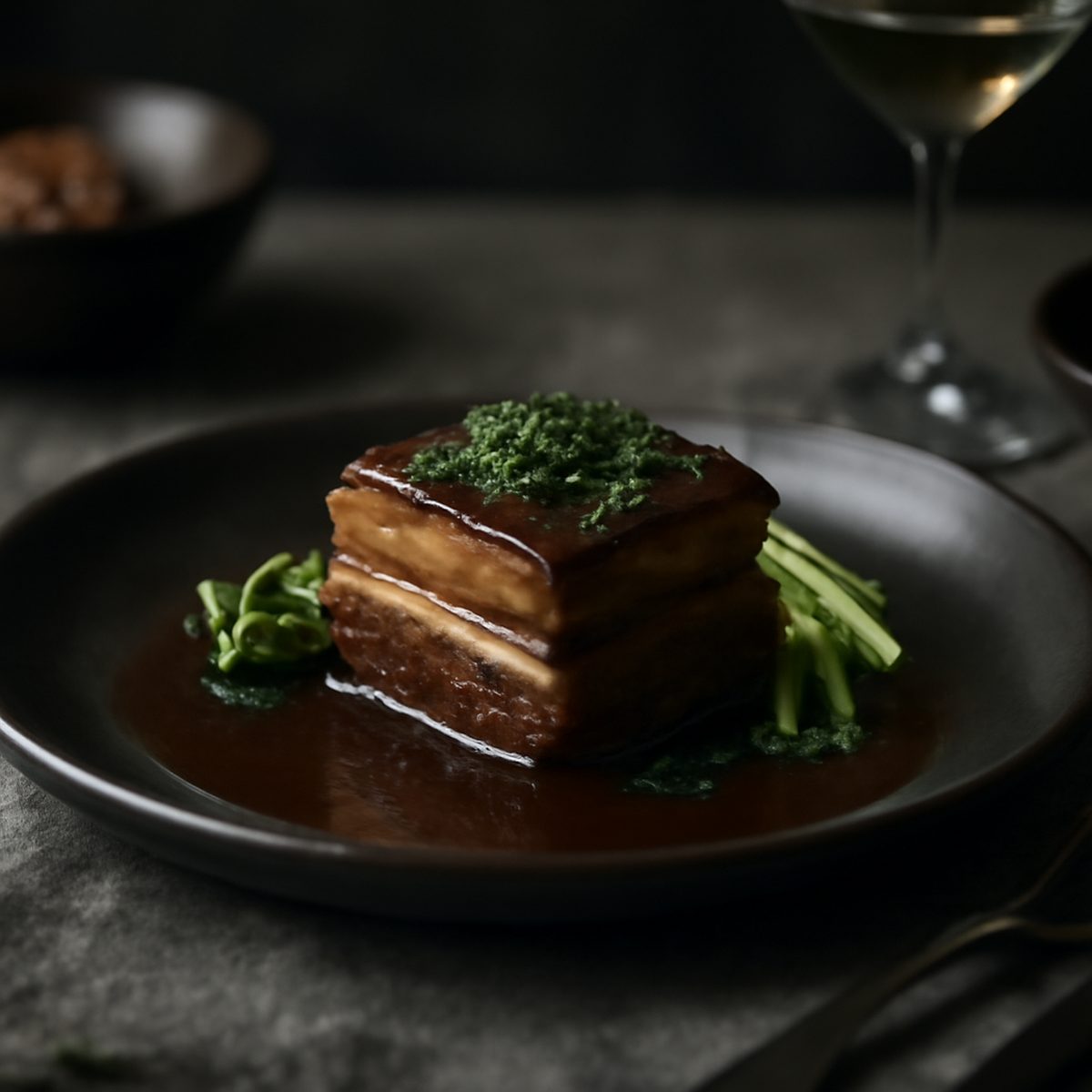
Hakka cuisine has always occupied an odd position in the hierarchy of Chinese regional cooking in Singapore — deeply loved at home, built around preserved and slow-cooked ingredients born of a historically itinerant, resource-conscious community, but rarely treated as a candidate for fine dining in the way Cantonese or Sichuan cooking has been. That is changing, slowly, as a small number of chefs with genuine Hakka heritage begin building full tasting menus around the cuisine’s core techniques, elevating dishes that once lived exclusively at the family dinner table into something considerably more ambitious, without stripping away what made them worth eating in the first place.
What Makes Hakka Cooking Distinct
Hakka cuisine developed among a community with a long history of migration, and its defining techniques reflect that: heavy use of preserved and salted ingredients that travel and keep well, slow braising that tenderises tougher, more affordable cuts, and a reliance on fermented pastes and sauces for depth of flavour rather than fresh aromatics alone. Dishes like braised pork belly with preserved mustard greens, or stuffed beancurd built to stretch a small amount of meat across a larger meal, carry within them a genuine history of thrift transformed into technique — not unlike ngoh hiang’s own origin story, where necessity eventually became craft.
The chefs doing this well in tasting-menu form understand that the point is not to disguise these origins but to sharpen them, using better ingredients and more careful technique to let the original dish’s logic show through more clearly than a rushed home version ever could. A bolder, more fiery regional cuisine is being given similar treatment, as our look at the best contemporary Hunan tasting menus shows.
Dishes Worth Watching For
- Braised pork belly with preserved mustard greens, done with real patience over several hours.
- Stuffed beancurd, updated with more generous, better-sourced fillings than the traditional stretch-the-meat version.
- Salt-baked chicken, a technique that rewards precise timing more than any single seasoning.
- Preserved vegetable and rice dishes, often the most quietly impressive course on a menu built around louder proteins.
A Cuisine Finding Its Place Alongside Others
Hakka’s emergence into fine dining mirrors a broader shift happening across several regional Chinese cuisines in Singapore that were, for a long time, considered too homely for a tasting-menu treatment. Our wider guide to regional Chinese cuisine in Singapore tracks this shift across several traditions at once, and Hakka’s rise is arguably the most interesting case within it, precisely because it started from further outside the fine-dining conversation than most.
“My grandmother would laugh if she saw the plating,” one chef building a Hakka tasting menu told us. “But she’d recognise the flavour immediately. That’s the part I refuse to change.”
How It Compares to the Wider Chinese Tasting Menu Scene
Placed alongside Singapore’s best contemporary Chinese tasting menus more broadly, the Hakka rooms tend to distinguish themselves through a slower, more deliberate pace — a reflection of the cuisine’s braising-heavy roots — and a greater willingness to let a single, humble ingredient like preserved mustard green carry an entire course rather than constantly introducing new elements. This restraint can read, to diners expecting the more elaborate presentation common at other contemporary Chinese fine-dining rooms, as understatement, but it is, more accurately, a faithfulness to the cuisine’s original character that we find genuinely admirable.
What to Expect at the Table
A well-constructed Hakka tasting menu typically opens with something bright and preserved — a pickled vegetable or salted egg course — before moving through the heavier braised centrepieces, and closing with a simple, comforting rice or noodle dish that grounds the meal back in its home-cooking roots. The wine or tea pairing, where offered, tends to favour something with enough acidity or tannin to cut through the richness of the braises, and a good sommelier working alongside a Hakka kitchen will usually reach for something unexpected rather than a default red.
Why This Matters Beyond the Plate
What makes this small movement worth paying attention to is not simply the quality of the cooking, though that has genuinely improved, but what it represents: a willingness to take working-class culinary history seriously on its own terms, rather than requiring it to be dressed up as something else before it earns a place on a tasting menu. That is a meaningful shift, and one worth supporting with an actual booking. For more on where Singapore’s fine-dining scene is heading, our continuing coverage across Dining & Drinks will keep tracking this quiet, considered evolution as it unfolds.
The Sourcing Question
One of the more interesting challenges facing chefs building a Hakka tasting menu is sourcing ingredients that were traditionally chosen for practicality rather than prestige. Preserved mustard greens, for instance, were historically made at home or bought cheaply from a neighbourhood provision shop, and finding a version with the depth and consistency needed for a fine-dining setting has pushed several chefs into working directly with small, ageing producers who still make it the traditional way, rather than the mass-produced versions found in most supermarkets. This has, in a few cases, sparked a genuinely useful side effect: renewed demand from restaurant kitchens has kept a handful of these small preservers in business at a moment when their traditional customer base was shrinking, a small but real example of fine dining supporting rather than displacing the working-class food culture it draws from.
Salt for the salt-baked chicken presents a similar, if lower-stakes, sourcing question, since the technique depends on a specific coarse grain that heats and releases moisture at a particular rate, and chefs who have taken the time to source this properly rather than substituting a generic alternative tend to produce a noticeably more evenly cooked, better-seasoned bird as a result. These are small details, invisible to most diners, but they are precisely the kind of care that separates a genuinely serious Hakka tasting menu from one merely borrowing the cuisine’s name for novelty.
Even the rice at the close of the meal receives this level of consideration at the better addresses, cooked in stock rather than plain water and finished with a scattering of the same preserved vegetables used earlier in the meal, tying the whole progression back to its starting point. It is a small, unshowy gesture, but it is exactly the kind of detail that tells a diner the kitchen has thought about the menu as a complete, considered arc rather than a sequence of individually impressive but disconnected courses.
Renée has covered Singapore's restaurants for over a decade, with a soft spot for the kitchens most people walk past.