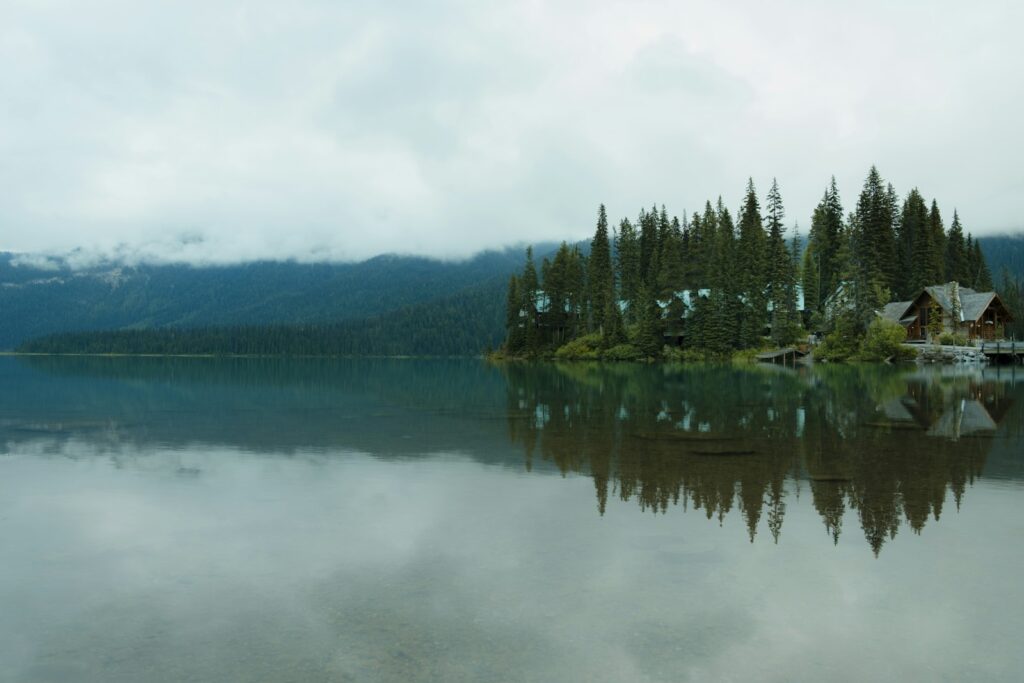
The Best Chalk-Stream and Spring-Fed Escapes
There is a particular clarity to a chalk stream or spring-fed river that no reservoir or rain-fed waterway matches, and a handful of lodges are built around it.
 By Marcus Lim
1 September 2026 · 6 min read

There is a very particular quality of water in a true chalk stream or a properly spring-fed river, a clarity that comes not from filtration or luck but from geology itself. Water that has spent months or years percolating slowly through porous chalk or limestone emerges filtered, mineral-rich and remarkably stable in temperature, running gin-clear over pale gravel beds even after heavy rain has turned every other waterway in the region to brown. It is this clarity, and the calm it seems to induce in anyone standing beside it, that has drawn a small but devoted group of lodges and retreats to build their entire identity around these streams rather than around a lake, a coastline or a mountain view.
What makes a chalk stream different
Unlike a typical river, fed unevenly by surface run-off and prone to flooding or drying depending on rainfall, a chalk stream draws its water from underground aquifers, which act as a natural buffer against weather extremes. The result is a waterway that runs at a near-constant, cool temperature year-round, rarely flooding violently and rarely running dry, which in turn supports a particularly rich variety of aquatic weed, most visibly the trailing green ranunculus that gives many of these streams their distinctive, almost combed appearance in summer. A composite lodge built directly alongside one such stream keeps a small jetty extending over the clearest stretch specifically so guests can watch trout hold position against the current, visible from above in a way that is almost never possible in rain-fed water.
A slower kind of fishing lodge
Fly fishing has long been the traditional draw to these waters, and the better lodges treat it with a seriousness that borders on ceremony: rods matched carefully to the stream’s particular character, guides who know which stretch holds fish on a given morning by the angle of light on the water, and a house rule, at more than one property we know, that a caught fish is released with more care than it took to land. But increasingly, these lodges have opened their appeal beyond anglers entirely, positioning the stream itself, its sound, its clarity, its steady temperature, as reason enough to visit. A morning spent simply walking the bank, or an afternoon reading with feet in the shallows, works as well as a day’s fishing for guests with no interest in a rod at all.
What to expect from a good chalk-stream stay
- Rooms positioned to actually face or overlook the water, not simply advertise proximity to it.
- A kitchen willing to work with watercress, trout and other genuinely local, water-linked ingredients.
- Guides or keepers who can speak knowledgeably about the stream’s ecology, not just its fishing.
- A pace that assumes guests will stay several nights, not one, since the stream rewards familiarity.
Where springs feed something larger
Beyond the classic chalk stream, a related category of retreat has grown up around larger spring-fed systems, where underground water surfaces to form wetlands, fens and slow-moving channels rather than a single defined stream. These settings support a different, often richer variety of birdlife and plant growth, and our guide to fen and wetland reserve retreats covers this adjacent category in more depth, useful for travellers who find the stillness of a chalk stream appealing but want a broader wetland landscape to explore on foot. Similarly, where a spring-fed system opens into a wider river and delta network, our coverage of river and delta retreats picks up the story downstream.
“You can hear the difference before you see it,” a composite keeper at one such lodge told us. “A chalk stream doesn’t rush. It just moves, steadily, the same way, every single day of the year.”
Chalk downs above the water
These streams typically rise from and run through chalk downland, rolling, sparsely wooded hill country that offers its own quiet pleasures above the waterline: open walking trails, wildflower meadows through the warmer months, and a particular kind of long, uninterrupted view that lowland forest rarely allows. Readers keen to pair a stream-side stay with time spent walking the hills above should see our guide to chalk-down and grassland retreats, which covers this landscape from the ridge rather than the riverbank, and the two make a genuinely complementary pairing for a longer countryside trip.
The wildlife a clean stream supports
Water this clear and stable supports a noticeably different food web than a murkier, rain-fed river, and the better lodges know their stream’s residents individually rather than generically: a particular kingfisher that favours one overhanging branch, a heron that fishes the same bend most mornings, otters that pass through on a rough but fairly predictable schedule. Mayfly hatches, when they occur, draw both fish and birdlife into a brief, concentrated flurry of activity that guides at the more attentive properties will happily plan an evening around if asked. It is this density and visibility of wildlife, a direct consequence of the water’s clarity, that gives a chalk-stream stay a different texture from a retreat built around a larger, murkier river, where the same species exist but are far harder to actually observe.
The table, built around the water
Kitchens attached to the better chalk-stream lodges tend to lean hard into what the water itself provides, and a menu built around trout, watercress and freshwater crayfish, when locally permitted, feels far more coherent than one imported wholesale from a distant coastline. A composite lodge we return to smokes its own trout over local applewood, serving it simply with nothing more than a squeeze of lemon and bread baked that morning, on the reasoning that a fish this fresh needs almost no intervention at all. Watercress, historically grown commercially in beds fed by these same streams, still turns up peppery and startlingly fresh on menus that bother to source it properly, a small, easily missed detail that says a great deal about how seriously a kitchen takes its setting.
Booking with intention
A chalk-stream stay rewards a slightly different kind of planning than most retreats: checking water levels and clarity for the season, understanding whether fishing rights are included or booked separately, and, where possible, timing a visit around the ranunculus bloom that peaks in early summer and turns the clearest stretches into something close to an underwater garden. Late spring through early autumn tends to offer the most reliable combination of warm weather and full, healthy weed growth, though a stream at any time of year retains a stillness that few other landscapes can match. For travellers assembling a broader countryside itinerary around water, quiet and genuine stillness, our full Travel & Stays section carries further guides to retreats built around exactly this kind of unhurried, water-led pace.
Marcus writes on travel and hospitality across Asia, and is happiest a long way from a lobby.