The Best Carrot Cake and Chai Tow Kway
There is no carrot in carrot cake, and the argument over black versus white has outlived several governments. Here is how to choose your side wisely.
 By Renée Tan
31 August 2026 · 6 min read
By Renée Tan
31 August 2026 · 6 min read
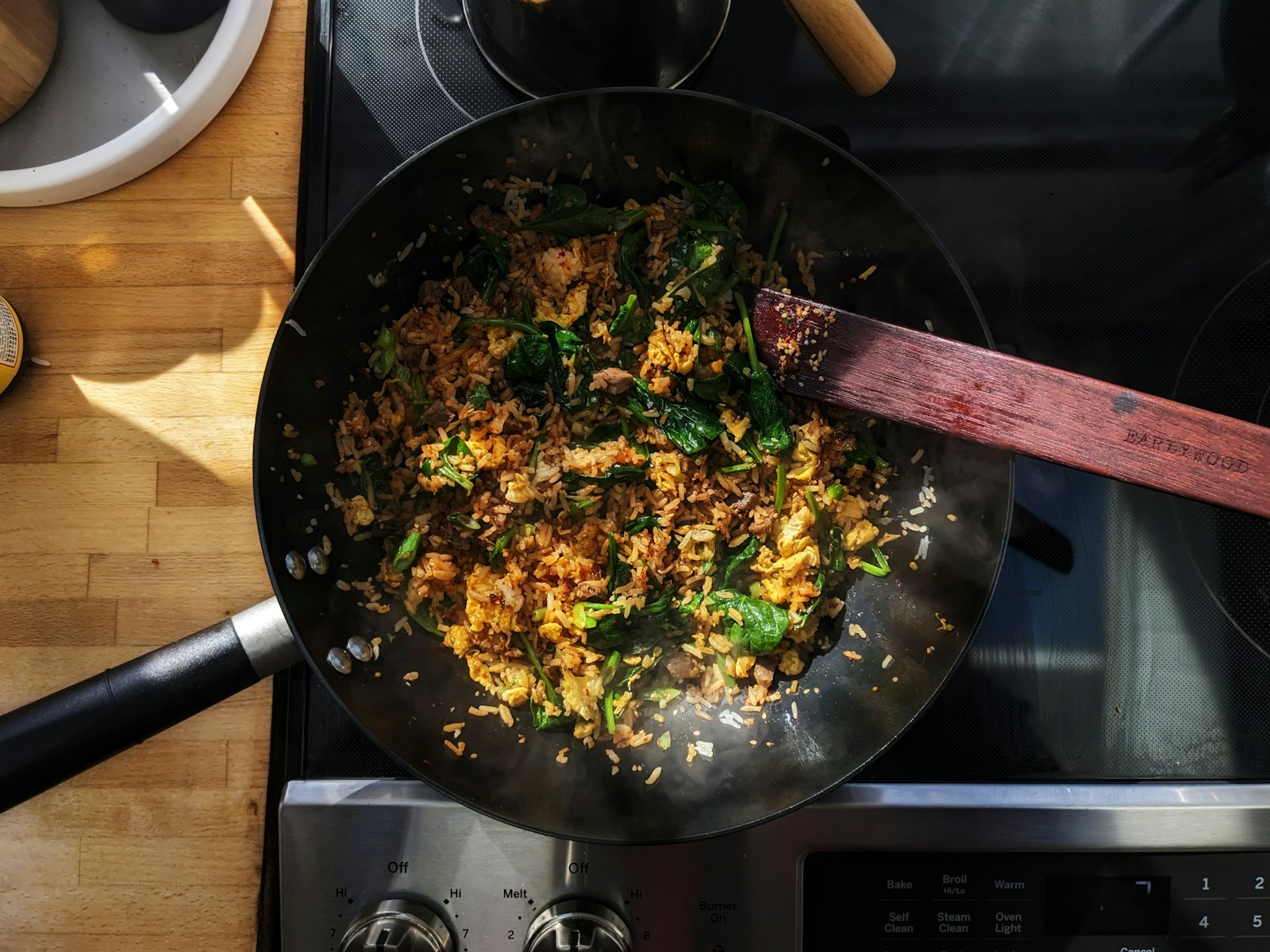
There is no carrot in carrot cake. This is the first thing anyone visiting Singapore for the first time must be told, gently, before they order it expecting dessert and receive instead a plate of diced radish cake, fried until the edges blister, bound with egg and scattered with spring onion. The radish in question is the Chinese white radish, steamed into a dense cake with rice flour, then cut into cubes and given a second life in the wok. What happens in that wok — and which sauce, if any, goes into it — is where Singapore quietly divides itself into two camps that rarely speak to each other with much generosity.
Black or White: The Argument That Never Ends
White carrot cake is the purist’s plate: radish cake, egg, garlic, preserved radish (chai poh), and little else, fried hot and fast so the exterior crisps while the inside stays custardy. Its proponents will tell you that this is the only honest version, that sauce is a crutch for cooks who cannot control their wok heat. Black carrot cake answers with sweet dark soy, which caramelises against the metal and turns the dish glossy, faintly smoky, verging on sticky. Its proponents will tell you the white camp is missing the point entirely — that the char from reduced soy sauce is the whole reason to order the dish.
Both are right, in their way. What separates a good plate from a mediocre one, in either camp, is not the sauce but the fry: whether the cook lets the radish cake sit undisturbed long enough to develop a genuine crust, rather than stirring it into a soft, steamed-tasting mush. At a considered hawker counter — the kind worth a detour rather than a convenient stop — you will see the cook press the cubes flat against the wok and leave them, resisting the urge to fuss, which is precisely the discipline that separates it from the version at your nearest coffee shop.
What to Look For at the Stall
- Char, not colour. A dark plate from soy sauce alone tells you nothing about skill. Look for actual browned, slightly crisped edges on individual cubes.
- Egg that clings, not scrambles. The egg should coat the radish cake in ribbons, not sit alongside it as a separate omelette.
- Chai poh with restraint. Preserved radish should punctuate the dish with salt and a faint sweetness, not dominate it.
- A short queue at odd hours. The best stalls tend to have a rhythm — busy at breakfast, quieter mid-morning — and a cook who is visibly unhurried even under pressure.
Chai Tow Kway’s Quieter Cousins
Beyond the binary of black and white sits a handful of variations worth seeking out on their own terms. Some hawkers finish the dish with a scattering of chye sim for bitterness against the richness of the egg. Others add a shake of chilli in the cooking rather than at the table, integrating heat into the dish rather than layering it on afterwards. A rarer version, found at older stalls run by cooks trained in an earlier generation’s kitchens, uses a coarser-cut radish cake with visible flecks of dried shrimp folded through the batter before steaming — a detail that changes the texture of every bite, giving it a faint chew beneath the crisp exterior.
One hawker of the old school, whose stall has occupied the same corner for three decades, put it simply when asked why he refuses to speed up his fry: “The wok tells you when it’s ready. You just have to stop talking and listen to it.” It is the kind of line that sounds almost too neat for a magazine, and yet it is exactly what separates a rushed plate from one cooked with attention — the difference between radish cake that merely exists on a plate and radish cake that has actually been cooked.
Pairing and Timing
Carrot cake is, properly, a breakfast or brunch dish, eaten before the day gets serious, ideally with a cup of kopi-o or a glass of iced barley. It does not travel especially well — the crisp edges soften within minutes of leaving the wok, and a takeaway box steams itself into sogginess before you have crossed the carpark. If you can, eat it standing at the stall, or seated at the nearest formica table, within five minutes of it arriving. For a fuller sense of how Singapore’s hawker culture rewards this kind of patience, it is worth building an entire unhurried morning around a rotation of two or three stalls rather than treating any single plate as the destination.
Those who prefer their radish cake in soup form rather than fried should look instead to the city’s noodle counters, where a version steamed and sliced thin sometimes appears as a side dish, distinct from but clearly related to the fried classic. And for a sweeter, gentler start to the day, the kaya toast and kopi ritual remains the carrot cake stall’s most obvious rival for a Singaporean’s breakfast loyalty — the two are rarely eaten at the same sitting, but both reward the same unhurried attention.
A Dish That Rewards Repeat Visits
The honest answer to “where is the best carrot cake in Singapore” is that it depends on which camp you belong to, and that the answer will change depending on the hour, the cook’s mood, and how recently the wok was last properly seasoned. What is worth saying plainly is that this is not a dish to rush through once and dismiss. Return to the same stall three or four times, across different mornings, and you will start to notice the small variations — a slightly heavier hand with garlic on a Tuesday, a crisper fry when the queue is shorter — that separate a competent hawker from a genuinely gifted one. Those interested in the wider landscape of the city’s hawker traditions will find carrot cake sits at an interesting crossroads: nominally vegetarian in its white form, before the egg and shrimp complicate matters, and endlessly adaptable to a cook’s own instincts. For the full landscape of what the city does best over a wok flame, our Dining & Drinks section tracks the stalls, counters and kitchens worth building a morning around.
In the end, carrot cake is a small dish that asks a large question: whether you trust sauce to do the work, or whether you trust heat and time and a cook’s steady hand. Singapore has never quite resolved this argument, and it probably never will — which is, in its own way, the most honest thing about the dish. Order both versions on your next visit, compare them side by side, and decide for yourself which corner of the debate you belong to. It is one of the more pleasant homework assignments the city has to offer.
Renée has covered Singapore's restaurants for over a decade, with a soft spot for the kitchens most people walk past.