
The Art of the Statement Kitchen Splashback
A splashback is a kitchen's most visible surface and its hardest-working. Here is how to choose one that makes a statement and survives daily cooking well.
 By Priya Nair
30 August 2026 · 5 min read
By Priya Nair
30 August 2026 · 5 min read
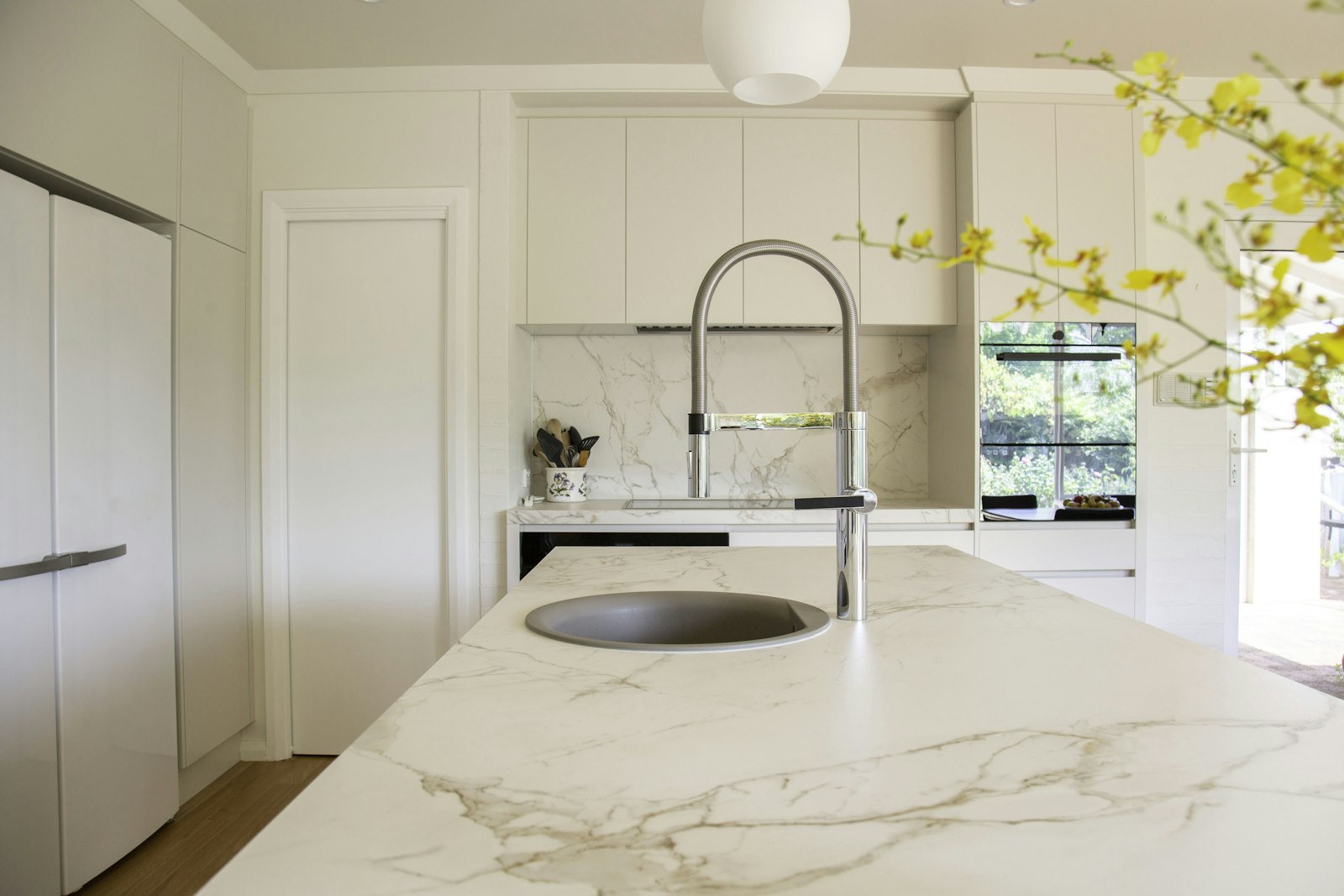
Of all the surfaces in a kitchen, the splashback carries the most visual weight relative to its actual size. It sits directly behind the hob, at eye level for anyone cooking, and it is one of the first things noticed on entering the room — more prominent, in daily experience, than the worktop below it or the cabinetry around it. That prominence makes it an obvious place to make a genuine design statement, and also the place where a poor material choice is punished fastest, since it is directly exposed to heat, splashing oil, steam and the general chaos of active cooking. A considered splashback threads that needle: bold enough to anchor the room, tough enough to survive what actually happens in front of it.
Bookmatched Stone: the Boldest Statement
A full slab of bookmatched marble or a striking quartzite, its veining mirrored across a seam to create a symmetrical pattern, is the most dramatic splashback choice available, and increasingly the signature move in considered kitchen renovations. The effect depends entirely on the quality of the slab and the precision of the match — a poorly matched seam undermines the whole point, drawing the eye to the join rather than the pattern. Practically, a full slab splashback in a sealed, honed stone handles heat and moisture better than the same stone might elsewhere in the home, since it faces direct splatter and steam rather than the general ambient humidity a bathroom vanity contends with, and a quality sealant reapplied periodically keeps staining at bay behind a hob that sees genuine daily use.
Tile as the More Practical Alternative
Where budget or maintenance appetite rules out a full stone slab, tile remains the most practical way to bring genuine pattern and colour to a splashback without sacrificing durability. Zellige and other handmade glazed tiles bring a variation and depth that a uniform, machine-made tile cannot replicate, each piece catching light slightly differently and giving even a small splashback area real visual texture. Large-format tiles, by contrast, minimise grout lines — a genuine practical advantage behind a hob, since grout is where grease and staining accumulate fastest and is the hardest surface in a kitchen to keep looking fresh. A dark grout, rather than white, disguises the inevitable staining that occurs around a hob regardless of how diligently a kitchen is cleaned, and is worth choosing on that practical basis alone.
Splashback materials, weighed for daily cooking
- Bookmatched natural stone — the boldest visual statement, needs sealing and careful matching
- Handmade glazed tile — genuine texture and depth, more grout lines to maintain
- Large-format porcelain tile — minimal grout, highly durable, easier daily cleaning
- Stainless steel — the most heat- and stain-resistant option, an industrial rather than soft look
- Glass panel — sleek and easy to wipe clean, though it shows fingerprints and streaks readily
Heat, Grease and the Practical Reality
Whatever material is chosen, the area directly behind a hob deals with a level of heat and grease exposure unlike anywhere else in a kitchen, and it is worth confirming a material’s actual heat rating before committing rather than assuming a beautiful showroom sample will perform identically above an active flame. Natural stone and porcelain both handle direct heat well, while some resin-based composites are better suited to areas away from the hob itself, such as behind a sink or prep area, where heat exposure is minimal but splash and staining resistance still matter. A stainless steel panel directly behind the hob, even paired with a different material either side, is a longstanding professional-kitchen solution worth considering for anyone who cooks with real intensity and wants the single most heat-resistant surface available, whatever else surrounds it.
A splashback should survive real cooking, not just look considered in a kitchen nobody actually uses.
Scale and Where the Statement Should Stop
A splashback that runs the full height between worktop and upper cabinetry, rather than a narrow strip behind the hob alone, gives a material far more presence and is generally the more successful design choice where budget allows. Deciding where a statement splashback stops — whether it wraps around an entire kitchen or is confined to a single feature wall behind the hob — has a significant bearing on cost and on how bold the material can reasonably be. A dramatic bookmatched stone across an entire kitchen’s perimeter can become overwhelming, whereas the same material confined to a single generous panel behind the hob, with simpler tile or paint elsewhere, often reads as more considered and more deliberately composed than material used everywhere at once.
Lighting the Splashback Properly
A splashback’s material choice is only half the picture; how it is lit determines whether that material’s texture and pattern actually register during daily use rather than only in professionally shot photographs. Under-cabinet lighting, positioned to wash directly down the splashback’s surface, brings out stone veining or tile texture in a way overhead kitchen lighting alone rarely achieves, since general room lighting tends to flatten a vertical surface rather than modelling its depth. Warm-toned LED strips, rather than the cooler white light often chosen for task visibility, flatter natural materials considerably better, particularly stone and timber-adjacent tones, without sacrificing the practical brightness needed for safe, comfortable cooking directly in front of a hot hob.
A Small Area, a Large Effect
Because a splashback occupies relatively little total surface area compared with flooring or cabinetry, it is one of the more efficient places in a kitchen renovation to spend on a genuinely striking material without the budget implications that the same choice would carry applied to a larger surface. Chosen well, it becomes the detail a kitchen is remembered for, long after the practical decisions around storage and layout have simply been absorbed into daily use, quietly doing their job without anyone particularly noticing.
For more, browse Homes & Culture, along with the best materials for kitchen splashbacks, the art of the open-plan kitchen, and the best materials for a timeless kitchen.
Priya tours the homes most people only glimpse from the road, and asks how they are really lived in.


